




A City of Liquid Sunshine
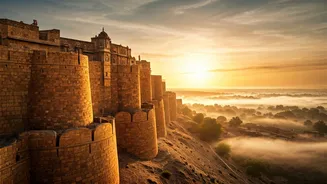
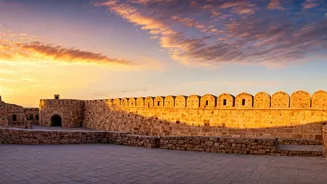
To see Jaisalmer for the first time is to witness a mirage made solid. Perched on a yellowish sandstone ridge, the entire city seems to glow, earning it the nickname “The Golden City.” In the late afternoon, the sun doesn't just illuminate the buildings;
it appears to melt into them. The walls of the ancient fort, the ornate facades of merchant houses, and even the simple homes of its residents are all carved from the same local sandstone. This isn't just an aesthetic choice; it’s a geological destiny. The stone, soft enough to carve with intricate detail but strong enough to withstand centuries of desert wind, is the city’s foundational element. It’s the canvas upon which a story of survival and beauty has been written.
The Science of Scarcity
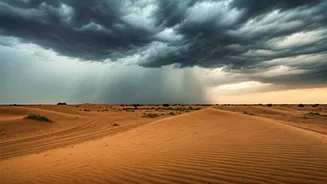
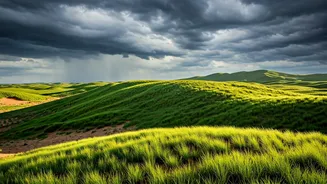
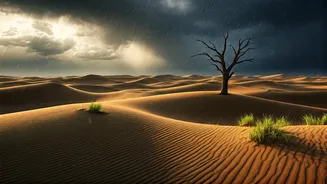
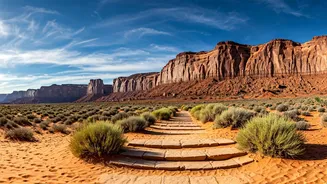
Jaisalmer’s story begins with an absence. The city lies in the immense rain shadow cast by the Aravalli Range, a mountain chain that runs southwest-northeast through western India. As monsoon clouds heavy with moisture drift in from the Arabian Sea, the Aravallis force them upward. The air cools, and the clouds release their rain on the windward side, leaving the mountains’ eastern slopes lush and green. By the time the winds cross the peaks and descend into the Thar Desert, they are stripped of their moisture. This meteorological phenomenon creates an arid zone where Jaisalmer sits, receiving barely a few inches of rain per year. The city was not built in spite of the desert; it was built because of it, as a strategic outpost on ancient trade routes where the most valuable commodity was not gold or spices, but water.
A Fortress Forged by Heat
The centerpiece of this love story is the Jaisalmer Fort. Unlike many of Europe’s preserved castles, this is not a museum piece—it is a living, breathing citadel, home to thousands of residents. Its very design is a masterclass in passive cooling and community defense. The massive sandstone walls absorb the sun’s brutal heat during the day and slowly release it during the cool desert night, regulating temperature. Its narrow, winding lanes are intentionally designed to create shade and funnel the slightest breeze, offering relief from the oppressive sun. The fort wasn't just built to keep enemies out; it was engineered to keep the elements from overwhelming the life within. It’s a testament to understanding the environment, not trying to conquer it.
The Poetry of Havelis
If the fort is the city's resilient heart, the havelis are its soul. These are the spectacular mansions built by wealthy merchants in the 18th and 19th centuries, when Jaisalmer was a key stop on the caravan routes connecting India to Central Asia. Their facades are a riot of latticed windows (jharokhas), intricate balconies, and unbelievably detailed sandstone carvings. But this opulence is deceptive. The latticework wasn't just for show; it allowed the women of the household to observe the street without being seen, while also breaking up the harsh sunlight and encouraging airflow. The intricate designs are an act of defiance and devotion—a way of creating profound beauty and comfort in a place defined by its limitations. They are a physical manifestation of the wealth wrested from a difficult land through clever trade and sheer grit.
A Culture of Water
Ultimately, the love story of Jaisalmer is about its relationship with water. In a place where rain is a rare and celebrated event, water is sacred. The city and its surrounding villages are dotted with ancient step-wells, or baoris, architectural marvels designed to reach deep into the earth to collect and store groundwater. These weren't just utilitarian structures; they were community centers, places of worship, and cool retreats from the summer heat. The culture that evolved here is one of conservation and interdependence. Every drop was, and still is, precious. This reverence for a scarce resource shaped social bonds, religious practices, and the very rhythm of daily life.