




A New Eye on the Cosmos
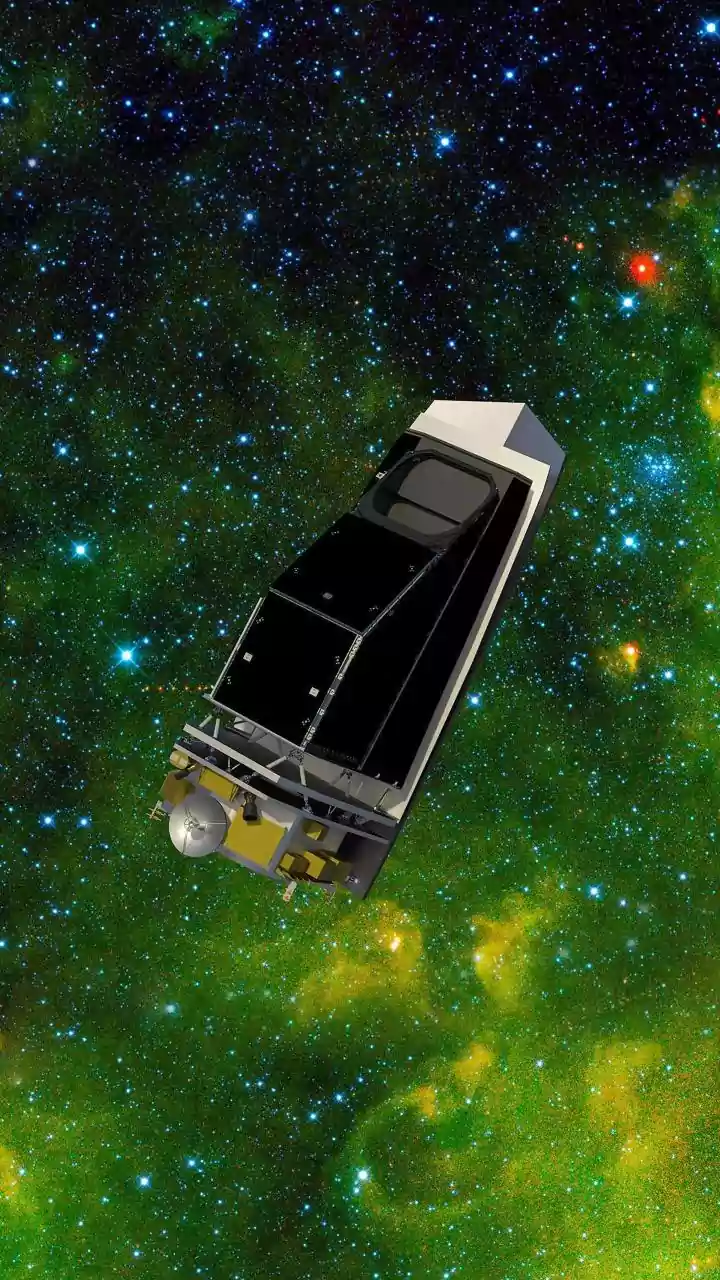
Set to launch in the coming years, the Nancy Grace Roman Space Telescope is often discussed in the same breath as Hubble and the James Webb Space Telescope (JWST), but it’s a completely different kind of beast. Named after NASA’s first chief of astronomy,
Dr. Nancy Grace Roman—the visionary “mother of Hubble”—this telescope isn't designed to stare deeply at one tiny patch of sky for days. Instead, its mission is one of breathtaking scale. Think of Roman as a cosmic surveyor, tasked with creating the largest, most detailed 3D maps of the universe ever attempted. Its primary mirror is the same size as Hubble’s (2.4 meters), but its technological magic lies in its camera.
The Universe in Wide-Angle
The key to Roman’s power is its colossal field of view. While the Hubble and Webb telescopes see the sky through a keyhole, delivering incredibly detailed but narrow images, Roman sees it through a massive bay window. Its Wide Field Instrument can capture an area of the sky 100 times larger than Hubble can in a single snapshot. This means that in just a few years of operation, Roman will be able to image more of the universe than Hubble has in its entire 30-plus years of service. It’s this wide-angle capability that makes the “billion galaxies” headline a reality. By conducting vast surveys, it will systematically photograph billions of celestial objects, providing a treasure trove of data for astronomers to study everything from the structure of our own Milky Way to the evolution of galaxies across cosmic time.
Chasing Cosmic Phantoms
Seeing a billion galaxies isn’t just about collecting cosmic postage stamps. Roman’s main scientific purpose is to tackle two of the biggest mysteries in physics: dark energy and dark matter. Together, these invisible components are thought to make up 95% of the universe, yet we know almost nothing about them. Dark energy is the mysterious force causing the expansion of the universe to accelerate. By precisely measuring the distances and shapes of hundreds of millions of galaxies, Roman will help cosmologists trace the history of cosmic expansion. This will allow them to test theories about dark energy and perhaps, for the first time, understand its nature. The telescope’s massive survey is essential for gathering the statistical power needed to detect the subtle effects of these invisible forces on the cosmic web.
The Hunt for Hidden Worlds
Beyond its grand cosmological quest, Roman has another groundbreaking mission: to hunt for thousands of exoplanets, or planets orbiting other stars. But it will use a clever technique called gravitational microlensing. This method detects planets by observing how their gravity, combined with their host star’s, bends and magnifies the light from a more distant star perfectly aligned behind them. Unlike other planet-finding methods that are biased toward finding large planets orbiting close to their stars, microlensing is sensitive to planets of all sizes, even rogue planets that have been ejected from their solar systems and wander the galaxy alone. Roman’s survey is expected to provide the first true census of planets in the Milky Way, giving us a much clearer picture of our place among the stars.
Hubble, Webb, and Roman: A Cosmic Trio
So, is Roman a replacement for Hubble or Webb? Not at all. It's a partner. The three telescopes form a complementary trifecta for modern astronomy. Think of it this way: Roman is the scout that maps the territory on a grand scale, identifying thousands of fascinating targets. Then, Hubble and Webb are the specialists, zooming in with their high-resolution vision to study those targets in exquisite detail. Roman will find the cosmic needles in the universal haystack, and Webb and other telescopes will analyze what those needles are made of. This synergy will propel astronomical discovery for decades to come, ensuring that each observatory makes the others more powerful.