


The End of the Kitchen Table Office
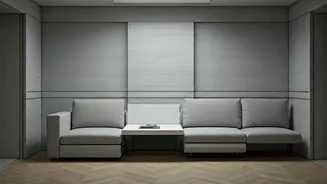
Remember the early days of remote work? The world cobbled together makeshift offices from whatever flat surfaces were available. Kitchen tables became command centers, guest rooms became headquarters, and couches became… well, they were still couches,
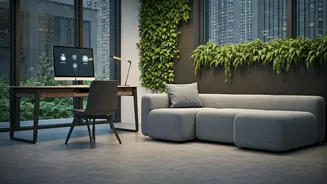
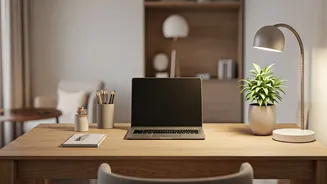
but now with laptops. For a while, it was a novel, if slightly messy, adjustment. But as remote and hybrid work have transitioned from temporary measures to permanent fixtures of American professional life, the novelty has worn off. The blurred lines between work and home have led to burnout and a desperate need for separation. A home that doubles as an office needs clear boundaries, and the open-concept floor plan that was once so desirable suddenly felt like a liability. People don't just want a place to work anymore; they need a place to *stop* working, and that starts with having a dedicated spot they can physically and mentally close off at the end of the day.
Enter the 'Cloffice' and Its High-Tech Cousins
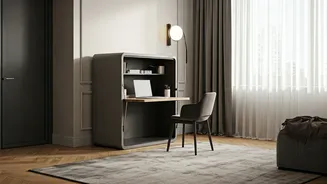
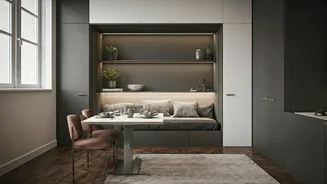
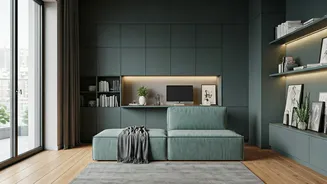
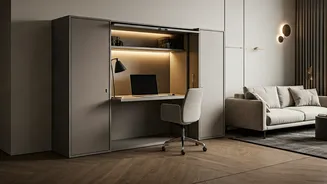
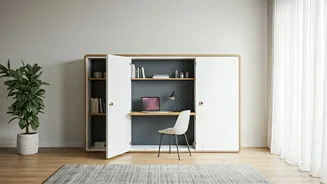
The initial solution was the 'cloffice'—a portmanteau of 'closet' and 'office'—where homeowners converted underutilized storage space into a mini-workstation. It was a clever, DIY-friendly fix. Now, developers and architects are taking that concept and running with it, integrating far more sophisticated solutions directly into their properties. Enter the foldaway study pod. These aren't just shelves in a closet; they are thoughtfully engineered pieces of transformational architecture. Think a sleek wall unit that, with the push of a button or a gentle pull, reveals a fully equipped desk, complete with integrated lighting, power outlets, and shelving. Companies specializing in robotic and transformable furniture have designed systems where a desk, a bed, and a bookshelf can all occupy the same footprint, appearing and disappearing as needed. For developers selling apartments in dense, expensive urban markets, these features are a godsend. They allow a 600-square-foot studio to offer the functionality of a one-bedroom apartment, making a small space feel both luxurious and hyper-practical.
More Than an Amenity, It's a Lifestyle
Real estate marketing has always been about selling a dream, and the dream being sold today is one of seamless, stress-free, flexible living. A foldaway study pod is more than just a clever use of space; it’s a tangible promise of work-life balance. It tells the prospective buyer: 'In this home, you will be productive. You will be focused. And when you are done with work, you can make it vanish and reclaim your personal sanctuary.' In a competitive market, where buyers are more discerning than ever, these features act as powerful differentiators. While a rooftop deck is nice, it doesn't solve the daily, nagging problem of a laptop cluttering the dining table. By addressing a core pain point of modern life, developers are finding that a well-designed work nook can be more compelling to a buyer than traditional, shared luxury amenities. It’s a feature that provides value every single day, not just on special occasions.
A Glimpse into the Future of Home
While not yet standard in every new build, the rise of the integrated workspace is a clear indicator of where home design is headed. The pandemic didn't just change where we work; it fundamentally altered our expectations of what a home should do for us. It must now be a place of rest, entertainment, family, and productivity. This demand for versatility is forcing a re-evaluation of static, single-purpose rooms. Why have a guest room that sits empty 50 weeks a year when that space could be a gym, an office, and a guest room all in one? The foldaway study pod is the thin end of the wedge. It represents a broader shift toward dynamic, responsive living spaces that adapt to the needs of the occupant in real time. As this technology becomes more affordable and widespread, we can expect to see even more innovation in multi-functional design, permanently reshaping our definition of a functional and desirable home.