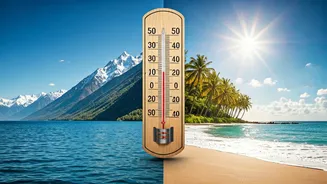







What is 'Temperature-First' Travel?
Imagine your ideal vacation day. Is it a sun-drenched 75 degrees with a light breeze? Or a crisp, cool 55 degrees perfect for hiking without breaking a sweat? Now, instead of picking a city and hoping for the best, you start with that perfect temperature
and let it guide you to the destination. This is the core of 'temperature-first' or 'weather-driven' travel. It’s a paradigm shift where the desired climate—not a specific city or landmark—becomes the primary filter for trip planning. Instead of forcing a trip to Paris in August and enduring a heatwave, you simply tell a search tool you want to go somewhere in the 70s. The results might show you Brittany, France; the coast of Oregon; or maybe even a corner of the Andes you’d never considered. It prioritizes the experience over the pin on the map, transforming the globe into a menu of microclimates.
Why This is Happening Now
This trend isn't just a quirky new travel hack; it’s a direct response to modern realities. First, there's the climate factor. With record-breaking heatwaves, wildfire smoke, and unpredictable storms making traditional summer destinations less reliable, travelers are seeking refuge. Why visit the Mediterranean in July if it’s 105 degrees and packed with crowds when you could find a pleasant 75 degrees elsewhere? Second is the rise of flexible work. The post-pandemic boom in remote and hybrid schedules has untethered millions of Americans from the rigid 9-to-5, five-day office week. This newfound freedom allows for 'flex-cations,' where travel can happen outside of peak holiday windows. If you can work from anywhere, you can chase perfect weather year-round. Finally, technology has caught up to the concept. Major travel search engines like Kayak and Google Flights have integrated features that allow users to filter destinations by weather, making this once-complex planning process as easy as a few clicks.
The Benefits of the New Rule
Adopting a temperature-first mindset comes with a host of advantages that go beyond just being comfortable. The most significant benefit is often financial. By letting weather and flexibility guide you, you naturally sidestep the hordes of tourists descending on the same popular cities at the same time. This allows you to discover destinations in their 'shoulder seasons'—the periods just before or after peak season—when flights and accommodations are significantly cheaper. This approach also broadens your horizons. When you're not mentally locked into the same ten famous cities, you open yourself up to discovering hidden gems. You might find a charming coastal town in Portugal instead of crowded Rome, or a vibrant city in Mexico that wasn't on your radar. You trade the pressure of a travel checklist for the pleasure of genuine discovery, all while enjoying guaranteed good weather. It’s a recipe for a more relaxing, affordable, and unique vacation.
How to Plan Your Own Trip
Ready to give it a try? Planning a temperature-first trip is surprisingly straightforward. Start by using the right tools. Kayak has an 'Explore' feature with a temperature filter; simply input your home airport, select a month or season, and slide the temperature gauge to your desired range (e.g., 60-80°F). The map will populate with destinations and their corresponding flight prices. Google Flights has a similar, powerful 'Explore' map where you can leave the destination blank, select flexible dates, and browse options worldwide. Don't be afraid to be broad. Instead of searching for 'Italy,' search for 'Europe' to see a wider range of possibilities. Be open to airports you haven't heard of; a smaller, regional airport might be your gateway to a perfect-weather paradise. The key is to embrace flexibility—in your destination, your dates, and your expectations. Let the algorithm do the work and be ready to say 'yes' to an adventure you didn't know you wanted.