



The Sweetest Battlefield
When you hear “global war,” you’re probably not picturing a basket of fruit. But in the multibillion-dollar world of exotic produce, the competition is fierce. Nations and regions vie for dominance on supermarket shelves and in the discerning kitchens
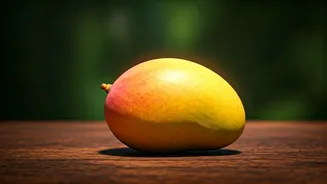
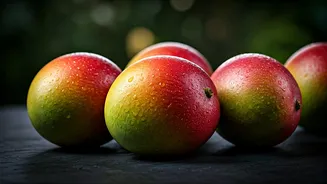
of Michelin-star chefs. For decades, the mangoes most Americans have known are the sturdy, reddish-green varieties from Latin America—bred for long-distance travel, not necessarily for mind-blowing flavor. But a different contender has entered the ring, not with a massive marketing budget, but with the quiet confidence that comes from centuries of perfection. This is the story of the Dussehri mango from Lucknow, the capital of India’s Uttar Pradesh state, and how its legacy is its greatest asset in this flavorful fight.
A Mango with Royal Blood
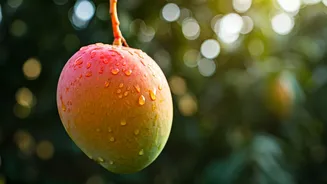
To understand the Dussehri, you have to go back to the 18th century. Lucknow was the heart of the Kingdom of Awadh, ruled by extravagant Nawabs who were patrons of poetry, music, and, most importantly, gastronomy. They were obsessive horticulturalists, and their royal orchards became laboratories for cultivating the perfect fruit. The legend of the Dussehri mango begins here, in the nearby mango belt of Malihabad. It’s said the original tree is over 300 years old and still bearing fruit. This isn't just a mango; it’s a living artifact. The Nawabs didn’t need a marketing team; they had court poets write odes to its flavor. This deep-rooted cultural heritage means the fruit’s reputation was established centuries before the concept of a “global market” even existed. Its victory isn't based on a new strategy, but on an ancient one: be undeniably, irreplaceably good.
What Makes a Dussehri Special?
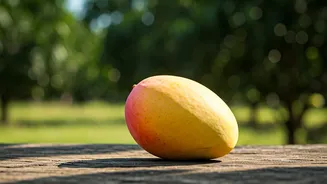
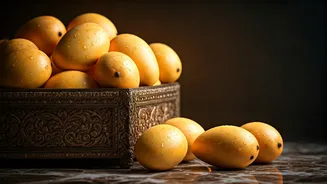
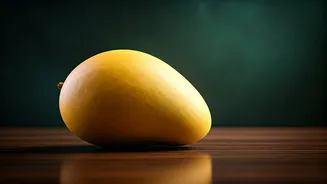
So, what’s the fuss about? For anyone who has only tasted the fibrous, sometimes bland mangoes engineered for the rigors of shipping, biting into a Dussehri is a revelation. The experience starts with the aroma—a heady, sweet perfume that fills a room. Its skin is a delicate, uniform yellow, and its shape is elegantly elongated. But the magic is inside. The flesh is completely fiberless, melting on the tongue like a sorbet. The flavor is intensely sweet but complex, with notes of honey, citrus, and a floral finish that lingers. It’s so delicate that it doesn’t travel well unless handled with extreme care, making it a prized, seasonal delicacy. In 2009, India granted the “Malihabadi Dussehri” a Geographical Indication (GI) tag, the same kind of protection that ensures Champagne can only come from Champagne, France. This designation legally recognizes its unique origin and quality, protecting it from imitators.
Effortless, Not Uncontested
The term “effortlessly” is, of course, a bit of an exaggeration. Generations of farmers have poured immense effort into preserving the genetic purity and traditional cultivation methods of these mangoes. The real meaning of “effortless” in this context is the lack of a slick, corporate-style global campaign. Lucknow isn't winning with Super Bowl ads. It's winning because foodies, chefs, and the Indian diaspora have acted as unofficial ambassadors, spreading the gospel of the Dussehri. The challenge now is maintaining this standard. Climate change threatens the delicate blossoms, and the logistics of getting such a perishable fruit to discerning markets in New York or London are immense. The “war” is also fought against other heritage mangoes, like Pakistan’s Sindhri or India’s own Alphonso. Yet, the Dussehri holds its own, not by shouting the loudest, but by offering a taste of history that no modern hybrid can replicate.