







What Exactly Is Rath Yatra?
Rath Yatra, which translates to “Chariot Journey,” is an annual Hindu festival held in the city of Puri in the eastern Indian state of Odisha. At its heart, the festival is a grand procession celebrating Lord Jagannath—a form of the Hindu deity Vishnu—along
with his elder brother Balabhadra and sister Subhadra. For this one time each year, the deities are brought out of their inner sanctum at the famous Jagannath Temple to travel to the Gundicha Temple, a smaller temple about two miles away, which is believed to be their aunt's home. The journey symbolizes a divine vacation for the gods, allowing them to mingle with devotees from all walks of life. The festival's public nature is central to its philosophy; it’s a rare occasion when those traditionally not allowed inside the temple, including non-Hindus, can get a direct view, or *darshan*, of the deities, making it a profoundly inclusive spiritual event.
The Chariots: Marvels of Faith and Craftsmanship
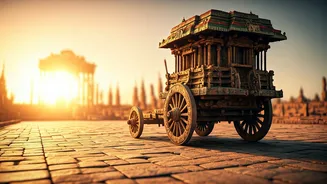
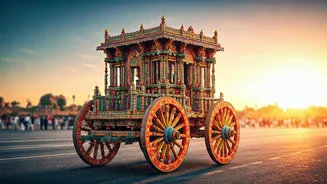
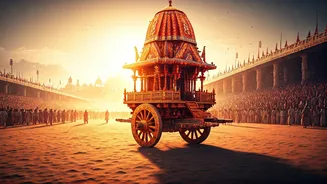
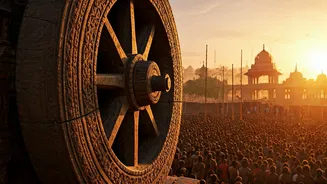
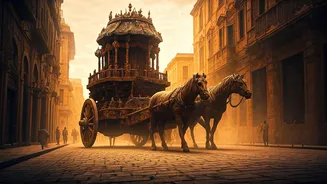
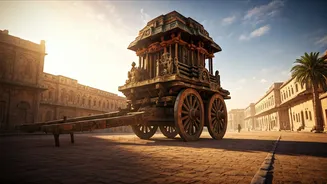
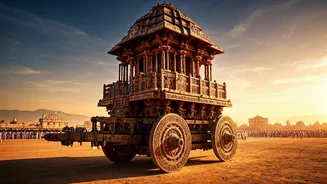
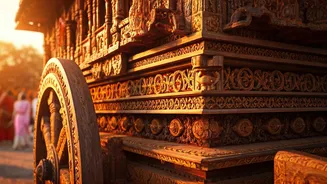
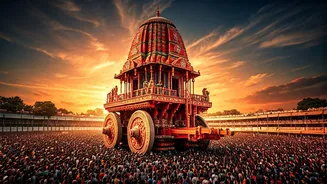
The stars of the show are the three gigantic wooden chariots, each built anew every year according to strict, centuries-old specifications. These are not just vehicles; they are temporary mobile temples. Lord Jagannath’s chariot, Nandighosha, stands about 44 feet tall and rolls on sixteen massive wheels. The chariots for Balabhadra and Subhadra are slightly smaller but no less impressive. Constructed by a dedicated team of carpenters using specific types of wood, these structures are adorned with vibrant fabrics, religious iconography, and intricate carvings. The sheer scale is breathtaking. It takes hundreds of people, pulling on thick coir ropes, to move each chariot along the main thoroughfare of Puri, known as the Grand Road. For devotees, the act of pulling these ropes is considered an act of great piety, a way to participate directly in the divine journey and earn spiritual merit.
A Spectacle of Unimaginable Scale
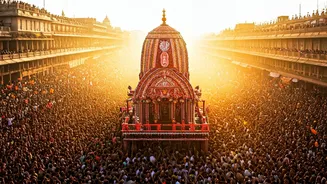
While the headline figure of “millions” might seem like an exaggeration, it’s an accurate reflection of the crowds that descend upon Puri. Devotees and tourists from across India and around the world flood the city, creating a dense, moving ocean of people. The atmosphere is electric, filled with the sounds of devotional music, chanting, and the rhythmic clash of cymbals. For the nine days of the festival, the city operates on a different plane of existence, focused entirely on the deities’ journey and the associated rituals. The logistics of managing such a crowd are immense, involving massive security deployments and public health measures. To witness it is to see faith manifested on an epic scale, a powerful expression of collective devotion that has been happening for centuries and continues to draw staggering numbers of participants who come to feel a part of something larger than themselves.
From Ancient Ritual to Viral Phenomenon
In recent years, Rath Yatra has transcended its physical boundaries to become a major digital event. The “massive online buzz” is a testament to how ancient traditions adapt to the modern world. Live streams of the chariot procession are watched by millions globally, allowing the vast Indian diaspora and the merely curious to participate virtually. Social media platforms like Instagram, X (formerly Twitter), and Facebook are flooded with images and videos under hashtags like #RathYatra and #Jagannath. People share stunning photos of the chariots, selfies from the crowd, and spiritual quotes. This digital layer doesn't diminish the festival's sanctity; instead, it amplifies its reach. It allows a new generation to connect with their heritage and provides a window for outsiders to understand the cultural and religious significance of an event that might otherwise seem distant and inaccessible.