


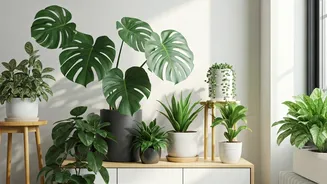
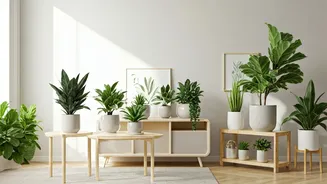


They Break Up a Room's Hard Lines
Look around your room. It’s likely dominated by straight lines and hard angles: the edges of your television, the corners of your coffee table, the frame of your window. While this geometry provides structure, too much of it can make a space feel rigid
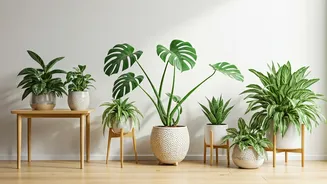
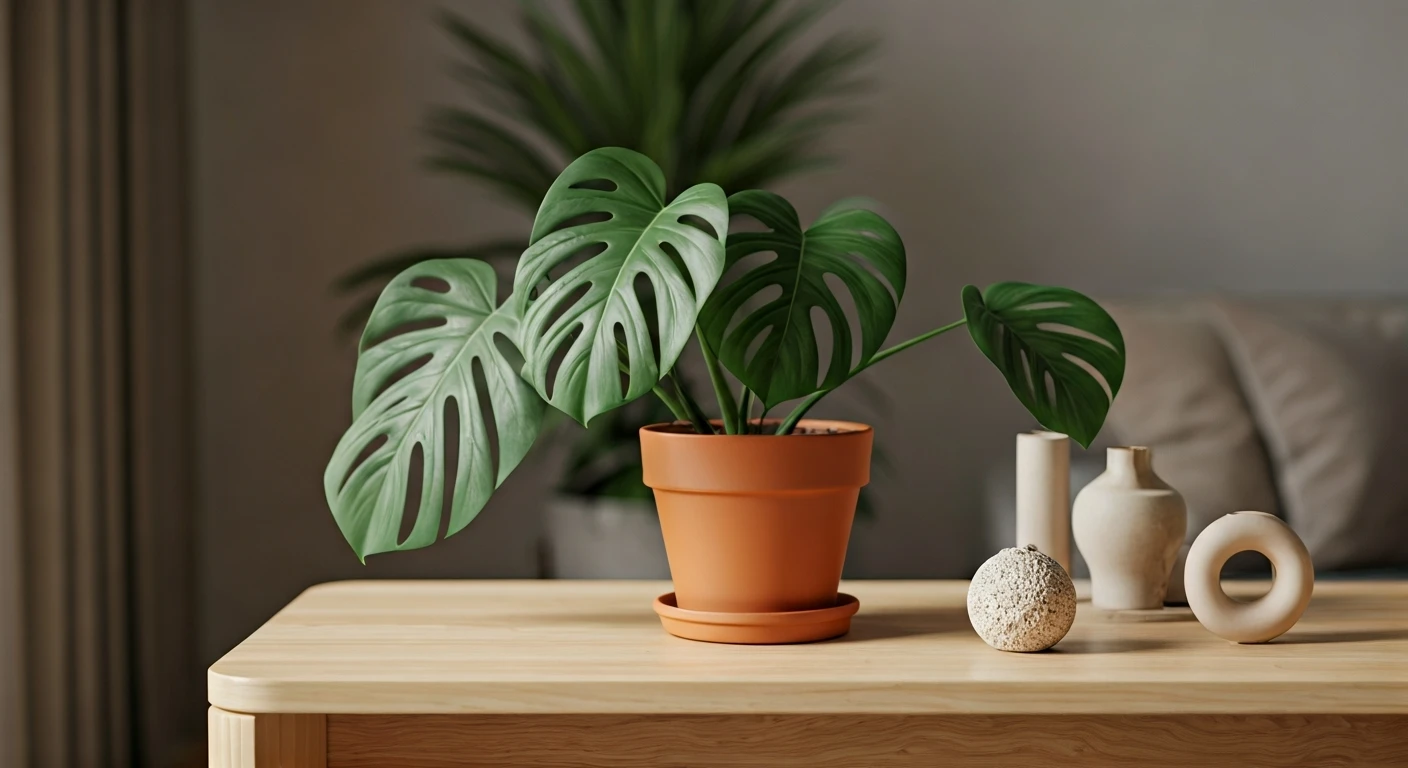
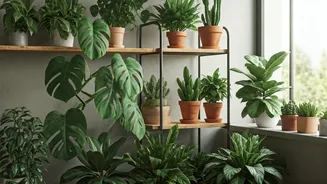
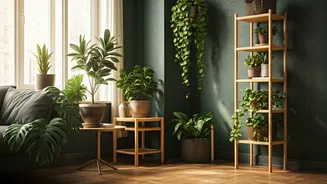
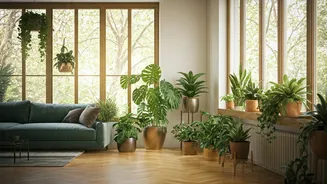
and sterile. Plants are the perfect antidote. The organic, irregular shapes of leaves, the gentle arch of a stem, and the cascading trail of a vine all work to disrupt rigid geometry. A tall fiddle-leaf fig can soften a sharp corner, while a draping pothos can break up the harsh line of a bookshelf. This introduction of natural curves creates visual relief, making the entire room feel more relaxed, approachable, and, well, softer.
They Add Dynamic Color and Texture
A painted wall or a colorful pillow adds a single, static hue to a room. Plants, on the other hand, offer a dynamic palette. The greens alone can range from the deep, moody shade of a ZZ plant to the bright, almost neon lime of a philodendron. Many varieties also feature stunning variegation with splashes of white, pink, or yellow. This isn't just about color, but also texture. Compare the smooth, waxy leaves of a rubber plant to the velvety feel of an African violet or the intricate, bumpy texture of a succulent. Unlike a throw blanket or a piece of art, this living decor subtly changes with new growth, unfurling leaves, and shifts in light, adding a layer of constant, quiet interest to your home.
They Improve Your Air and Mood
The idea that plants make us feel better isn't just a feeling; it's rooted in science. The concept of biophilia suggests that humans have an innate tendency to seek connections with nature. Bringing plants indoors taps into this connection, which has been shown to reduce stress, improve focus, and elevate mood. While the famous 1989 NASA study on air purification might be difficult to replicate in a typical home, plants do contribute to a healthier indoor environment. Through photosynthesis, they absorb carbon dioxide and release oxygen. More importantly, the psychological benefit is undeniable. Seeing a living, growing thing in your space serves as a gentle, constant reminder of the natural world, which can be incredibly grounding in our digitally saturated lives.
They Naturally Dampen Sound
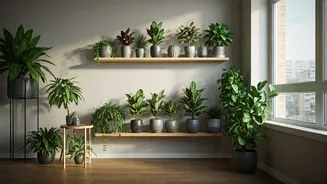
In the world of acoustics, soft, irregular surfaces are used to absorb and break up sound waves, reducing echo and creating a quieter environment. While a single small succulent won't soundproof your apartment, a collection of plants—especially larger ones with dense foliage—can make a noticeable difference. Their leaves, stems, and the soil they’re in all help to scatter and absorb sound. This is particularly effective in rooms with a lot of hard surfaces like wood floors, large windows, and sparse furniture, which can cause sound to bounce around and create a harsh, echoing effect. Strategically placed plants can help absorb the clatter of daily life, contributing to a more peaceful and serene atmosphere without the need for heavy rugs or thick curtains.
They Introduce a Nurturing Routine
A home feels softer when it’s a place of care, not just a place of existence. The simple act of tending to plants introduces a gentle, nurturing rhythm to your daily life. The weekly watering, the occasional dusting of leaves, the quiet joy of spotting new growth—these small rituals connect you to your home in a more meaningful way. This act of care transforms you from a passive occupant into an active participant in your living space. A home with plants is a home where something is being actively looked after and encouraged to thrive. This sense of purpose and mindful activity radiates throughout the space, making it feel less like a static backdrop and more like a responsive, living partner in your life.