






First, A Quick Correction
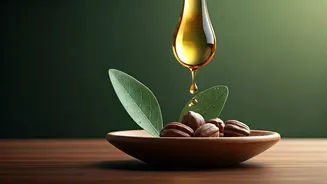
Let's get one thing straight right away: jojoba oil isn't technically an oil. It’s a wax ester. This might sound like a minor scientific detail, but it’s the entire reason it’s so beloved by dermatologists and beauty chemists. Unlike heavier oils like coconut
or olive oil, the molecular structure of jojoba wax ester is strikingly similar to the sebum our own skin produces naturally. This is the secret to its magic. It’s not just sitting on top of your skin; your skin recognizes it, welcomes it in, and knows exactly what to do with it.
The Science of Skin Harmony
Because jojoba is a near-perfect mimic of our natural sebum, it works in a fascinatingly intelligent way. If your skin is dry, jojoba provides the emollient, moisturizing properties it's craving, helping to seal in hydration and repair a compromised skin barrier. But here’s the clever part: if your skin is oily or acne-prone, jojoba can actually help regulate oil production. When it senses the presence of this familiar wax ester, your skin gets a signal that it’s already sufficiently moisturized and can slow down its own sebum production. This is why it’s prized as a non-comedogenic moisturizer—it hydrates without clogging pores, making it one of the few oils that’s generally considered safe for all skin types, from desert-dry to oily and blemish-prone.
So Why Is It Popular *Now*?
Jojoba itself is nothing new; Indigenous peoples in North America have used it for centuries for its skin-healing properties. Its current surge in popularity, however, is perfectly timed with several major shifts in the beauty world. First, there’s the 'skinimalism' movement—a collective move away from complicated, 12-step routines and harsh active ingredients. Consumers are looking for gentle, multi-tasking workhorses, and jojoba fits the bill perfectly. It’s a moisturizer, a makeup remover, a hair conditioner, and a cuticle softener all in one. Second, the obsession with repairing the skin barrier has put a spotlight on ingredients that soothe and support, rather than strip and exfoliate. Jojoba’s anti-inflammatory properties and barrier-mimicking structure make it an ideal candidate for calming irritated, over-processed skin.
How to Pick and Use It
Ready to give it a try? The good news is, you don’t need to splurge. A simple, pure bottle of jojoba oil is often more effective than a fancy,-formulated cream. Look for bottles labeled '100% pure,' 'cold-pressed,' and 'unrefined' or 'virgin.' This ensures you're getting the highest concentration of nutrients. A little goes a long way. For your face, warm 2-4 drops between your palms and gently press it into clean, damp skin as the last step in your routine (or before sunscreen in the morning). For hair, use a few drops to smooth frizz on dry ends or massage it into your scalp as a pre-shampoo treatment to soothe dryness and dissolve product buildup. You can even add a drop to your foundation for a dewier finish. As with any new product, it's always wise to do a patch test on your inner arm first.