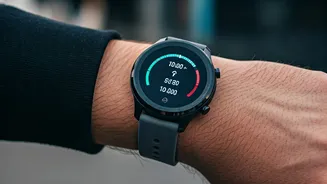









The New Digital Stroll
Walk through any park in Mumbai, Bangalore, or Delhi, and you’ll see it. Groups of friends not just chatting, but pacing with purpose. Office workers foregoing a rickshaw for the last mile home. At night, social media feeds light up not with party photos,
but with screenshots of fitness apps proudly displaying five-figure numbers. Hitting 10,000, 15,000, or even 20,000 steps has become a badge of honor, a form of social currency exchanged among friends, family, and colleagues. In a country known for its collective spirit, the solitary act of walking has been transformed into a public, competitive, and highly social activity. The obsession isn't just about the walk; it's about the proof, the data, the gamified victory of hitting a daily goal.
A Perfect Storm of Factors
This trend didn't appear in a vacuum. It’s the product of a perfect storm brewing in modern India. First, there’s the technology. The Indian market has been flooded with incredibly affordable wearables from domestic brands like boAt and Noise, alongside international players like Xiaomi. For the equivalent of $20-30, a young person can get a feature-packed fitness tracker. Combine this with some of the cheapest mobile data rates in the world, and you have a massive, digitally connected population ready to adopt new tech. Second, there’s a rising wave of health consciousness. The COVID-19 pandemic acted as a national wake-up call, accelerating awareness around fitness and immunity. For a generation watching their parents grapple with lifestyle diseases like diabetes and hypertension, proactive health has become a personal mission and a symbol of modern, responsible living.
Competition Is the Best Cardio
If American wellness is often portrayed as an individualistic journey of self-discovery, in India, it’s a team sport. The step-counting craze is fueled by a deeply ingrained culture of friendly—and sometimes fierce—competition. Family WhatsApp groups buzz with daily leaderboards. Companies are rolling out corporate wellness challenges, pitting departments against each other for bragging rights and small rewards. This social element is key. It provides motivation, accountability, and a sense of shared purpose. You’re not just walking for your own health; you’re walking to beat your cousin, to help your team win, or to maintain your standing in your friend group. It transforms a mundane activity into an engaging game, tapping into the same aspirational and competitive drive that fuels academic and professional life in the country.
An Indian Twist on a Global Trend
While fitness tracking is a global phenomenon, the way it's manifesting in India is unique. It’s less about subscribing to a specific Silicon Valley wellness guru’s philosophy and more about a practical, data-driven approach to a healthier life. It represents a form of accessible aspiration. You might not be able to afford a gym membership or a personal trainer, but you can afford a basic fitness band and you can always walk. This democratization of wellness is powerful. For millions of young Indians, tracking steps is a tangible way to participate in a global modernity, to take control of their health, and to signal their ambition. It’s a simple metric that speaks volumes about personal discipline, technological savvy, and a forward-looking mindset. It’s not just about counting steps; it’s about making every step count toward a better future.