






The Windshield as a Movie Screen
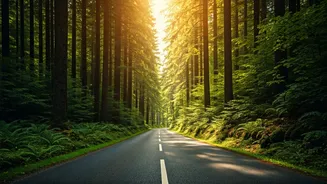
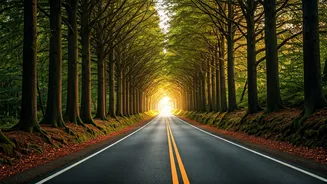
There’s a unique magic to a drive framed by nature. It’s more than just pretty scenery; it’s a dynamic, unfolding experience. The windshield becomes a widescreen theater, with sunlight filtering through leaves creating a flickering, filmic effect. The slow
parallax of a winding road, where ancient trees in the foreground move faster than the distant hills, gives the journey a sense of depth and deliberate pacing. Unlike a sterile highway, a green road is alive with movement, texture, and shifting light. It’s this constant, gentle sensory input that elevates a simple trip. The destination fades in importance, replaced by the quiet drama of the drive itself. You’re not just moving from Point A to Point B; you’re the main character in a short film about a peaceful journey, even if it only lasts for three blocks.
Your Brain on Nature’s Scenery
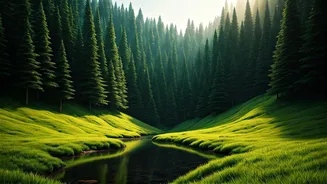
This feeling isn’t just poetic fancy; it’s rooted in our psychology. The concept of “biophilia,” popularized by biologist E.O. Wilson, suggests that humans have an innate and genetically determined affinity for the natural world. When we are surrounded by greenery, our bodies respond. Studies have consistently shown that even brief exposure to natural environments can lower stress levels by reducing cortisol, decrease blood pressure, and improve our mood. The fractal patterns in leaves and branches are inherently fascinating to the human eye, capturing our attention without demanding intense focus—a phenomenon known as “soft fascination.” This allows our minds to wander and restore, a stark contrast to the cognitive load required to navigate a congested urban intersection. That cinematic feeling is, in part, your brain taking a deep, restorative breath.
An American Tradition of Scenic Drives
The idea of designing roads for pleasure, not just for utility, is a deeply American one. In the early 20th century, as cars became more common, landscape architects and planners envisioned a new kind of road: the parkway. Unlike commercial highways, parkways like the Bronx River Parkway in New York or the scenic Blue Ridge Parkway weaving through the Appalachians were intentionally designed to be beautiful. They featured gentle curves that followed the land’s contours, a complete absence of billboards and commercial traffic, and lush, managed landscapes. The goal was to provide an escape, to make the act of driving an aesthetic experience. These historic routes are the grandparents of your favorite tree-lined shortcut. They codified the idea that a road could be a destination in itself, a place for contemplation and beauty, not just a means of efficient transport.
How to Find Your Own Green Road
In an era of GPS optimization that defaults to the “fastest route,” finding these cinematic corridors requires a little more intention. It starts with looking at a map differently. Instead of just tracing the bold red lines of major arteries, look for the roads that snake through green patches—city parks, local preserves, or even just neighborhoods known for their mature trees. Try toggling the “satellite” view on your map app to visually identify tree canopies. Sometimes, the most scenic route is just one street over from the one your GPS suggests. Make a conscious choice to take the slightly longer, more beautiful way home from work. This small act of reclaiming your commute can transform it from a stressful obligation into a moment of daily decompression and quiet joy. It’s a simple rebellion against pure efficiency in favor of a richer human experience.