






The Myth of 'No Pain, No Gain'
For decades, the dominant fitness narrative has been one of intensity. We’ve been taught that a workout’s value is measured in sweat, elevated heart rates, and next-day muscle soreness. If you don’t leave the gym feeling completely spent, did you even
work out? This “go hard or go home” mentality is effective for building cardiovascular endurance and muscle strength, but it overlooks other critical components of physical and mental well-being. It champions a “yang” approach—active, forceful, and dynamic—while often dismissing its opposite. But what if the most productive thing you could do for your body wasn't about moving faster, but about becoming profoundly still? This is the question Yin Yoga asks, and its answer is quietly revolutionary.
So, What Is Yin Yoga?
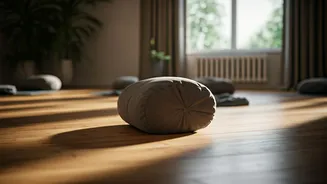
Unlike its dynamic cousin, Vinyasa, which flows from pose to pose, Yin Yoga is a slow, meditative practice where poses are held for long periods—typically three to five minutes, and sometimes longer. The practice is almost entirely floor-based, using props like bolsters and blocks to help the body surrender into a passive stretch. The key difference isn't just the speed; it’s the target. While active (yang) yoga styles focus on engaging and strengthening muscles, Yin targets the body’s deeper connective tissues: the ligaments, tendons, and fascia. Fascia is the web-like network of tissue that wraps around our muscles, bones, and organs. When it becomes tight and stiff from inactivity, repetitive motion, or injury, it can restrict movement and cause pain. Yin Yoga is designed to gently and safely stress these tissues, encouraging them to become more elastic and hydrated over time.
The Productive Power of Holding Still
This is where “slow” starts to feel incredibly useful. Holding a pose like Butterfly or Sleeping Swan for five minutes might not feel like a workout in the traditional sense, but the work is happening on a deep, internal level. As you settle into a pose and relax your muscles, gravity begins to apply a gentle, sustained pressure on your connective tissues. This is the sweet spot of Yin. It’s not about pushing to your absolute edge, but finding a point of sensation—often called a “healthy edge”—and simply breathing there. This sustained, gentle stress stimulates the fascia, promoting flexibility and improving joint mobility in a way that dynamic stretching often can't. You’re not just stretching a muscle for 30 seconds; you're remodeling the very fabric that holds your body together. The feeling of release after holding a challenging Yin pose is a palpable sense of accomplishment, proving that profound effort doesn’t always require rapid movement.
More Than Just a Deep Stretch
The “usefulness” of Yin Yoga extends far beyond the physical. The practice is, at its core, a training ground for the mind. Holding a pose for minutes at a time forces you to confront discomfort, boredom, and the relentless chatter of your inner monologue. The goal is not to fight these feelings, but to observe them without judgment. This process is a form of mindfulness meditation, training your nervous system to shift from a state of “fight or flight” (sympathetic) to “rest and digest” (parasympathetic). In a world that constantly demands our attention and keeps us in a low-grade state of stress, an hour of Yin can feel like a system reset. It lowers cortisol levels, calms the mind, and creates a space for genuine rest. This combination of deep physical release and mental stillness makes it an essential counterbalance to both intense workouts and the stresses of modern life.