







What Causes the Ocean to Glow?
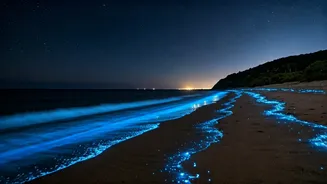
The magical phenomenon, often called “sea sparkle” or “blue tears,” is a form of bioluminescence. It’s caused by tiny marine organisms called dinoflagellates, specifically a species named Noctiluca scintillans. These microscopic plankton are floaters,
and when they are disturbed by waves, a swimmer's foot, or a boat's wake, they emit a flash of light as a defense mechanism. When present in high concentrations, their collective glow can transform an entire shoreline into a breathtaking spectacle. While the sight is otherworldly, the cause is pure biology. The glow is most visible on dark, moonless nights, away from the light pollution of coastal cities, making the search for it an adventure in itself.
Udupi: The Heart of the Bioluminescent Coast
For travelers seeking this natural light show, the coastal district of Udupi is the primary destination. Located in the southwestern Indian state of Karnataka, this region has become famous for its recurring bioluminescent events. Mattu Beach, a quiet stretch of sand just south of Udupi town, is arguably the epicenter. Reports and photos from locals and travelers have put this beach on the map for night-time explorers. Just a short drive away, Padukere Beach is another well-known hotspot. The experience is often subtle at first—a few sparks in the foam. But as your eyes adjust to the darkness, you may see entire waves lined with a shimmering blue-green light, creating a truly unforgettable memory.
Beyond Udupi: Exploring the Coastline
While Udupi gets most of the attention, it’s not the only place to witness this phenomenon. The entire coastal belt of Karnataka, stretching for nearly 200 miles along the Arabian Sea, is a potential stage for the sea sparkle. Sightings have been reported near the port city of Mangalore, particularly at beaches like Someshwara and Tannirbhavi. Further north, the tranquil beaches around Gokarna have also occasionally lit up. The key is understanding that this isn't a permanent fixture. The phytoplankton blooms are transient, moved by currents and conditions, so what was glowing one week might be dark the next. This unpredictability is part of what makes a successful sighting feel so special.
How to Plan Your Bioluminescence Quest
Finding the glow requires planning and a bit of luck. To maximize your chances, aim to visit between October and March, after the monsoon rains have subsided. The most crucial factor is darkness. Plan your trip around the new moon, when moonlight won't wash out the subtle glow. Arrive at the beach after 10 p.m. and give your eyes at least 15-20 minutes to adjust to the dark. For American travelers, the gateway to this region is Mangalore International Airport (IXE), which is well-connected to major Indian hubs like Mumbai and Bangalore. From there, Udupi is about an hour's drive north. Hiring a local driver or renting a car is the easiest way to explore the various beaches along the coast.
A Gentle Footprint on the Shore
As with any natural wonder, responsible tourism is paramount. The ecosystems that support this beautiful phenomenon are fragile. When you visit, commit to leaving no trace. Pack out everything you bring in, and avoid disturbing coastal vegetation. Resist the urge to use bright flashlights or your phone’s flash, as this will ruin your night vision and detract from the natural experience for you and others. The best way to see the glow is by gently wading into the shallows and swishing your hands or feet in the water. By treating the environment with respect, you help ensure that these hidden shores can continue to sparkle for years to come.