


A Mythical Himalayan Paradise
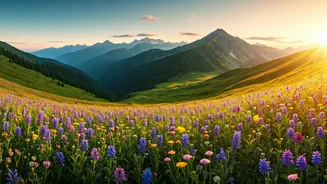
Located in the state of Uttarakhand in northern India, the Valley of Flowers National Park is exactly what it sounds like: a sprawling, high-altitude valley that erupts into a carpet of hundreds of species of wildflowers. For a few short months, the landscape
is painted with vibrant strokes of blue, pink, yellow, and white. Local legend holds that it is the place from which the Hindu deity Hanuman collected the mythical Sanjeevani herb to save Lakshmana. Today, it’s a globally recognized biodiversity hotspot, home to rare and endemic flora like the electric-blue Himalayan poppy, the cobra lily, and countless orchids and primulas. It’s also a sanctuary for elusive wildlife, including the Asiatic black bear, snow leopard, and blue sheep. The sheer spectacle has made it a bucket-list destination for trekkers and botanists from around the world.
The Monsoon's Fleeting Gift
The magic of the Valley of Flowers is inextricably linked to the Indian monsoon. The rains, which arrive in late June, are what awaken the dormant seeds and trigger the spectacular bloom. The floral display typically reaches its peak from mid-July to mid-August, creating the lush, otherworldly scenery that draws visitors. But the monsoon is a double-edged sword. As the season progresses into late August and September, the life-giving showers intensify into torrential downpours. This makes the mountain trails dangerously slippery, prone to landslides, and often impassable. Rivers swell, bridges can be washed away, and the entire region becomes hazardous. For safety reasons, authorities officially close the trails, and the valley is left to nature until the following year. This creates a very narrow, urgent window for anyone hoping to witness its beauty.
Planning Your Expedition
Getting to the Valley of Flowers is an adventure in itself. The journey begins with a flight to Delhi, followed by travel to the yoga capital of Rishikesh. From there, it's a long but scenic multi-day drive into the mountains to the town of Govindghat or the nearby village of Pulna, which serves as the starting point for the trek. You'll need to obtain a permit to enter the national park, which can be acquired at the trailhead. Because of the trek's popularity during its short season, it's wise to book accommodations and transport well in advance. The base for exploring the valley is a small, bustling settlement called Ghangaria. There are no luxury hotels here—expect basic guesthouses and simple, hearty food. It’s a place for travelers, not tourists, and its rustic charm is part of the experience.
What to Expect on the Trail
The trek is considered moderate in difficulty. You don't need to be a professional mountaineer, but a good level of physical fitness is essential. The trail from Pulna to Ghangaria is a steady, well-marked climb of about 6 miles. After resting overnight in Ghangaria, you’ll make the day-hike into the Valley of Flowers itself, a gentler walk of about 2-3 miles each way through the breathtaking floral meadows. Many trekkers also use Ghangaria as a base to visit Hemkund Sahib, a sacred Sikh pilgrimage site featuring a glacial lake located at an even higher altitude. This is a much steeper and more challenging climb, but rewards the determined with stunning panoramic views. Throughout the journey, be prepared for rain at any moment. The weather changes rapidly in the Himalayas.
Essential Gear and Tips
Packing smart is crucial. High-quality, broken-in waterproof hiking boots are non-negotiable. So is reliable rain gear—a poncho or a full rain suit is a must. Dress in layers, as mornings can be chilly, afternoons warm, and evenings cold. A sturdy backpack, sunscreen, a hat, and sunglasses will protect you from the high-altitude sun. Carry a personal first-aid kit and any necessary medications. While porters and mules are available for hire to carry your main luggage to Ghangaria, you'll want a daypack for water, snacks, and your rain gear. Finally, bring cash. ATMs are non-existent in the upper reaches, and you'll need it for permits, food, and lodging.