




Start with a Renter-Friendly Foundation
Before you buy a single plant, start from the ground up. Most rental balconies feature a stark concrete slab that’s neither inviting nor stylish. The solution is temporary, interlocking deck tiles. Usually made from acacia wood, composite, or even durable
plastic, these tiles snap together like puzzle pieces and sit directly on top of the existing surface. They instantly warm up the space, provide better drainage, and feel much better underfoot. When it’s time to move, they unsnap just as easily, leaving no trace behind. It’s also wise to give your lease a quick read. Check for any specific rules regarding balconies, especially weight limitations. Most buildings are fine with a reasonable collection of pots, but it’s always better to be sure.
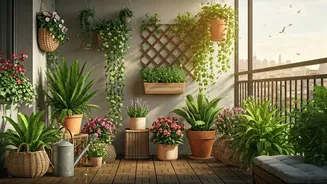
Think Vertically to Maximize Space
Balcony real estate is precious. To get the most out of your small footprint, stop thinking horizontally and start thinking vertically. This is the key to creating that lush, enveloping feel without cluttering the floor. Leaning a trellis against a wall provides a beautiful, non-permanent structure for climbing plants like jasmine or clematis. Railing planters are another essential, hooking securely over the balcony railing to add a splash of color without taking up any floor space. Look for adjustable models to ensure a snug fit. You can also use tiered plant stands or freestanding shelving units to stack pots, creating layers of greenery that draw the eye upward and make the space feel larger and more dynamic.
Choose Plants That Will Thrive
Your balcony is a unique microclimate, so plant selection is critical. Before heading to the nursery, observe your space. How many hours of direct sunlight does it get? Is it exposed to strong winds? For hot, sunny spots, hardy succulents, geraniums, and lavender are excellent, low-maintenance choices. If your balcony is shadier, consider ferns, hostas, or impatiens. Herbs are a fantastic option for any balcony, providing fresh flavors for your kitchen. Basil, mint, rosemary, and chives are easy to grow in containers. To ensure success, choose pots with good drainage holes and use a high-quality potting mix specifically designed for containers, which is lighter and less compact than garden soil.
Embrace Damage-Free Decor
A green balcony is more than just plants—it's an outdoor room. The goal is to make it cozy and functional using only temporary, damage-free solutions. Instead of installing permanent light fixtures, use solar-powered stake lights in your larger pots or weave battery-operated string lights through your railing or trellis. These create a magical ambiance in the evening with zero wiring required. For seating, opt for lightweight, foldable bistro sets or weather-resistant floor cushions that can be easily stored. An outdoor rug can tie the space together, but make sure it’s made of a material like polypropylene that won’t trap moisture against your deck tiles or the concrete beneath.
Rely on Hooks, Straps, and Tension
The golden rule of rental decorating applies outdoors, too: no nails, no screws, no permanent changes. Thankfully, an entire market of clever products exists to help you hang things securely. Use over-the-door style hooks on your balcony railing to hang decorative items or small tool baskets. Heavy-duty, adjustable tension rods can be wedged between two walls or posts to create a bar for hanging lightweight planters or string lights. For privacy screens or bamboo fencing, strong zip ties are your best friend. They can secure almost anything to your existing railings quickly, cheaply, and without leaving a single mark when you snip them off on moving day.