


First Off, What Is Khichdi?
Before we get to the fancy stuff, let’s talk basics. For millions in India and across the South Asian diaspora, khichdi (pronounced KICH-uh-ree) is the ultimate comfort food. It’s the equivalent of what a simple congee is to East Asia or what chicken
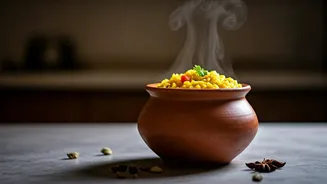
soup is to the West: the dish you eat when you’re feeling under the weather, when it’s raining outside, or when you just need a culinary hug. At its heart, khichdi is a humble, one-pot dish made from rice and lentils (usually moong dal) cooked together until they break down into a soft, porridge-like consistency. It’s typically seasoned with a pinch of turmeric and salt, and often tempered with ghee sizzled with cumin seeds or other simple spices. It’s nutritious, easy to digest, and profoundly satisfying in its simplicity.
The Unexpected Glow-Up
So, how did this beautifully simple dish find itself in the company of one of the world's most prized and expensive ingredients? The answer lies in the global evolution of modern cuisine. As chefs and diners become more adventurous, the old walls separating “fine dining” from “home cooking” are crumbling. Chefs at modern Indian restaurants, from New York to London to Mumbai, are looking inward at their own culinary heritage and asking how they can present it in new, exciting ways. Instead of borrowing from the West to seem fancy, they’re applying luxury techniques and ingredients to their own foundational dishes. Khichdi, with its creamy, neutral base, turns out to be the perfect canvas for bolder, more complex flavors. It’s a blank slate begging for an artist’s touch.
Enter the Mushroom and Truffle
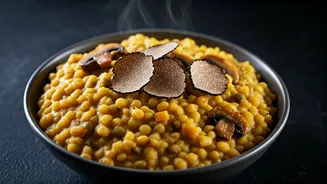
The pairing isn’t random. The magic of this fusion lies in a single, powerful concept: umami. Khichdi provides a warm, creamy texture, while sautéed wild mushrooms bring a deep, meaty earthiness. Drizzling it with truffle oil or topping it with freshly shaved truffle adds an intoxicating, pungent aroma and a layer of savory depth that elevates the entire experience from simple comfort to sophisticated indulgence. The truffle’s distinct flavor doesn’t overpower the khichdi; it complements it, weaving its musky notes into the soft bed of rice and lentils. The result is a dish that feels both familiar and thrillingly new. It’s a culinary dialogue between a rustic Indian kitchen and a lush European forest.
More Than Just a Mashup
This trend is about more than just throwing an expensive ingredient on a traditional dish. It signifies a powerful shift in how global cuisines are perceived. For decades, many international foods were expected to be “cheap and cheerful” in the American market. The rise of premium fusion dishes like truffle khichdi challenges that notion. It’s a confident declaration that the flavors of home, from any country, are worthy of the same reverence, creativity, and high-quality ingredients as a French cassoulet or an Italian risotto. In a way, mushroom truffle khichdi is to Indian food what lobster mac and cheese was to American comfort food a decade ago: a signal that a beloved classic is ready for its close-up on the main stage.
The Taste of Modern Comfort
So, what’s it like to eat? The first spoonful is a revelation. You get the immediate, soul-soothing warmth of classic khichdi, but it’s quickly followed by the rich, woodsy flavor of mushrooms and the unmistakable, decadent aroma of truffle. It’s creamy, savory, and deeply aromatic. It’s the kind of dish that makes you close your eyes for a second to fully absorb the experience. It manages to be both grounding and luxurious, a rare feat in the culinary world. It doesn’t replace traditional khichdi; it exists alongside it as a celebratory alternative—the version you have when you want to treat yourself while still feeling cared for.