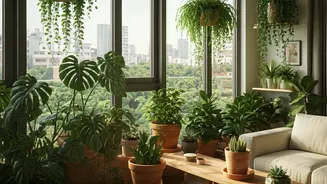



More Than Just Decoration
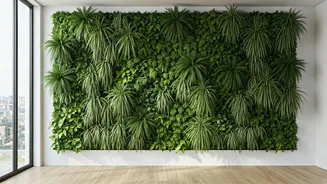
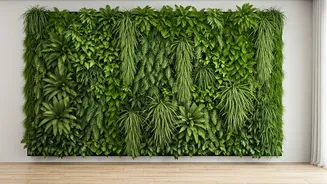
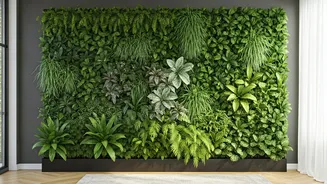
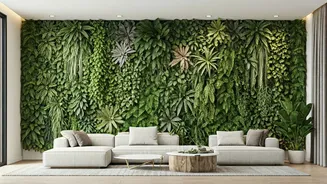
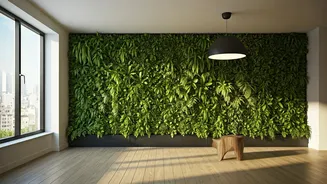
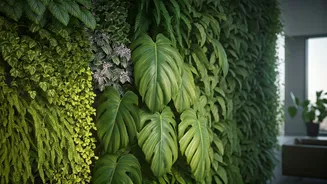
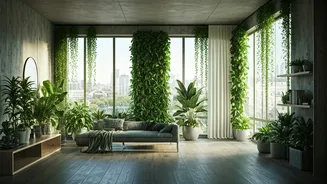
A plant wall, also known as a living wall or vertical garden, is exactly what it sounds like: a wall partially or completely covered with vegetation. But it represents something much deeper than a simple design choice. It’s a key element of biophilic
design, an architectural philosophy that seeks to connect building occupants more closely to nature. In cities where private green space is a luxury, vertical gardens are an ingenious solution. They utilize unused vertical real estate to create a lush, dynamic feature that serves as both art and a living organism. Instead of a framed print, your focal point becomes an ever-evolving tapestry of leaves, textures, and shades of green.
The Science of a 'Breathing Space'
The headline claim that plant walls make a space “breathe” is more emotional than literal, but it’s rooted in real benefits. Studies have consistently shown that exposure to indoor plants can reduce stress, lower blood pressure, and improve mood and concentration. The visual presence of greenery calms our nervous systems, which are often overstimulated by urban environments. While plants do filter airborne toxins—a fact famously studied by NASA—it’s important to have realistic expectations. You would need a dense jungle to significantly purify the air in an entire apartment. The primary benefit is psychological: the feeling of being in a fresh, vibrant, and life-filled space. A plant wall is a powerful visual cue to your brain to relax and de-stress, making your home a true sanctuary.
The DIY Approach for Renters and Budgets
You don’t need a custom-built, hydroponic system to create this effect. The beauty of the plant wall is its scalability. For a simple, budget-friendly start, consider fabric pocket planters. These are felt-like sheets with multiple pockets that can be hung from a sturdy curtain rod or hooks. Just add soil and small plants. Another popular option is a trellis. Install a simple wooden or metal grid a few inches from the wall and train climbing plants like pothos or ivy to grow up it. For an even easier approach, arrange a collection of wall-mounted planters in a tight, artistic cluster. This gives the impression of a single, cohesive green feature without the complex installation. These methods are often renter-friendly, as they can be installed with minimal damage to walls.
Pre-Built Systems for a Seamless Look
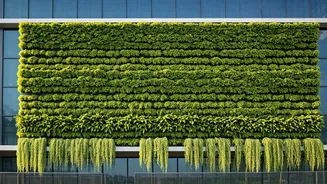
If you’re a homeowner or have a bigger budget, professional systems offer a stunning, integrated look. These often come in the form of modular panels that can be attached to a wall, complete with built-in irrigation to make watering foolproof. Some high-end versions are hydroponic, meaning they don’t use soil, which reduces weight and mess. Companies like GSky and AgroSci offer sophisticated living wall systems that are often seen in commercial spaces but are becoming more accessible for residential projects. While the initial investment is significant—potentially thousands of dollars depending on the size and complexity—the result is a breathtaking, low-maintenance feature that completely redefines a room.
Choosing the Right Plants for the Job
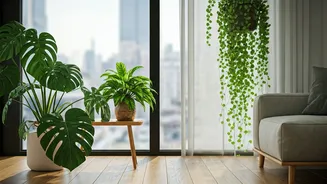
The success of your plant wall depends heavily on plant selection. You need hardy, relatively low-maintenance varieties that can thrive in indoor conditions. Trailing plants are a fantastic choice because they create a cascading, waterfall effect. Golden Pothos is nearly indestructible and thrives in various light conditions. Heartleaf Philodendron offers a similar look with beautiful, heart-shaped leaves. For upright structure, consider the Snake Plant, which is famously drought-tolerant and requires very little light. Spider Plants are also excellent, as they produce “pups” that dangle down, adding to the lush look. When choosing, consider the light your wall receives and select plants that match those conditions. Grouping plants with similar water and light needs will make maintenance far simpler.