





Beyond the Beige
For years, the design world was dominated by a specific kind of chic minimalism: think greige walls, Scandinavian simplicity, and a strict adherence to neutral tones. But a new wave of interior design, particularly visible among young urbanites in India,
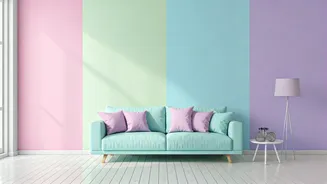
is joyfully rejecting that quiet aesthetic. Enter the pastel color-blocked wall. It’s a style defined by soft, dreamy hues—lilac, mint green, dusty rose, and baby blue—applied in bold, geometric shapes. Forget a single accent wall; this is about creating dynamic compositions. You might see a painted arch framing a headboard, a diagonal slash of color bisecting a living room, or two complementary pastels meeting in a clean, crisp line. It’s playful, personal, and a world away from the monochrome mood of the last decade.
The 'Dopamine Decor' Effect
So, why this sudden craving for color? Much of it is a direct response to the anxiety and confinement of recent years. The trend is a key part of what designers are calling “dopamine decor,” the practice of using color, texture, and light to create a home environment that actively boosts your mood. After being stuck indoors, many young people are looking to make their personal spaces feel more vibrant, optimistic, and life-affirming. Pastels, in particular, strike the perfect balance. They offer the psychological lift of color without the overwhelming intensity of primary brights. A room washed in soft peach and lavender feels energizing yet serene, creating a personal sanctuary that feels both calming and cheerful—a much-needed antidote to a chaotic outside world.
An Instagram-Ready Aesthetic
It’s impossible to separate this trend from the generation that’s pioneering it. For Gen Z, who grew up with social media, personal space often doubles as a content studio. A color-blocked wall is, in essence, a perfect, pre-made backdrop. The clean lines and pleasing color combinations are inherently photogenic, creating a visually interesting setting for selfies, TikTok videos, and product shots. The painted arch, a recurring motif, functions almost like a built-in filter, framing the subject and adding a touch of architectural interest to an otherwise plain room. In a digital-first world, your home’s aesthetic is an extension of your personal brand, and these walls are a clear, creative, and highly shareable statement.
DIY-Friendly and Budget-Smart
Perhaps the most crucial element driving this trend is its accessibility. This isn't a style that requires expensive wallpaper, custom furniture, or a professional interior designer. At its core, color-blocking is a high-impact, low-cost DIY project. All it takes is a roll of painter's tape, a level, and a few sample-sized pots of paint. This resonates deeply with a generation navigating economic uncertainty, rental agreements, and the desire for personalization on a budget. Instead of investing in expensive art, the wall itself becomes the artwork. It allows for radical transformation of a space with minimal commitment and cost, empowering young people to put their own stamp on their environment, even if it’s a temporary one.
A Global Mood, A Local Flavor
While the love for pastels and graphic shapes is a global Gen Z phenomenon, its expression in India has a unique flavor. The soft, modern palettes are often seen alongside traditional Indian elements—richly patterned textiles, carved wooden furniture, or brass decor—creating a fascinating fusion of old and new. This isn't about erasing cultural heritage in favor of a generic globalist aesthetic; it's about integrating a modern, international sensibility into a distinctly local context. It shows a generation that is confidently looking outward for inspiration while remaining grounded in its own culture, creating spaces that feel both globally connected and deeply personal.