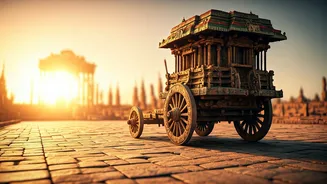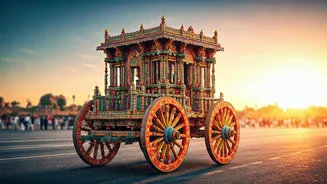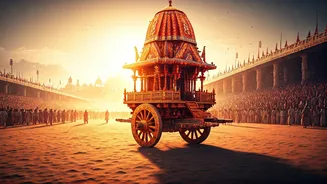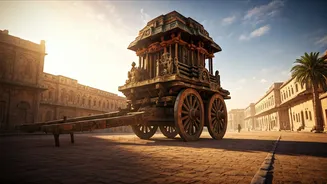





First Off, What Is the Rath Yatra?
At its heart, the Rath Yatra (literally "Chariot Journey") is a Hindu festival centered on Lord Jagannath, a form of the deity Vishnu. It takes place in the city of Puri in the eastern Indian state of Odisha. The main event involves transporting three
deities—Jagannath, his elder brother Balabhadra, and his sister Subhadra—from their home in the main Jagannath Temple to the Gundicha Temple, said to be their aunt's home, about two miles away. This isn't a simple trip. The deities are placed on three colossal, newly-built wooden chariots and pulled by hand by thousands of devotees through the streets. After a nine-day stay, they make the return journey. The event is a spectacle of color, sound, and raw devotion, broadcast live across India and attracting pilgrims from around the globe.
The Deities Taking a Road Trip
The stars of the show are the three deities, whose idols are unlike the typical sculpted stone or metal figures seen in many Hindu temples. They are carved from sacred neem wood, with large, round eyes and no visible hands or feet. This unique form has several origin stories, but it represents a more tribal, abstract conception of the divine. Lord Jagannath, whose name means "Lord of the Universe," is considered a living god. The festival is framed as his annual vacation. He leaves the sanctum of his temple, which is normally only accessible to Hindus, and comes out into the public, allowing people of all faiths and backgrounds to see him. This act of divine accessibility is a core tenet of the festival's enormous appeal.
These Aren't Your Average Parade Floats
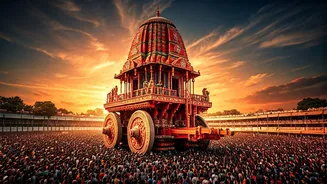
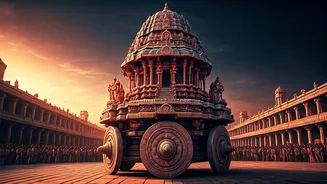
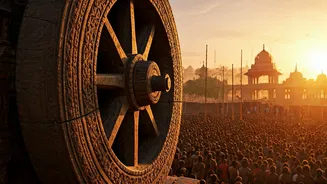
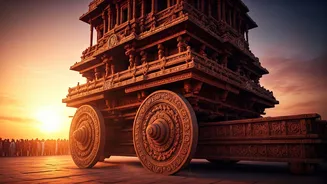
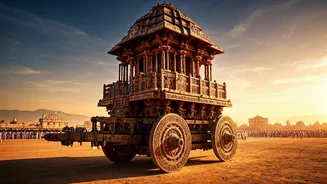
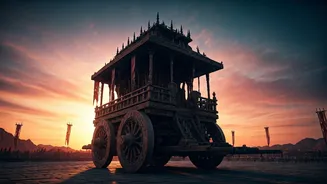
The term "chariot" barely does them justice. These are mobile temples. Jagannath’s chariot, Nandighosha, stands about 45 feet tall, has 16 wheels each seven feet in diameter, and is draped in vibrant red and yellow cloth. His siblings’ chariots are similarly immense. The most astonishing part? They are constructed from scratch every single year by a dedicated team of carpenters using traditional techniques passed down through generations. No blueprints, just hereditary knowledge. Specific types of wood are brought from designated forests, and the construction is a months-long ritual in itself. After the festival, the wood is dismantled and used as fuel in the temple's massive kitchen, which feeds thousands daily. The sheer scale, artistry, and disposability of these sacred structures are a huge part of the "devotional flex."
A Million-Person Mosh Pit of Faith
The energy on the streets during the Yatra is overwhelming. Picture a sea of people packed shoulder-to-shoulder, all pushing forward with a single purpose: to get close enough to touch the thick ropes used to pull the chariots. It is believed that pulling the ropes or even just witnessing the journey can grant spiritual merit and forgiveness of sins. The air thrums with the sound of gongs, cymbals, and chants of "Jai Jagannath!" (Victory to Jagannath!). It is chaotic, intense, and profoundly moving. This isn't passive viewership; it's active participation. For devotees, the physical effort of pulling the massive, lumbering structures through the crowded streets is a form of prayer, a tangible connection to the divine.
The Ultimate Act of Humility
For all its grandeur, the festival includes a ritual that powerfully underscores its spiritual message. Before the chariots begin their journey, the Gajapati King of Puri, the ceremonial head of the region and considered the god's chief servitor, performs a ritual called Chera Pahara. Dressed in simple white, he climbs onto each chariot and sweeps the platform with a golden-handled broom, sprinkling sandalwood water and flowers. This act symbolizes that in the eyes of the divine, everyone is equal, and even a king is but a humble servant. It’s a profound moment of humility amidst the monumental display of power and scale, beautifully balancing the spectacle with its spiritual core.