




What Is Aloo Pitika?
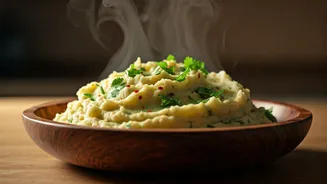
At its heart, Aloo Pitika is deceptively simple: it’s mashed potatoes. But comparing it to the buttery, creamy version common on American dinner tables would be like comparing a folk song to a symphony—both are music, but the soul is entirely different.
Aloo Pitika hails from Assam, a state in Northeast India known for its lush tea gardens and torrential monsoons. The dish is a staple in Assamese cuisine, a humble and beloved side that forms the backbone of countless meals. It consists of boiled or fire-roasted potatoes, mashed not with butter and milk, but with a vibrant mix of raw ingredients that deliver a punch of flavor: finely chopped raw onions, green chilies, and fresh cilantro.
The Secret Weapon: Pungent Mustard Oil
The true magic, the ingredient that elevates Aloo Pitika from a simple mash to a culinary icon, is raw mustard oil. If you’ve only ever had the milder, refined mustard oil used for cooking, you’re in for a surprise. The cold-pressed, pungent version used here is a condiment, not just a fat. It has a sharp, sinus-clearing quality reminiscent of wasabi or potent horseradish, a flavor known in Assamese as *jhaaj*. A generous drizzle of this assertive, golden-green oil is mixed into the potatoes, emulsifying with the starch and binding all the other ingredients together. It’s this pungent kick that cuts through the richness of the potato and makes the dish so uniquely addictive and warming—the perfect antidote to a damp, chilly day.
A Taste of the Assamese Kitchen
In Assam, Aloo Pitika isn't a standalone star; it’s a vital team player. It’s almost always present in a traditional Assamese *thali* (a platter featuring small bowls of various dishes). It serves as a comforting, starchy anchor alongside dal (lentil soup), stir-fried vegetables (*bhaji*), pickles (*achar*), and a mound of steamed rice. Its beauty lies in its accessibility. This is not fancy restaurant fare; it’s the everyday food of the people, prepared in minutes in kitchens from rural villages to bustling cities. The ingredients are cheap and readily available, making it a reliable source of comfort for everyone. This democratic nature is central to its identity as a comfort food—it belongs to everyone.
Beyond the Potato
While the classic potato version is the most common, *pitika* is more of a technique than a single recipe. The term refers to the act of mashing ingredients with mustard oil, onion, and chili. This versatile method is applied to a wide array of ingredients. You might find *Koni Aloo Pitika*, where a hard-boiled egg is mashed alongside the potato, adding a creamy richness. There’s also *Bengena Pitika*, made with fire-roasted eggplant that lends a smoky depth, similar to a simplified baba ghanoush. Other variations use roasted tomatoes, squash, or even small dried fish, each one offering a different texture and flavor profile but retaining that same comforting, pungent soul.
The Soul of Simplicity
So why is this dish so inextricably linked to the monsoon? It’s a convergence of practicality and emotion. During the heavy rains, when fresh produce can be harder to come by, potatoes and onions are pantry staples that endure. The dish requires no complex cooking, just boiling or roasting, making it easy to prepare when you’re cooped up indoors. But more than that, it’s about nostalgia. For anyone who grew up in Assam, the taste of Aloo Pitika is the taste of home, of a mother’s care, of simple meals shared while the world outside is awash with rain. It’s a testament to the idea that the most profound comfort often comes not from elaborate preparations, but from the simple, honest flavors of our childhood.