



A Legacy of Cool
Shimla’s reputation as a heat refuge is nothing new; it’s woven into its very identity. In the mid-19th century, the British Raj, desperate to escape the oppressive summer heat of Calcutta and later Delhi, designated this mountain town as their official
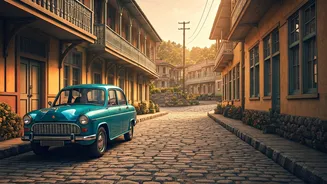
summer capital. For months each year, the entire government apparatus would decamp to these cooler climes, ruling the vast Indian subcontinent from a perch 7,000 feet above sea level. This history isn't just a footnote—it’s the reason for the town’s unique character. The grand administrative buildings, the mock-Tudor cottages, and the charmingly English names of lanes and landmarks all speak to a past built entirely around the concept of a cool, orderly escape.
The Beating Heart: The Mall and The Ridge
The true magic of Shimla for a modern visitor isn’t just the temperature drop, but the change of pace. The epicenter of this experience is The Mall Road and The Ridge, a sprawling, open-air promenade where traffic is famously restricted. While cities below choke on fumes and noise, here the dominant sounds are conversation, laughter, and the occasional whinny of a horse offering rides. Lined with shops, cafes, and bakeries, The Mall is a place for strolling, not rushing. Visitors browse for woolen shawls, snack on roasted corn-on-the-cob, and gather at Scandal Point—a real place with a rumored scandalous history involving a viceroy's daughter—to watch the sun set behind the mountains. The Ridge, an open space above The Mall, offers panoramic views and is home to the iconic Christ Church, whose neo-Gothic silhouette is a defining feature of the Shimla skyline.
An Architectural Time Capsule
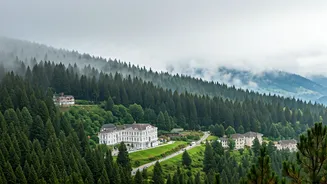
Unlike many modern resort towns, Shimla feels like a living museum. Its architecture is a delightful jumble of colonial styles. The Viceregal Lodge, now the Indian Institute of Advanced Study, is a breathtaking example of Scottish Baronial architecture that looks more like a castle from the Scottish Highlands than an Indian administrative building. Walking through its halls, you can almost hear the echoes of the pivotal political decisions made within its walls. Elsewhere, the Gaiety Theatre, with its perfectly preserved Victorian-era auditorium, still hosts performances. Even the humble post office and local municipal buildings carry an air of historic grandeur. This architectural heritage provides a visual feast and a constant reminder that you are somewhere truly different, a world away from the concrete and glass of the modern Indian metropolis.
Beyond the Town Center
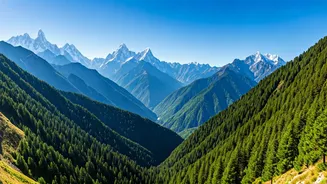
While The Mall Road is Shimla’s main artery, the surrounding hills offer their own adventures. A short but steep trek or a cable car ride leads to the Jakhu Temple, dedicated to the monkey god Hanuman. The temple itself is a vibrant spiritual site, but it’s the journey and the hundreds of mischievous resident monkeys that make it a memorable excursion. For those seeking even higher altitudes and more dramatic scenery, a day trip to Kufri is a popular choice. Just a short drive from Shimla, Kufri offers horseback riding, hiking trails, and, in the winter, skiing. These nearby attractions allow visitors to experience the raw, natural beauty of the Himalayas without straying too far from the comforts of their base in Shimla.
The Reality of Its Popularity
The headline's claim that "everyone" is heading to Shimla contains a kernel of truth. Its immense popularity, especially during peak season and heatwaves, brings challenges. The winding mountain roads leading into the town can become gridlocked, and accommodation can be scarce and expensive if not booked well in advance. The very charm that draws people in can feel strained by the sheer volume of visitors. For many, however, this is a worthy tradeoff. The traffic jams and crowds are seen as a small price to pay for breathing cool, pine-scented air and escaping a life-threatening heatwave. It’s a testament to Shimla’s enduring appeal that even with these pressures, its status as India's favorite mountain retreat remains unshakable.