



The Mango Capital's Quiet Crisis
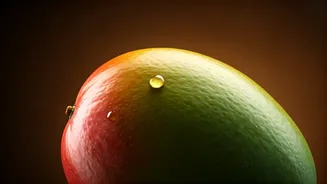
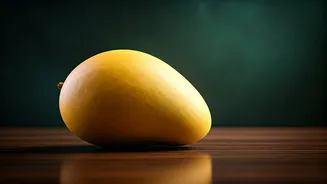
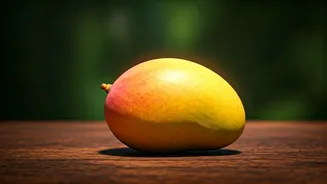
For most Americans, a mango is a mango—a sweet, kidney-shaped fruit that’s either reddish-green or golden yellow. But in the Malihabad region near Lucknow, the capital of India's Uttar Pradesh state, that singular idea dissolves into a dazzling, near-infinite
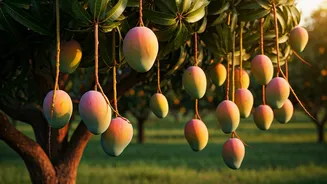
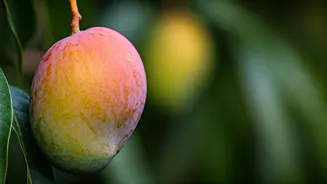
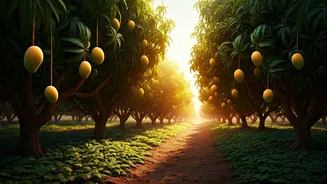
spectrum of flavor, color, and history. This is India’s famed “Mango Belt,” a place where the fruit is not just a commodity but the center of a centuries-old culture. For generations, orchards here have produced hundreds of distinct varieties, each with its own name, story, and unique profile. But this rich biodiversity is facing a silent threat. The demands of modern commerce favor uniformity, durability, and high yields. As a result, a single, commercially popular variety—the Dasheri—has come to dominate the landscape. It’s a delicious and reliable mango, but its rise has pushed countless other “heirloom” varieties to the edge of existence. With less market demand for fruits that may be smaller, more perishable, or simply less known, many farmers have been forced to replace their diverse groves with monocultures, threatening to erase a priceless genetic and culinary library.
The Mango Man and His Living Museum
At the heart of the conservation effort is a legendary figure named Haji Kaleem Ullah Khan, known affectionately as the “Mango Man.” A horticulturist with a magical touch, Khan has dedicated his life to preserving these forgotten fruits. His most famous achievement is a single, 100-year-old mango tree that he has painstakingly grafted with over 300 different varieties. The tree stands as a living museum, a testament to the region's botanical wealth. On its branches, you can find the “Anarkali,” a mango with two different layers of pulp, each with its own taste, or the “Khas-ul-Khas,” the “special of specials.” Khan doesn't see himself as just a farmer; he's a curator and an artist. He gives his new creations poetic names, like “Aishwarya” after the famous actress Aishwarya Rai Bachchan, to capture their beauty. His work is a defiant act of love against the tide of commercial agriculture, driven by a deeply-held belief that these ancient flavors are a cultural treasure that cannot be lost. He and other farmers like him are the guardians of this legacy, passing down grafting techniques and knowledge that have been in their families for centuries.
A Library of Forgotten Flavors
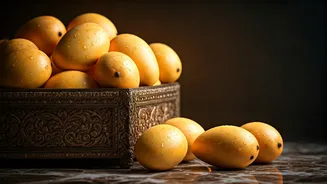
The mangoes being saved are not just novelties; they represent a universe of taste that the global market has overlooked. There is the Gulab Khas, which carries the distinct aroma of roses. The Asl-ul-Muqarrar is an ancient variety so prized that its name translates to “the real thing.” Some are fiberless and melt in your mouth like butter; others are intensely sweet with notes of honey, citrus, or even melon. They come in shapes and sizes that defy the standard supermarket image—some are small and round, others long and slender like a parrot’s beak, giving one variety its name, Totapuri. Each of these mangoes tells a story of the region’s history, climate, and soil. They were cultivated over centuries by princes and peasants alike, selected for their unique qualities long before supply chains and shelf life became the primary concerns. Losing them wouldn't just mean fewer types of fruit; it would mean losing a tangible connection to the past.
More Than Just Fruit
The fight to save Lucknow’s mangoes is a local story with global resonance. All over the world, agricultural biodiversity is shrinking as a handful of high-yield crops replace thousands of traditional varieties. This not only makes our food system more vulnerable to disease and climate change but also makes our diets less interesting and our cultures less rich. The work of Malihabad's farmers is a powerful counter-narrative. It champions the idea that value isn't just measured in profit margins but in flavor, history, and resilience. By maintaining these diverse orchards, they are ensuring that future generations can experience a heritage that would otherwise exist only in old books. Their living library of mangoes is a reminder that some of the most important treasures aren't kept in vaults, but are grown on trees.