






The Paradise Paradox
We’ve all seen the pictures, and many of us have lived the reality. You book a trip to a world-famous island paradise—think Phuket, Bali, or even parts of the Caribbean during high season—dreaming of pristine sand and quiet contemplation. What you find
is a frantic ballet of packed beaches, buzzing water-skis, and restaurants with lines out the door. The very popularity that put the destination on the map can become its undoing, transforming a serene escape into a stressful dash for resources. It’s the great irony of modern travel: the search for an unspoiled corner of the world often leads us to places that feel anything but.
An Alternative in the Bay of Bengal
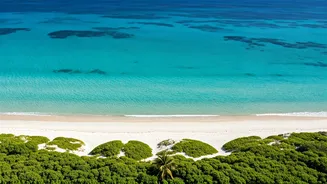
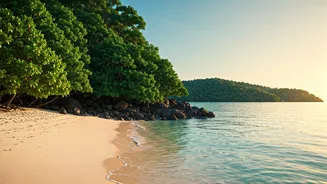
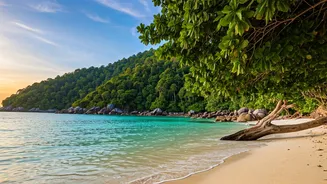
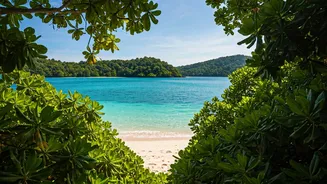
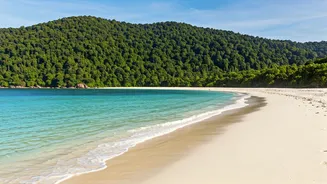
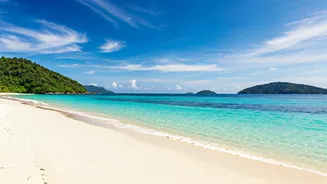
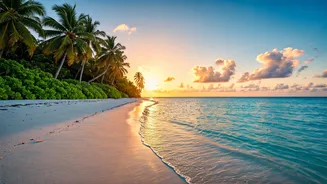
Now, imagine a different scene. You’re on a crescent of white sand so fine it squeaks underfoot, flanked by a turquoise sea on one side and a lush, primeval forest on the other. The loudest sound is the gentle lapping of waves. This isn't a fantasy; it’s a typical afternoon in the Andaman Islands. A remote chain of over 300 islands belonging to India, the Andamans are geographically closer to Myanmar and Thailand but remain a world apart in terms of tourist density. For the American traveler willing to go a bit further, they represent one of Asia’s last accessible, relatively undeveloped beach frontiers.
What 'Empty' Really Means
Let’s be clear: the Andamans aren’t literally empty. The main hubs, like Havelock Island (now officially Swaraj Dweep) and Neil Island (Shaheed Dweep), have a well-established but low-key tourism infrastructure of eco-resorts, beach huts, and dive shops. But the scale is completely different. There are no towering high-rises, no global fast-food chains, and no sprawling mega-resorts. 'Chaos' is a traffic jam of scuba divers boarding their boats, not a multi-lane highway. 'Crowded' on the world-renowned Radhanagar Beach—often cited as one of Asia's best—means sharing a half-mile of sand with a few dozen people at sunset, not thousands. The islands’ protected status and remote location have naturally limited development, preserving a sense of raw, untouched beauty that has vanished from more mainstream destinations.
Beyond the Beach Lounger
The appeal here goes far beyond just a quiet place to sunbathe. The Andaman Sea is a premier destination for scuba diving and snorkeling, with vibrant coral reefs teeming with life. The Mahatma Gandhi Marine National Park offers a glimpse into a protected underwater ecosystem that is thriving. On Havelock, you can kayak through mangrove creeks at night to witness the magic of bioluminescent plankton, which makes the water sparkle with every paddle stroke. The vibe is slow and restorative. It’s a place for reading books, taking long walks, and enjoying fresh seafood at a family-run shack, not for bar-hopping until 4 a.m. It forces a downshift, replacing a packed itinerary with simple, profound moments of natural wonder.
The Practicalities of Paradise
Getting to the Andamans requires a bit more planning than a direct flight to Cancún, but it’s straightforward. For U.S. citizens, the journey begins with securing an Indian tourist visa. From there, you’ll fly into Port Blair, the archipelago’s capital, via a connecting flight from a major Indian city like Chennai, Kolkata, or Delhi. From Port Blair, government and private ferries are the lifeline connecting you to popular islands like Havelock and Neil. The best time to visit is from October to May, outside the heavy monsoon season. While some restricted areas require special permits (mostly protecting indigenous tribal lands), the main tourist islands are easily accessible. The extra steps are a feature, not a bug—they are precisely what keeps the islands from becoming another overrun hotspot.