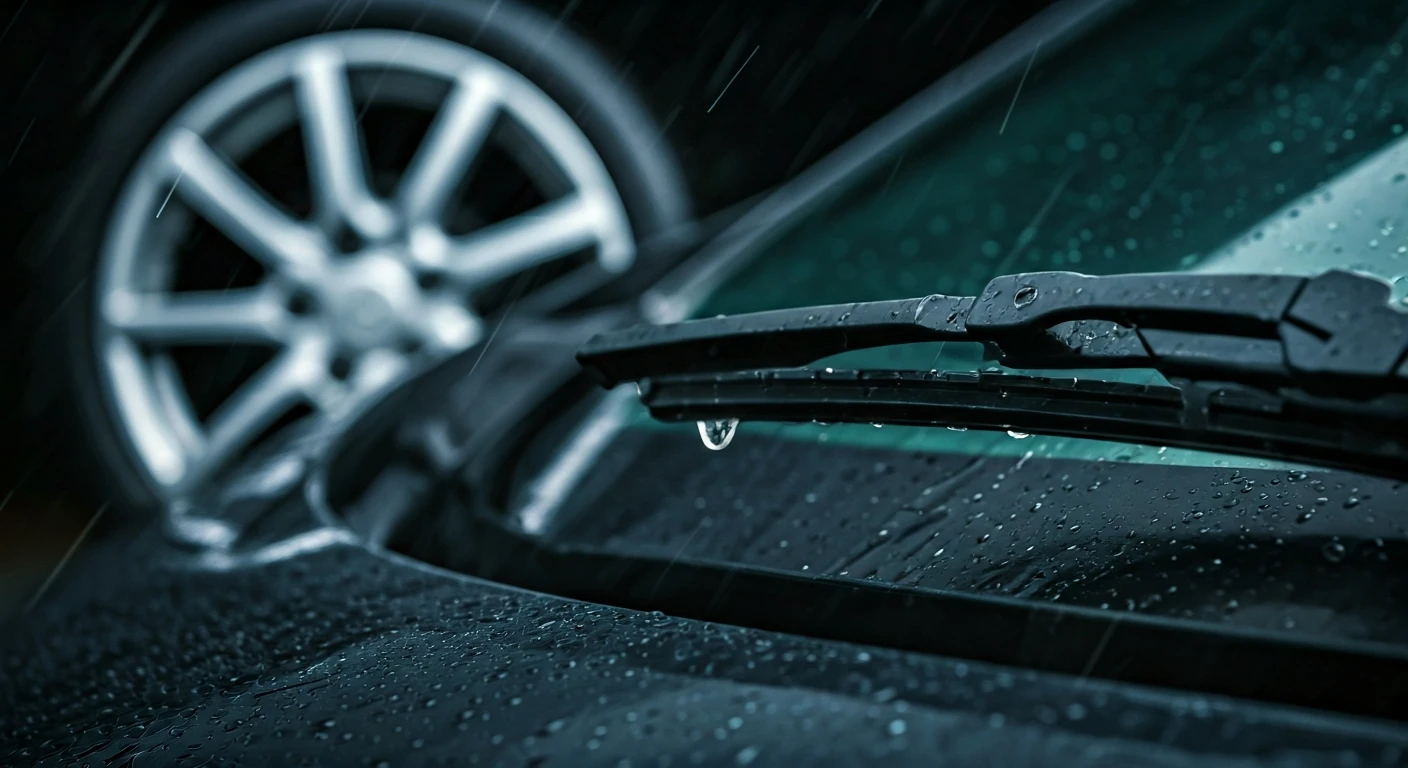









1. Treat Your Windshield Like a Raincoat
Your wiper blades can only do so much. The real game-changer is treating your exterior glass with a hydrophobic coating. Products like Rain-X, Aquapel, or other glass water repellents work by creating an ultra-slick surface that forces rain to bead up
and roll right off. At highway speeds, you’ll find you barely even need your wipers. Application is simple: clean your windshield thoroughly, apply the product with a cloth as directed, let it haze over, and then buff it off until the glass is crystal clear. This invisible barrier not only sheds water but also makes it easier to scrape off ice in the winter and remove bugs in the summer. For a few dollars and 15 minutes of work, you get months of dramatically improved visibility.
2. Deep Clean Your Wiper Blades
If your wipers are streaking, they might not need replacing—they might just be dirty. Over time, road grime, wax, and grit build up on the rubber edge, preventing it from making clean contact with the glass. Instead of buying new blades right away, give them a cleaning first. Dampen a clean microfiber cloth with some rubbing alcohol or a specialized wiper fluid. Gently pinch the blade and wipe it down from end to end. You’ll be shocked at the black gunk that comes off. Repeat until the cloth comes away clean. This simple hack restores the blade’s effectiveness, eliminates annoying streaks, and can extend the life of your wipers by a full season.
3. Banish Interior Fog with Shaving Cream
There’s nothing worse than having your windows fog up from the inside while it’s pouring outside. This happens when the interior of your car is warm and humid, and the glass is cold. While your defroster works, it can be slow. For a lasting fix, turn to a classic car-detailing trick: shaving cream. The same surfactants that allow a razor to glide over skin also create a protective film on glass that prevents water vapor from condensing. Apply a small amount of basic, non-gel shaving cream to a cloth and wipe a thin layer onto the inside of your windshield and windows. Then, with a separate, clean cloth, buff it all off until it’s completely clear. You won’t see any residue, but you’ll have an anti-fog barrier that lasts for weeks.
4. Restore Your Hazy Headlights
Driving in the rain at night is hard enough without dim, yellowed headlights. Over time, the polycarbonate lenses on modern cars become oxidized by UV rays, which scatters the light beam and dramatically reduces your visibility. You don't need a professional to fix this. Auto-parts stores sell affordable headlight restoration kits that include a series of fine-grit sandpaper pads and a polishing compound. The process involves wet-sanding the hazy outer layer off the lens and then polishing it back to a factory-clear shine. It takes about an hour, but the result is a massive improvement in how far and wide your headlights illuminate the road, cutting through the rain and making you more visible to other drivers.
5. Check Your Tires with a Penny
Your tires are your single most important safety feature in the rain. The deep grooves, or treads, are designed to channel water out from under the tire, allowing the rubber to maintain contact with the pavement. When the tread wears down, that water has nowhere to go, and your car can hydroplane—literally floating on a thin layer of water with no steering or braking control. You can easily check your tread depth with a penny. Stick the penny into a tread groove with Lincoln's head upside down. If you can see the top of Abe's head, your treads are too shallow (below 2/32 of an inch) and the tires need to be replaced immediately for safe wet-weather driving.
6. Unclog Your Car's Hidden Drains
Ever noticed a mysterious damp spot on your floor mat or a drip from the headliner after a storm? The culprit is likely a clogged drain. Cars have hidden drainage channels, called cowls, located at the base of the windshield (under the plastic trim) and around sunroofs. These are designed to route rainwater safely away from the cabin. But over time, they fill up with leaves, pine needles, and other debris. When they clog, water backs up and finds its way inside. Use a pair of pliers to pull out large debris, and then use compressed air or a flexible wire (like a straightened coat hanger, used gently) to clear the passages. Keeping these drains clear prevents interior water damage, musty smells, and electrical problems.