





1. Shape the Earth to Capture Water
The single most important prep work you can do is earth-shaping. Monsoons don't deliver gentle showers; they unleash torrential downpours. Instead of letting that precious water sheet off your hard-baked soil and run into the street, you want to capture
it. For trees and large shrubs, this means creating or reinforcing basins—shallow, bowl-like depressions around the base. The basin should extend to the plant's dripline (the edge of its canopy). For sloped areas or garden beds, build low, curved earthen mounds called berms. These act like miniature dams, slowing water down, preventing erosion, and giving it time to sink deep into the soil where plant roots can access it for weeks.
2. Apply a Thick Layer of Mulch
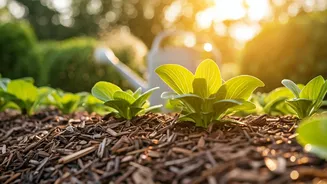
Mulch is a monsoon gardener's best friend, serving two critical roles. First, a thick layer (3-4 inches) of organic mulch like wood chips or straw acts as a sponge, absorbing the initial impact of heavy raindrops. This prevents soil from compacting and crusting over, which would otherwise cause water to run off. Second, it dramatically reduces evaporation during the hot, dry days leading up to and between storms, keeping the soil beneath it cooler and more moist. This pre-hydrated soil is far better at absorbing a sudden deluge than bone-dry dirt. Avoid rock mulch in areas where you want to absorb water; it gets extremely hot and doesn't aid water penetration in the same way organic material does.
3. Prune for Wind, Not for Shape
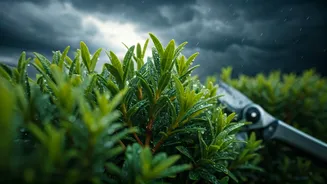
Monsoon storms are famous for their powerful winds, called downbursts, which can snap branches and even topple entire trees. June is the time for strategic pruning. The goal isn't to create a perfect shape, but to increase the plant's resilience. Focus on thinning the canopy of dense trees and shrubs. Removing some of the inner branches allows wind to pass through the plant rather than pushing against it like a sail. Also, be sure to remove any dead, damaged, or weakly attached branches that are likely to break off and become dangerous projectiles in a storm. For top-heavy plants like some palms or cacti, this is an essential safety step.
4. Audit Your Irrigation System
An automated irrigation system can be a huge liability during monsoon season. Running your sprinklers or drip lines on a regular schedule when the sky is delivering inches of free water is wasteful and can lead to root rot and other fungal diseases. Before the first storm hits, test your system to ensure you know how to turn it off completely. If your controller has a "seasonal adjust" or "rain delay" function, learn how to use it. The best practice is to switch your system to manual operation. Water only when you see signs of stress, and never water when a storm is in the forecast. Let nature do the work.
5. Plan for Inevitable Overflow
Even with perfect basins and berms, an intense monsoon can deliver more water than your garden can absorb. You need a plan for this overflow. Identify the natural low spots in your yard and think about where you want that excess water to go. The goal is to direct it away from your home's foundation, patios, and other structures. You can create subtle channels, or swales, lined with river rock to create functional, attractive dry creek beds that come to life during a storm. This passive water-harvesting technique safely guides water to street drains or larger, thirstier plants at the edge of your property, preventing pooling and potential property damage.