

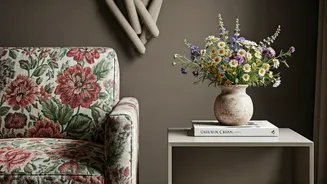

The Escape from 'Fast Furniture'
Walk into any number of homes today and you might feel a sense of déjà vu. The same streamlined coffee table, the same ubiquitous accent chair, the same perfectly symmetrical gallery wall. In an era dominated by 'fast furniture' and big-box convenience,
it’s easier than ever to assemble a home that is stylish, on-trend, and utterly impersonal. While there's nothing wrong with affordable, accessible design, a space saturated with mass-produced items can begin to feel like a showroom rather than a sanctuary. It lacks a certain depth, a narrative quality that reflects the unique lives of the people who live there. The smooth, flawless surfaces of factory-made goods can, ironically, make a space feel cold and anonymous, missing the warmth of the human touch.
Every Object Tells a Story
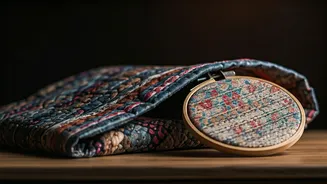
The single most powerful quality of a handmade piece is its story. A machine-made ceramic mug is simply a vessel for coffee. A hand-thrown mug, however, is a story you can hold. It carries the faint impression of the potter's fingers, the unique drip of the glaze, the vision of an individual artist. This narrative layer adds profound value. Whether it’s a quilt stitched by a grandparent, a painting bought from a student art fair, or a wooden bowl discovered at a rural craft market, the object becomes more than decor. It’s a memory, a connection to a person or a place. This storytelling element is what transforms a house into a home, weaving your personal history into the very fabric of your environment. These aren't just things; they're artifacts of a life well-lived.
The Beauty of Imperfection
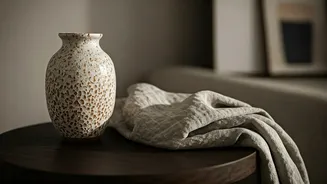
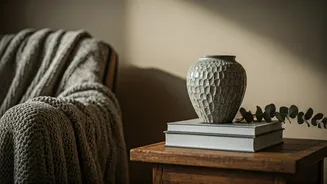
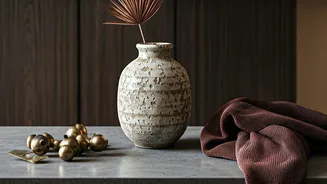
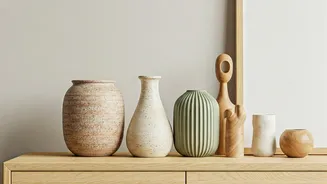
Mass production prizes uniformity and perfection. Any item deviating from the identical mold is considered a defect. In contrast, handmade goods celebrate the beauty of imperfection. The slight asymmetry of a hand-blown glass vase, the organic texture of a hand-loomed rug, or the subtle variations in a block-printed textile are not flaws—they are proof of authenticity. These small irregularities are what give an object its soul. Our eyes and hands are drawn to these details, which provide a subtle, tactile richness that sterile, perfect surfaces cannot replicate. In a world saturated with digital gloss and flawless filters, surrounding ourselves with things that are beautifully, honestly imperfect helps ground us. It creates a more forgiving, human, and relaxed atmosphere.
How to Start Small
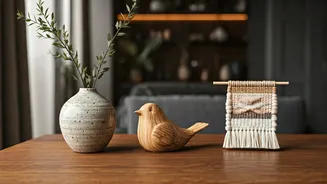
Incorporating handmade items doesn't require a massive budget or a complete overhaul of your decor. The key is to start small and focus on pieces with high personal impact. Instead of buying another generic decorative object, save up for a single piece of art from a local artist you admire. Swap out your standard-issue mugs for ones made by a local potter. Visit farmer's markets, craft fairs, and online marketplaces like Etsy not just to buy, but to discover makers in your community and beyond. Think about high-touch items you use daily: a cutting board, a soap dish, a favorite throw blanket. Upgrading just one of these to a handmade version can bring a surprising amount of daily joy and change the entire feel of a routine.
A Curated, Not Decorated, Home
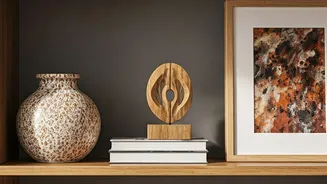
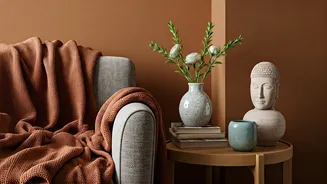
Ultimately, moving toward handmade pieces is a shift in mindset. It's about moving from decorating—filling a space with things that 'fit'—to curating—thoughtfully selecting items that you love and that tell your story. You don't need a home full of expensive, one-of-a-kind art. A few well-chosen pieces can do all the heavy lifting, acting as focal points that radiate character throughout a room. A striking, hand-carved sculpture on a bookshelf or a single, vibrant textile used as a wall hanging can instantly elevate an entire space, making everything around it feel more special and intentional. The goal isn't to reject all mass-produced items, but to create a balance that feels authentic to you.