



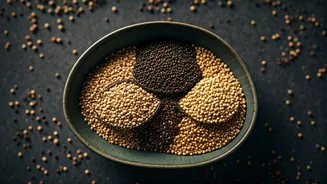
Breaking the Superfood Mold
For years, the American wellness journey has been paved with imported ingredients. We learned to pronounce 'keen-wah,' debated the ethics of our avocado toast, and tracked the long-distance journey of our goji berries. These foods, while nutritious, often
came with complex global supply chains and a faint whiff of cultural appropriation. The trend cycle was predictable: an exotic ingredient is 'discovered,' it floods Instagram, and its price skyrockets, sometimes creating economic instability in its native regions. Millet feels different. It sidesteps the 'exotic discovery' narrative because, for much of the world, it has never been obscure. It’s an ancient staple. But for the American wellness consumer, its re-emergence isn't tied to a distant, mystical origin story. Instead, its appeal is rooted in something much closer to home: agricultural resilience and local potential.
The Homegrown Advantage
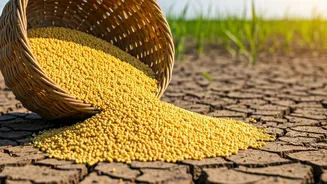
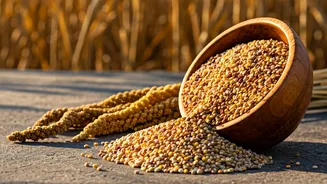
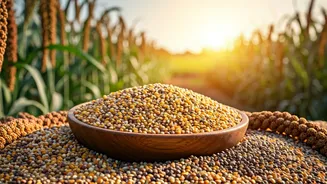
Here's the crucial difference: unlike many of its trendy predecessors, millet is remarkably well-suited to grow in the United States. It's not a fragile crop that demands a specific, far-flung climate. Millets are a group of hardy, drought-resistant cereal grains that thrive in semi-arid conditions where thirstier crops like corn or wheat struggle. States like Colorado, Nebraska, and South Dakota are already significant producers, often for birdseed and animal feed. But now, as demand for human consumption rises, farmers have a powerful incentive to scale up production for the local market. This shift has profound implications. A wellness trend powered by domestically grown millet means a smaller carbon footprint, more support for American farmers, and a more stable, predictable supply chain. It’s a farm-to-table ethos applied not just to heirloom tomatoes, but to the very foundation of our grain bowls.
A Culinary Chameleon
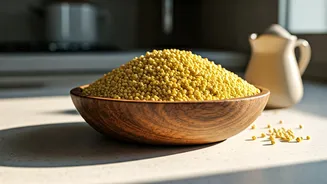
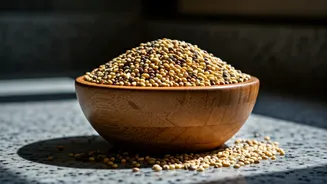
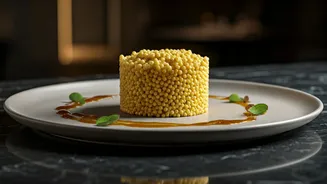
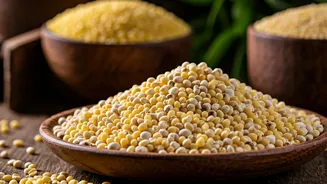
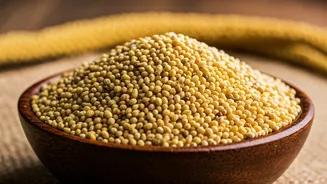
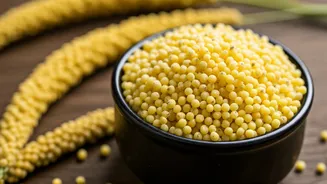
Of course, none of this would matter if millet didn't deliver on taste and nutrition. Nutritionally, it’s a powerhouse. Naturally gluten-free, it's packed with fiber, protein, and essential minerals like magnesium and phosphorus. Its low glycemic index makes it a great choice for sustained energy without the spike-and-crash of more processed carbs. In the kitchen, millet is a true chameleon. When cooked with more water, it becomes a creamy, comforting porridge, a fantastic alternative to oatmeal. When cooked with less water and toasted first, it turns into a light, fluffy grain that can stand in for couscous or rice in salads and pilafs. Popped like corn, it becomes a crunchy snack. Ground into flour, it yields delicate, slightly nutty baked goods. Chefs are embracing this versatility, using it as a base for hearty grain bowls, a crispy coating for fried chicken, or even fermenting it into savory pancakes. It has a mild, slightly sweet flavor that allows it to absorb the tastes of whatever it’s cooked with, making it a flexible team player in any dish.
An Ancient Grain's Modern Moment
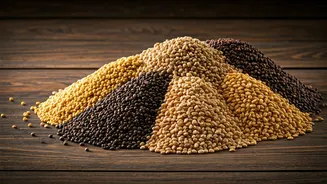
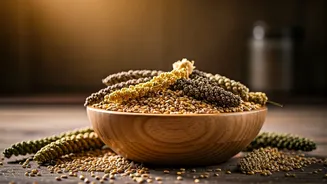
Millet isn't a fad; it’s a revival. It’s one of the oldest cultivated grains in human history, with evidence of its consumption dating back over 7,000 years in Asia and Africa. This deep history lends it an air of authenticity that many engineered health products lack. The United Nations even designated 2023 as the International Year of Millets, recognizing its potential to combat food insecurity and promote sustainable agriculture globally. This global push has created a perfect storm for its rise in the U.S. It aligns with our growing interest in 'ancient grains,' our demand for gluten-free options, and a collective desire for more sustainable food systems. Millet isn’t just a food; it’s a story about resilience, adaptability, and the power of looking to both the past and our own backyard for solutions.