





1. Find Serenity in Ancient Monasteries
Sikkim's landscape is dotted with over 200 monasteries, or gompas, each a spiritual sanctuary and a time capsule of Tibetan Buddhism. The most iconic is Rumtek Monastery, the seat of the Karma Kagyu lineage. As you approach, the massive, fortress-like
structure appears, adorned with intricate murals and woodwork. Inside, the air is thick with the scent of incense and butter lamps. The low hum of chanting monks and the occasional clang of a cymbal create a deeply meditative atmosphere. Don’t just look at the golden deer and Dharma wheel on the roof; take a moment to sit, breathe, and absorb the palpable tranquility. For a more historic feel, visit the Pemayangtse Monastery near Pelling. Founded in the 17th century, it’s one of the oldest in Sikkim and houses an incredible seven-tiered wooden sculpture depicting the heavenly palace of Guru Rinpoche, a masterpiece that took its creator five years to complete in solitude.
2. Get Lost in a Riot of Color
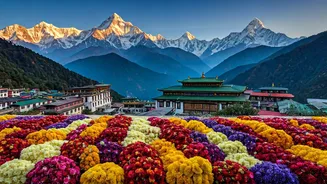
Known as the “Land of Orchids,” Sikkim is a botanist’s dream. The state boasts over 5,000 species of flowering plants, including 600 types of orchids and more than 35 species of rhododendrons that paint the hillsides red, pink, and white in the spring. You don’t have to be a horticulturalist to appreciate this natural bounty. A simple stroll through Gangtok’s Flower Exhibition Centre near White Hall offers a dazzling, accessible display. The glass-housed nursery is a riot of color year-round, showcasing seasonal blooms from delicate primulas to vibrant celosias. For a more local experience, wander through the produce section of Lal Bazaar, Gangtok’s main market. Amidst the stalls selling fresh vegetables and local cheeses, you'll find vendors with bundles of gladioli, roses, and other seasonal flowers, offering a glimpse into the everyday beauty that defines Sikkimese life.
3. Greet the World's Third-Highest Peak
The silent, colossal presence of Kanchenjunga looms over Sikkim. Seeing the world's third-highest mountain is not just a view; it's an event. The most sought-after moment is sunrise, when the first rays of light hit the peaks, turning them from a soft grey to a brilliant, fiery gold—a spectacle locals call the “Sleeping Buddha” coming to life. While the view is often visible from the capital, Gangtok, the town of Pelling in West Sikkim is arguably the best vantage point. From here, the mountain range feels astoundingly close, an immense wall of snow and ice dominating the horizon. Hotels and guesthouses in Pelling are built to maximize this vista, with many offering terraces or large windows facing the range. Waking up before dawn, wrapping yourself in a warm shawl, and watching the alpine glow spread across the five peaks of Kanchenjunga is a humbling experience that will stay with you long after you've left.
4. Taste the Culture
Beyond its headline attractions, the soul of Sikkim is found in its culture and cuisine. The state is a melting pot of Nepali, Bhutia, and Lepcha communities, creating a unique cultural fabric. This is most deliciously experienced through its food. You can't leave without trying the momos—steamed dumplings filled with meat or vegetables—served with a fiery red chili paste. You'll find them everywhere, from street-side stalls to upscale restaurants. Another staple is thukpa, a hearty noodle soup perfect for the cool mountain air. For a truly local flavor, try sinki, a fermented radish pickle, or gundruk, a fermented leafy green that adds a tangy kick to soups and curries. Exploring Sikkim is as much a journey for your palate as it is for your eyes and spirit, offering a complete sensory immersion into Himalayan life.