




The Psychology of a Golden Glow
Think about the places you associate with luxury and relaxation: a high-end restaurant, a cozy boutique hotel lobby, or a tranquil spa. What do they have in common? They are almost always bathed in warm, soft light. This isn't an accident. Harsh, cool-toned
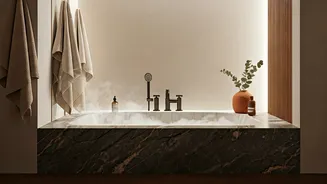
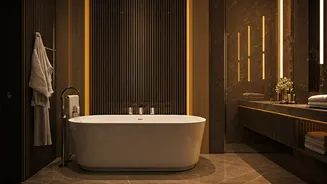
fluorescent light is associated with clinical, institutional settings like offices and hospitals. It’s functional, but it’s rarely inviting. Warm light, on the other hand, mimics the glow of candlelight and firelight, sources of light and heat that humans have found comforting for millennia. This ambient glow has a powerful psychological effect, signaling our brains to relax and unwind. It makes spaces feel intimate, sophisticated, and safe. When you bring that same quality of light into a bathroom, you instantly elevate it from a sterile, functional room to a personal sanctuary. It makes materials like tile, stone, and metal look richer and skin tones appear healthier and more vibrant, which is the very definition of a flattering environment.
Learn to Speak the Language of Lightbulbs
Achieving this effect starts with choosing the right lightbulb, and two numbers are critical: Kelvin (K) and the Color Rendering Index (CRI). Don't let the technical terms intimidate you; they're easy to understand once you know what to look for on the box. **Kelvin (K)** measures the color temperature of the light. Lower numbers mean warmer, more yellow light, while higher numbers mean cooler, bluer light. For that luxurious, spa-like feel, you want bulbs in the **2700K to 3000K** range. This is often labeled “Soft White” or “Warm White.” Anything over 4000K will start to feel sterile and commercial. **Color Rendering Index (CRI)** measures how accurately a light source reveals the true colors of objects. It’s rated on a scale of 0 to 100, with 100 being the quality of natural daylight. A low CRI bulb can make even the most beautiful tile look dull and skin tones appear washed out. Look for a **CRI of 90 or higher** to ensure everything in your bathroom—from your towels to your own reflection—looks its absolute best.
Layer Your Light for Function and Feel
A single, harsh overhead light (often unflatteringly called a “boob light”) is the fastest way to make a bathroom feel cheap and utilitarian. Professional designers think in layers to create a space that is both functional and atmospheric. * **Ambient Light:** This is the overall illumination for the room. It could be a central flush-mount fixture or recessed lighting. Make sure the bulbs here are in that warm 2700K-3000K range. * **Task Light:** This is the most crucial layer for a bathroom, focused on the vanity area. Instead of a single fixture above the mirror, which casts unflattering shadows, opt for a pair of sconces mounted on either side of the mirror at roughly eye level. This provides even, cross-illumination for tasks like shaving or applying makeup. * **Accent Light:** If you have an architectural feature, a piece of art, or beautiful tile work in a shower niche, a small, directed accent light can highlight it, adding depth and a custom-designed feel to the space.
Install a Dimmer Switch (It’s a Game Changer)
If you make only one change, make it this one. Installing a dimmer switch is a relatively simple and inexpensive electrical job, but it provides an enormous return in ambiance. A dimmer gives you complete control over the mood of your bathroom. You can have bright, clear light when you need it for grooming routines in the morning, and then dim it down to a soft, warm glow in the evening for a relaxing bath. This versatility is the hallmark of high-end design. It allows a single room to serve multiple purposes, shifting from a practical space to a restorative retreat with the simple turn of a dial. Make sure to buy dimmable LED bulbs to go with your new switch, as not all LEDs are designed to be dimmed and may flicker or hum otherwise.