




Why This Is a 'Hack,' Not a Chore
Let’s reframe 'food safety.' For too long, it’s sounded like a tedious lecture from a health inspector. But on a road trip, it’s the secret code to a better experience. Thinking about how you pack and store food isn’t just about avoiding a nasty bout of
food poisoning that could derail your vacation; it’s about unlocking a new level of freedom and savings. The real 'hack' is realizing that a well-packed cooler means you’re not beholden to the limited, expensive options along the interstate. You can skip the long drive-thru lines, avoid paying $4 for a bottle of water, and eat fresh, delicious food at a scenic overlook instead of a crowded food court. It transforms your meals from a travel problem to be solved into a pleasant part of the journey itself.
Master the Art of the Cooler
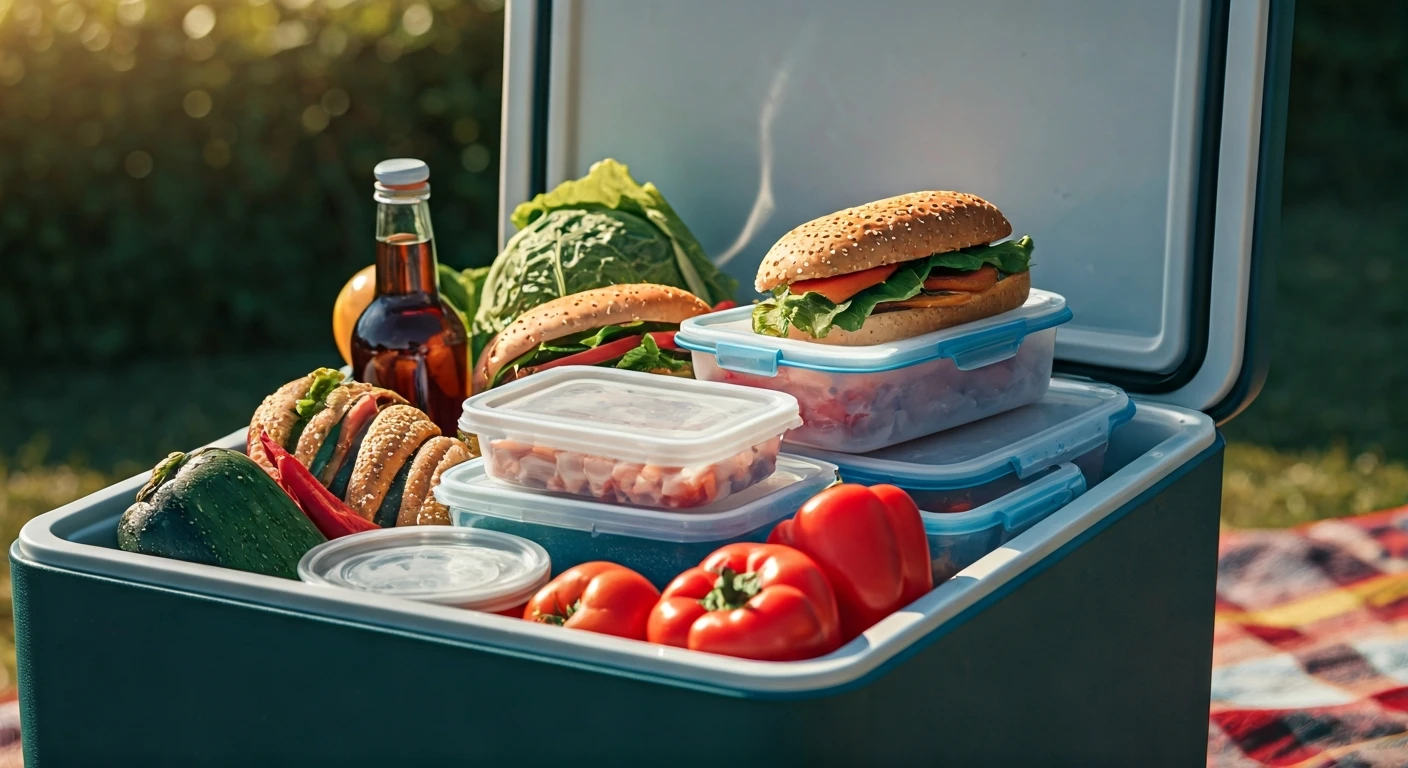
Your cooler is your portable refrigerator, and it needs to be treated with respect. The single most important rule is keeping cold food below 40°F, the threshold where bacteria begin to multiply rapidly. To do this, you need a strategy. First, pre-chill your cooler overnight by bringing it inside and filling it with ice or frozen gel packs. When you’re ready to pack, use a combination of ice types: solid block ice lasts longer and is great for the bottom, while cubed ice can fill in the gaps. Pack your food in reverse order of use—items you'll need last go on the bottom. Raw meat should be double-wrapped and stored at the very bottom to prevent juices from contaminating anything else. Finally, fill any empty air space with more ice or even crumpled newspaper; air is the enemy of cold.
Pack Foods That Go the Distance
Not all foods are created equal when it comes to travel. The best road-trip foods are durable, require minimal prep, and taste good cold or at room temperature. Think whole fruits like apples and bananas, hard cheeses, cured meats, and sturdy vegetables like carrots and bell peppers. Sandwiches are a classic for a reason, but use hearty bread and keep fillings like mayonnaise or tuna salad in a separate, well-chilled container to assemble just before eating. This prevents a tragic, soggy sandwich situation. For snacks, skip the greasy chips and opt for trail mix, granola bars, and pretzels. And here’s a pro tip: freeze water bottles and juice boxes to use as extra ice packs that you can drink as they thaw.
Rules of the Road (and the Cooler)
Once you're on the move, discipline is key. The more you open the cooler, the faster the cold air escapes. A brilliant hack is to use two coolers: one for drinks and frequently accessed snacks, and a second one for perishable food that should only be opened at mealtimes. This keeps your main food supply consistently cold. Keep the coolers inside the air-conditioned car rather than in a hot trunk. When you stop, take the cooler with you if you're leaving the car for an extended period in the sun. And always have hand sanitizer or sanitizing wipes on hand. A quick clean before you dig into the snacks can prevent the transfer of germs from gas pumps and rest stop doors to your food.
The Temperature Danger Zone
The guiding principle for all of this is avoiding the 'Temperature Danger Zone.' The USDA defines this as the range between 40°F and 140°F, where bacteria can double in number in as little as 20 minutes. A good cooler packed correctly should keep food safely below 40°F. But if you have any doubt, use a food thermometer. If perishable food like meat, dairy, or cooked leftovers has been in the danger zone for more than two hours (or one hour if the outside temperature is above 90°F), it's not worth the risk. When in doubt, throw it out. The money you save by packing your own food is quickly negated by a trip to an urgent care clinic.