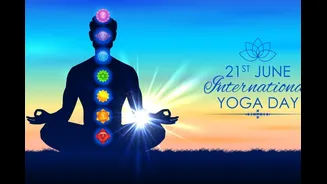







More Than Just a Calendar Date
First, let's be clear: this isn't just a hashtag holiday. Established by the United Nations in 2014 after being proposed by India, the International Day of Yoga has a specific purpose: to raise awareness worldwide of the many benefits of practicing yoga.
The date, June 21st, was chosen as it's the summer solstice, the longest day of the year in the Northern Hemisphere, holding special significance in many parts of the world. The UN resolution recognized yoga’s “holistic approach to health and well-being” and its power to provide “a sanctuary from the stresses of modern life.” Unlike a fleeting trend, this day is rooted in a global consensus that the principles behind yoga—harmony between mind and body, thought and action—are universally valuable.
From Ancient Practice to Modern Phenomenon
While yoga’s roots stretch back thousands of years in India, its journey to becoming a staple of American wellness is a more recent story. Once considered a niche spiritual pursuit, it exploded into the mainstream over the past few decades. Today, yoga studios are as common as coffee shops in many U.S. cities, and an estimated 300 million people practice it globally. The International Day of Yoga cleverly taps into this existing momentum. It gives seasoned yogis a day to celebrate their practice publicly and offers a welcoming, low-pressure entry point for the curious. It’s a brilliant fusion of ancient philosophy and modern marketing, creating a focal point for an activity that has already woven itself into the fabric of contemporary life.
A Search for Stillness in a Noisy World
So, why the massive appeal? The answer may have less to do with perfecting a headstand and more to do with the world we live in. In an age of constant notifications, political polarization, and endless to-do lists, the core promise of yoga—to connect with your breath and be present in your body—is more radical and necessary than ever. It offers a designated time to unplug and turn inward. The practice is not about escaping reality but about finding the tools to navigate it with greater calm and resilience. The physical benefits, like improved flexibility and strength, are well-known, but it's the mental dividend—the quiet, the focus, the stress relief—that seems to be the main driver for many. Yoga Day acts as an annual, collective exhale.
Community, Connection, and Celebration
Beyond the individual mat, Yoga Day is profoundly about community. The iconic images from the day are not of lone practitioners in quiet rooms but of vast, diverse crowds moving together. Whether it's a massive, free class in a city park, an online session connecting people across time zones, or a small gathering at a local studio, the event fosters a sense of shared experience. It reminds participants that they are part of a global community seeking similar goals: health, peace, and balance. In a society that often feels fragmented, this simple act of breathing and moving in synchronicity with others is a powerful antidote to isolation. It’s a celebration of well-being that is simultaneously personal and deeply communal, making it a uniquely modern and meaningful tradition.