



More Than Just Maximalism
When Americans picture “Indian design,” the mind often jumps to a kaleidoscope of vibrant silks, ornate carvings, and an almost overwhelming sensory richness—what might be dismissed as cluttered maximalism. While that opulent aesthetic has its place,
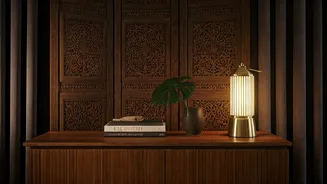
the current movement is something else entirely. It’s more thoughtful, curated, and deeply connected to heritage. Designers and homeowners are making a conscious choice to seek out and celebrate the country’s vast and varied craft traditions, integrating them into contemporary spaces in a way that feels both modern and timeless. It isn’t about recreating a palace; it’s about infusing a modern apartment or a family home with a piece of a story, a touch of a human hand, and a direct link to centuries of artistry.
The Soul in the Details
This revival is best seen in the specific crafts being championed. Take *thikri*, the intricate mosaic art from Rajasthan where hand-blown glass is painstakingly cut into mirrors and embedded in plaster to create shimmering patterns. Once the domain of Mughal palaces, it’s now appearing as stunning feature walls in Mumbai high-rises. Similarly, *pietra dura*, the delicate art of marble inlay made famous by the Taj Mahal, is finding new life not just on grand floors but in bespoke coffee tables and custom headboards. On the softer side, hand-block printed textiles from Jaipur, with their charming imperfections, are replacing mass-produced fabrics for upholstery and curtains. Each piece, whether a textile or a tile, carries the fingerprint of its maker, offering a texture and soul that a factory-made object simply cannot replicate.
A Rejection of Globalized Sameness
So, why is this happening now? Part of it is a natural reaction against the sterile, one-size-fits-all minimalism that has dominated global design trends for over a decade. In a world of fast furniture and algorithm-driven decor, there is a growing hunger for authenticity and uniqueness. For many in India, this means looking inward. It’s a form of cultural confidence—a declaration that local heritage is not something to be confined to museums, but a living, breathing source of inspiration for contemporary life. The pandemic also played a role. As people spent more time at home, the desire to create spaces that were not just functional but also meaningful and personal intensified. Commissioning a piece from a local artisan became a way to build a more intimate connection to one’s surroundings and community.
Creating the New Heirlooms
This trend is also an economic and social story. By working directly with master artisans, designers are helping to preserve endangered skills and provide sustainable livelihoods for craft communities that have often been marginalized. These collaborations are not just about patronage; they are about partnership. Designers bring a modern sensibility, helping to adapt traditional techniques for a contemporary market, while artisans bring generations of knowledge and unparalleled skill. The result is the creation of “new heirlooms”—beautiful, durable objects designed to last a lifetime and be passed down, a stark contrast to the disposable culture of today. It represents a shift in the definition of luxury, away from the brand name and toward the story, the skill, and the human connection embedded in the object itself.