

Beyond the Usual Suspects
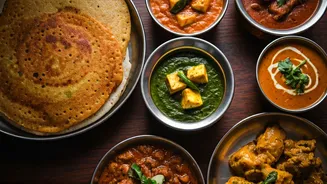
For many Americans, Indian food brings to mind a familiar lineup: creamy chicken tikka masala, rich saag paneer, and fluffy naan bread. While delicious, this menu represents just a fraction of India’s vast culinary landscape. A recent analysis of Google
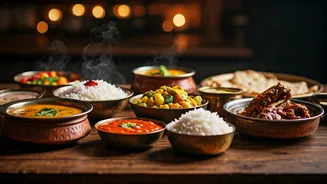
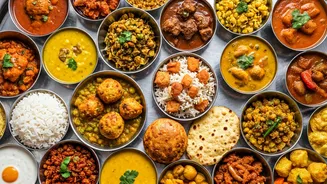
search trends in India paints a very different, and arguably more authentic, picture of what people are craving. The top trending recipes aren't complex, restaurant-style dishes, but hyperlocal, traditional foods that are often passed down through families. Take, for example, the high search interest in "mango pickle" (aam ka achar) and "panchamrit." The first is a beloved condiment, a tangy, spicy, and sweet preserve made from raw mangoes that varies from region to region. The second is a sacred offering made from five ingredients—milk, yogurt, honey, sugar, and ghee—used in Hindu religious ceremonies but also consumed for its health benefits. These aren't elaborate meals; they are foundational elements of regional home cooking, suggesting a deep desire to connect with specific, local flavors.
The "Fuss-Free" Revolution
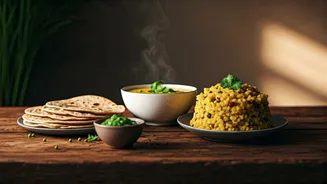
The other half of the equation is the demand for “fuss-free” preparation. This doesn’t necessarily mean a 15-minute meal or a one-pan dinner, though convenience is certainly a factor. In this context, “fuss-free” signals a move away from the intimidating, multi-stage recipes often found in glossy cookbooks or on elaborate food blogs. Instead, home cooks are looking for approachable techniques and accessible ingredients. This trend reflects a practical reality. As more households have dual working parents and hectic schedules, the time for laborious cooking has shrunk. But instead of turning exclusively to takeout, many are seeking to recreate the comforting flavors of their childhood without the all-day commitment. They want food that feels nourishing and real, something that can be realistically prepared on a Tuesday night after work. This search for simplicity is a rejection of culinary performance and an embrace of everyday sustenance.
Nostalgia on a Plate
Underpinning this entire movement is a powerful sense of nostalgia. In a rapidly modernizing and globalizing India, there's a growing cultural pull toward heritage and roots. Food is one of the most potent vehicles for this connection. Making a dish that your grandmother used to make, with ingredients sourced from a local market, is a way of holding onto identity in a changing world. During and after the pandemic, when people were confined to their homes, there was a global surge in home cooking. In India, this translated into a rediscovery of family recipes and regional culinary traditions. People had the time to call their mothers and aunts for instructions, documenting techniques that were once only passed down orally. The search trends suggest this habit has stuck. It's more than just about eating; it’s about preserving a legacy and finding comfort in the tastes of home.
A Familiar Global Craving
This Indian trend isn't happening in a vacuum. It mirrors a similar movement we’ve seen in the United States and across the West. Think of the rise of the farm-to-table movement, the obsession with heritage sourdough starters, or the renewed interest in regional American cuisines like Appalachian or Lowcountry cooking. In every culture, there seems to be a pendulum that swings between global fusion and hyperlocal tradition. What the Indian search data shows is that a nation of over a billion people is collectively swinging back toward its roots. They are looking inward, celebrating the diversity of their own culinary heritage over imported trends. For American food lovers, this is an exciting development. It signals that the next wave of Indian food to gain popularity abroad may not be another creamy curry, but something far more specific, simple, and rooted in the real kitchens of India.