





The Real Villain: Unrealistic Expectations
Before we even talk about products or techniques, let's address the biggest saboteur: the impossible standards set by social media filters and professionally styled celebrities. That impossibly glossy, perfectly behaved hair you see in an ad or on a red
carpet is often the result of hours of work, extensions, wigs, and post-production editing. Trying to make your natural hair match a digitally perfected image is like expecting a house cat to act like a trained lion. Your hair’s texture, density, and curl pattern are part of your unique genetic makeup. Fighting it is a recipe for frustration. The first step to making peace is accepting what your hair *is* and learning to work with its natural tendencies, not against them.
The Accomplice: Harsh Cleansers and Silicones
You think you’re “cleaning” your hair, but many mainstream shampoos are loaded with harsh detergents like sulfates (sodium lauryl sulfate, sodium laureth sulfate). These create that satisfying lather but can also strip your hair and scalp of their natural, protective oils. The result? Your scalp may overproduce oil to compensate, leaving you with greasy roots and dry, brittle ends. Your hair isn't “misbehaving”; it's reacting to being stripped bare. On the flip side, many conditioners and styling products use heavy, non-water-soluble silicones. They provide a temporary illusion of smoothness by coating the hair shaft, but they can build up over time, preventing moisture from getting in and weighing your hair down. That limp, lifeless feel isn't your hair giving up on life; it's suffocating under layers of product buildup.
The Weapon: Aggressive Styling Habits
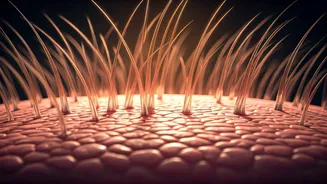
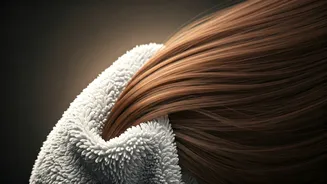
How you handle your hair matters just as much as what you put on it. Vigorously rubbing your hair with a coarse towel creates friction that lifts the hair cuticle, leading to frizz and breakage. That’s not “unruly” hair; that’s a cry for help. Blasting your hair with a blow-dryer on the highest heat setting without a protectant? It’s not your hair’s fault it feels like straw afterward; you’ve literally boiled the water inside the hair strands and caused damage. The same goes for flat irons and curling wands turned up to their highest temperatures. Similarly, yanking a brush through tangled, wet hair—when it's at its most elastic and vulnerable—can cause stretching and snapping. These aren't character flaws of your hair; they are the direct results of mechanical damage.
The Environment: An Unseen Attacker
Sometimes, the problem isn’t you or your products at all—it’s the world around you. If you live in an area with hard water, mineral deposits from your shower can build up on your hair, leaving it feeling dull, dry, and discolored. It can even interfere with how well your shampoo and conditioner work. Have you noticed your hair feels different after a vacation? It could be the water. Furthermore, just like your skin, your hair is susceptible to damage from the sun’s UV rays, which can degrade its protein structure and fade its color. Pollution and airborne grime can also settle on your strands, contributing to dullness and buildup. Your hair isn’t being difficult for no reason; it’s reacting to a constant, invisible assault from its environment.
The Hero: A Little Understanding
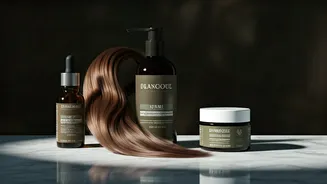
The path to peace with your hair is paved with knowledge. Instead of fighting it, get to know it. What is its porosity? (Does it absorb moisture easily or repel it?) What is its texture (fine, medium, coarse) and curl type? Once you understand its fundamental properties, you can stop blaming it and start supporting it. This means using gentler, sulfate-free cleansers, providing moisture with conditioners and masks that actually penetrate the hair shaft, and protecting it from heat and environmental damage. It means trading the rough towel for a soft t-shirt or microfiber cloth to reduce frizz. It’s about choosing a haircut that complements your natural texture instead of one that requires 45 minutes of heat styling every morning. Your hair isn’t the problem; the lack of a compatible care routine is.