
A Curve Through History
The arch is one of humanity’s most enduring architectural achievements, a simple form loaded with cultural memory. For the Romans, it was a symbol of imperial power and engineering genius, visible in the aqueducts that marched across the landscape and the Colosseum
that still stands today. The Roman arch is stout, semicircular, and powerful—a declaration of strength and permanence. Centuries later, Gothic builders pointed the arch skyward, creating soaring cathedrals that drew the eye and the spirit up to the heavens. Their arches were about light, aspiration, and a connection to the divine. In Moorish Spain, the arch became more ornate and intimate, with scalloped and horseshoe shapes creating mesmerizing patterns in palaces like the Alhambra, evoking a sense of mystery and secluded beauty. When a designer uses an arch today, they aren't just cutting a curve into a wall; they are tapping into this deep well of historical and emotional significance, whether they know it or not.
The Psychology of Softness
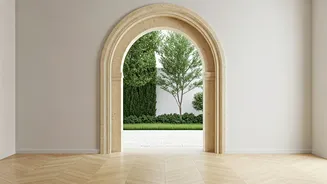
In a world dominated by the hard angles of our phones, laptops, and glass-and-steel skyscrapers, the curve offers a powerful psychological reprieve. Studies in neuro-aesthetics suggest that the human brain is hardwired to prefer curved shapes over sharp, angular ones. Curves are perceived as softer, safer, and more natural—they echo the forms found in nature, from rolling hills to the human body itself. A sharp corner can subconsciously register as a threat, while a gentle curve is seen as welcoming and approachable. An arched walkway does more than just provide passage; it frames a view, creating an intentional focal point. It acts as a portal, signaling a transition from one state to another—from public to private, from hectic to calm. This simple geometric shift transforms a mere opening into a deliberate, almost ceremonial experience, adding a layer of narrative to the simple act of moving through a home.
Modernism Meets an Ancient Form
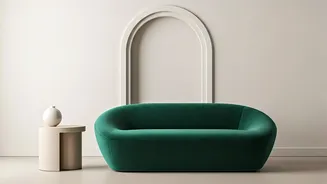
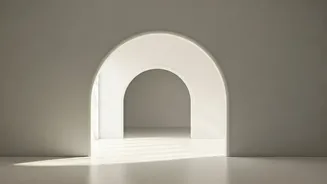
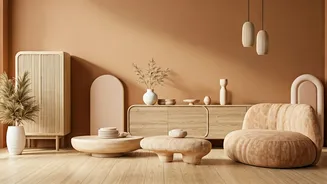
For decades, mainstream modernism favored the box. Clean lines, right angles, and unadorned surfaces were the language of cool, rational design. But today's architects and interior designers are rediscovering how the arch can enhance—not compromise—a modern aesthetic. The trend isn't about recreating Roman villas or Gothic naves. Instead, it’s about using the arch in its purest, most minimal form. A single, unadorned arched doorway in a long, white hallway can break the monotony and add a sculptural element that feels both contemporary and timeless. Arched niches become elegant showcases for art or simple decor. Wide, low arches can connect living spaces while maintaining a sense of openness. By stripping the arch of its historical ornamentation and focusing on its pure geometric form, designers are proving that it can coexist beautifully with minimalist principles, adding a necessary dose of warmth and character to spaces that might otherwise feel sterile.
Creating a Journey at Home
Ultimately, the power of an arched walkway in a modern home is its ability to shape our experience of the space. A standard rectangular doorway is purely functional; you pass through it without a second thought. An arch, however, encourages a moment of pause. It makes the transition intentional. When you see an arched passage at the end of a hall, you’re not just looking at another room; you’re looking at a destination. This sense of procession elevates the daily routine. A series of arches can create a rhythm, like a colonnade, guiding you through the home and lending a sense of monastic calm and order. It turns a simple floor plan into a story, with each arch serving as a new chapter, inviting you to discover what lies beyond. It’s a subtle but profound way to make a house feel more like a sanctuary.