



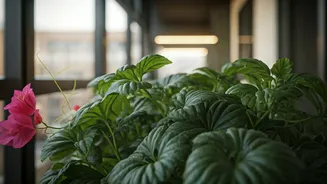
Why Pruning Is a Monsoon Essential
The dramatic increase in water and humidity during the monsoon season tells plants one thing: grow, and grow fast. While this lushness is beautiful, it can cause problems. Overly dense growth restricts airflow, creating a perfect environment for fungal
diseases like powdery mildew to take hold. Crowded branches compete for sunlight, often resulting in weaker, leggier stems. Heavy, water-logged growth can also become a structural hazard, with branches snapping under their own weight during a storm. Pruning isn’t about punishing your plants for their enthusiasm; it’s about strategic editing. By selectively removing branches, you improve the plant’s health, encourage stronger structure, and ensure that the explosive energy of the monsoon is channeled productively.
The Right Time to Make the Cut
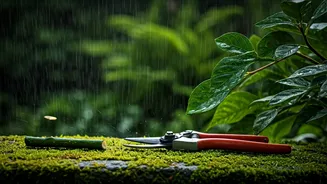
Timing your pruning during this wet season is crucial. While a major structural pruning is best done in the dormant winter season, maintenance trimming during the monsoon is key. The best time for a light trim is often right after a significant rainstorm, once the leaves have had a chance to dry. Avoid pruning while the foliage is still wet, as this can easily spread fungal spores from one part of the plant to another. Focus on maintenance, not a major overhaul. The goal is to manage the burst of growth as it happens. Think of it as a series of small haircuts throughout the season rather than one major chop. This approach allows you to react to how your garden is responding to the rains without causing undue stress to the plants.
A Pruner's Checklist for Monsoon Growth
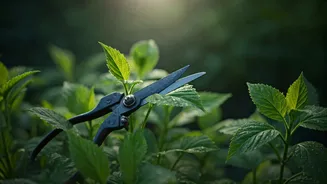
When you head out with your pruners, have a clear plan. Start with the basics, often called the “three D’s”: remove any wood that is dead, damaged, or diseased. This is the most important step for plant health. Next, look for branches that are crossing or rubbing against each other; remove the weaker of the two to prevent wounds that can invite pests and disease. Thin out the interior of dense shrubs to improve light penetration and air circulation. Finally, manage direction. Trim back branches that are growing into pathways, blocking windows, or heading in an undesirable direction. For fast-growing vines like bougainvillea or rambling roses, this is the time to rein them in before they completely take over a wall or trellis.
Tools and Techniques for a Clean Job
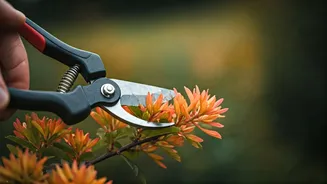
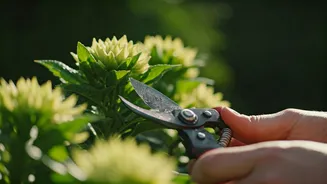
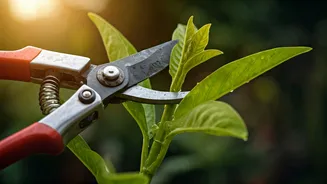
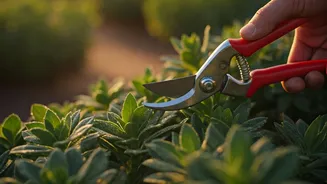
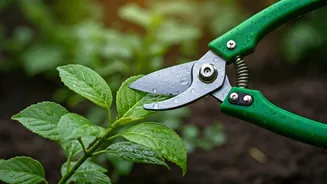
Using the right tool makes the job easier and is better for your plants. For small stems and branches up to a half-inch in diameter, a sharp pair of bypass pruners is your best friend. “Bypass” pruners work like scissors, making a clean cut that heals quickly. Avoid “anvil” pruners, which crush stems. For branches between a half-inch and 1.5 inches, use long-handled loppers for better leverage. Always make sure your tools are clean and sharp. A dull blade can tear plant tissue, leading to a ragged wound that heals slowly. Before you start and after you finish, wipe the blades with a cloth soaked in rubbing alcohol or a 10% bleach solution to prevent the spread of disease from one plant to another—a critical step during the humid monsoon.
What to Leave Alone
Knowing what not to cut is just as important as knowing what to cut. The golden rule is to never remove more than one-quarter to one-third of a plant's total mass at one time. Over-pruning can send a plant into shock, making it vulnerable to stress and disease. Be cautious with trees like palo verdes and mesquites; they are adapted to the desert and aggressive pruning can stimulate a wild flurry of weak, undesirable water sprouts. Also, be mindful of plants that bloom on old wood, like some varieties of lilac or forsythia (though less common in classic monsoon zones). If you prune them now, you'll be cutting off next year’s flowers. If you’re unsure, a light shaping is always safer than a hard cutback during the growing season.