




The Low-Light Challenge
Let’s be honest: most apartments weren't designed with a lush indoor jungle in mind. North-facing windows, shadows from neighboring buildings, and short winter days can starve even the hardiest houseplants of the light they need to photosynthesize. The
result is often sad, leggy growth, yellowing leaves, and a general failure to thrive. You can try moving your monstera from one corner to another, chasing those fleeting sunbeams, but it’s an inconsistent and often losing battle. This is the fundamental challenge for urban gardeners—replicating the consistent energy of the sun in an environment that actively blocks it.
Enter the Humble Grow Light
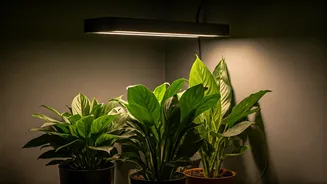
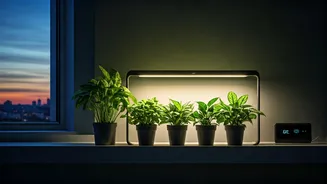
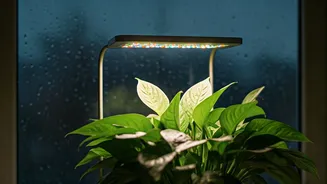
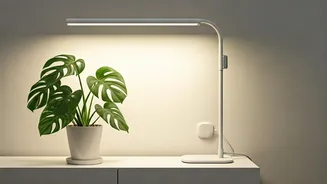
Grow lights are no longer the bulky, buzzing, heat-blasting contraptions you might imagine from a commercial greenhouse. Today’s consumer-friendly options are overwhelmingly powered by LEDs (Light Emitting Diodes), which are energy-efficient, long-lasting, and run cool to the touch, so they won't scorch delicate leaves. The key is to look for “full-spectrum” LED grow lights. These are designed to mimic the qualities of natural sunlight, providing the wide range of light wavelengths that plants use for every stage of their life cycle, from sprouting and vegetative growth to flowering. They come in various forms, from simple screw-in bulbs that fit in a standard lamp to sleek, minimalist light bars you can mount under a shelf.
The 'Smart' Automation Layer
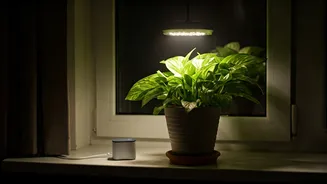
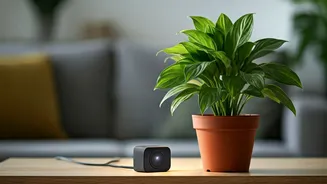
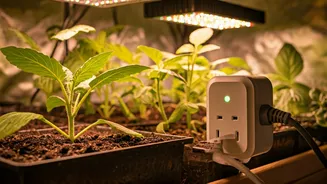
A grow light alone is a great tool, but it still relies on you to remember to turn it on and off every single day. This is where the magic of the smart plug comes in. A smart plug is a small adapter that fits between your lamp (or any other appliance) and the wall outlet. It connects to your home's Wi-Fi network and is controlled via an app on your phone. By plugging your grow light into a smart plug, you transform it into a fully automated system. You no longer need a separate, clunky analog timer. Instead, you can create a precise, consistent daily schedule right from your phone. Want the light to be on for 12 hours, from 7 a.m. to 7 p.m.? Just set it in the app once and forget it. Your plants will get the exact same amount of light every day, creating the stability they crave.
Putting Your System Together
Getting started is surprisingly simple and doesn't require any technical expertise. First, pick your full-spectrum LED grow light. A standard A19 or BR30 bulb is a great, inexpensive starting point that can fit into any desk lamp or floor lamp with a directional head. Next, choose a smart plug. Major brands like Kasa (TP-Link), Wyze, or Meross are reliable, affordable, and have user-friendly apps. Make sure the plug you choose is compatible with your phone (most work with both iOS and Android). The setup process is straightforward: plug the smart plug into the wall, plug the grow light's lamp into the smart plug, and follow the app's instructions to connect the plug to your Wi-Fi. It usually takes less than five minutes.
Setting the Perfect Schedule
Once connected, the app is your command center. You can name your plug—something like “Living Room Plant Light”—to stay organized. The most important feature is scheduling. Most houseplants thrive on 12 to 16 hours of light per day. A good starting point is a 14-hour cycle. Create a schedule for the plug to turn on in the morning and off at night. This consistency is a game-changer. It eliminates human error and ensures your plant's 'day' is always the same length, promoting strong, steady growth. Some smart plugs even integrate with voice assistants like Alexa or Google Assistant, allowing you to say, “Hey Google, turn on the plant light,” for those times you want to override the schedule and show off your greenery.