








The Summer Pressure Cooker
Let’s be honest: the fear of summer learning loss is real. Decades of research confirm that students, particularly from lower-income families, can lose a month or more of grade-level equivalency in math and reading over the long break. The market has
responded with a dizzying array of solutions: coding bootcamps, math intensives, writing workshops, and academic tutors, all promising to keep your child “ahead of the curve.” For many well-intentioned parents, the answer seems to be structure, rigor, and a schedule that mirrors the school year. We sign our kids up, often against their will, hoping the forced practice will inoculate them against academic backsliding. But in our rush to fill academic gaps, we often create a different kind of deficit: a motivational one. When learning becomes a chore—another box to check on a parent-mandated schedule—we risk extinguishing the very spark of curiosity we claim to be fanning.
The Undeniable Magic of Choice
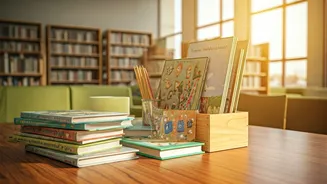
This is where the humble book corner enters the scene. It’s not about the specific furniture, but the philosophy behind it: creating an environment where learning is a pull, not a push. The core difference between a forced summer skills class and a book corner is the element of choice. This isn’t just feel-good fluff; it’s rooted in the science of intrinsic motivation. A child who is forced to complete a reading comprehension worksheet is extrinsically motivated—they’re doing it to avoid punishment or earn a reward. The task is a means to an end. A child who plucks a graphic novel from a pile of pillows in their book nook is intrinsically motivated. They are reading for the pure pleasure of the story, the thrill of discovery. This type of engagement is deeper and more powerful. They aren't just decoding words; they are building vocabulary, absorbing complex sentence structures, developing empathy for characters, and making cognitive connections—all without it ever feeling like “work.” Free voluntary reading is consistently one of the single greatest predictors of reading success, and it’s an activity powered entirely by joy, not by force.
What a 'Book Corner' Really Is
Let’s demystify the “book corner.” It’s not an Instagram-perfect, professionally designed space that costs hundreds of dollars. It’s an ethos. A book corner can be a stack of pillows in a closet with a flashlight. It can be a comfy beanbag chair next to a bookshelf. It can be a weekly ritual of visiting the local library and letting your child load up a tote bag with anything that catches their eye—no judgment. The key ingredients are comfort, access, and variety. Stock it with more than just classic novels. Include graphic novels (which are fantastic for visual literacy), age-appropriate magazines, weird fact books, comics, and audiobooks. The goal is to surround your child with appealing, low-pressure invitations to read. It's about signaling that reading is a form of leisure and entertainment, on par with watching a movie or playing a video game. It's an escape you choose, not a task you endure.
When Structure Still Has a Place
This isn't an argument to abandon all forms of structured learning. For children with diagnosed learning disabilities or those who are significantly behind, targeted intervention from a professional can be essential. The two aren't mutually exclusive. A child can attend a morning tutoring session for dyslexia and still spend their afternoon lost in a favorite book series. The point is not to create a false binary where classes are “bad” and books are “good.” Instead, it’s about re-evaluating our priorities. Before enrolling your child in a non-essential, “just-in-case” summer class they are dreading, first ask yourself: have we built a foundation of joyful, self-directed learning at home? Often, the behavioral issues and resistance we see in forced academic settings are a symptom of a child craving autonomy. By providing that autonomy first, you may find that their appetite for learning grows in ways you never expected.