





First, What Is an Ekadashi?
Before we get to the 'Nirjala' part, let's talk 'Ekadashi.' In the Hindu lunar calendar, Ekadashi is the eleventh day of each of the two lunar phases—the bright half (Shukla Paksha) and the dark half (Krishna Paksha)—that occur every month. This makes
for 24 Ekadashi days in a typical year. These days are considered especially auspicious for honoring Lord Vishnu, one of the principal deities of Hinduism. For many devout Hindus, Ekadashi is a day set aside for spiritual focus, prayer, and, most notably, fasting. The fast typically involves abstaining from grains, beans, and certain spices, with many observers eating only fruit or dairy, or forgoing food entirely.
The 'Nirjala' Difference: No Water
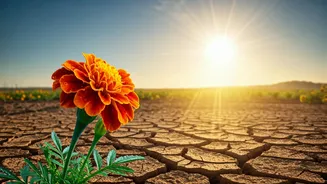
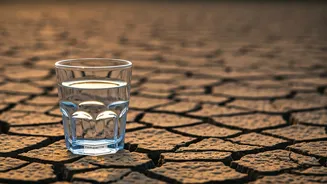
This is where Nirjala Ekadashi stands apart, earning its reputation as one of the most difficult fasts. The word 'Nirjala' literally translates to 'without water.' While most Ekadashi fasts allow for the consumption of water and certain foods, Nirjala Ekadashi is a complete fast observed without a single drop of water or any food from sunrise on Ekadashi day to sunrise the following day. It's a strict, 24-hour period of absolute abstinence. Occurring once a year during the waxing moon of the Jyeshtha month (typically May or June), it falls during the peak of summer in India, making the 'no water' rule a profound test of both physical endurance and mental resolve.
More Than Just Physical Discipline
So, why would anyone undertake such an arduous observance? The answer lies in its spiritual significance, which is far removed from the weight loss or 'detox' goals of modern diet culture. Observing Nirjala Ekadashi is believed to be an act of immense devotion that cleanses the soul of sins and purifies the mind and body. Devotees believe that the merit gained from observing this single fast is equivalent to observing all 24 other Ekadashis combined. It's a powerful gesture of faith, meant to detach the individual from worldly desires and focus the mind entirely on the divine. The physical hardship is seen as a tangible expression of one's spiritual commitment.
The Legend of the Strongman's Fast
The fast is also famously associated with a story from the Hindu epic, the Mahabharata. It's sometimes called 'Bhima Ekadashi' or 'Pandava Ekadashi.' The story goes that Bhima, the second of the five Pandava brothers, was a man of legendary strength and an equally legendary appetite. He found it impossible to observe the regular Ekadashi fasts that his family kept. Feeling guilty for being unable to show his devotion to Lord Vishnu through fasting, he sought the counsel of the sage Vyasa. The sage advised him that if he could observe just one fast a year—the Nirjala Ekadashi—with complete sincerity, he would reap the spiritual benefits of all the other Ekadashis. Bhima undertook the difficult fast, cementing its reputation as a test of willpower fit for even the strongest individuals.
A Test of Devotion, Not a Health Trend
It's crucial to understand that Nirjala Ekadashi is not a challenge to be undertaken lightly or as a health experiment. Hindu scriptures provide exemptions for those who are ill, elderly, pregnant, or otherwise unable to withstand the rigors of the fast. It is an act of faith, not an act of self-harm. For the millions of Hindus who observe it, the day is spent in prayer, chanting, and reading sacred texts. The breaking of the fast the next morning is a careful ritual, usually involving a sip of water followed by a simple meal. It represents a profound spiritual reset, a moment where devotion supersedes even the body's most basic needs.