





Know Your Hibiscus
Before you start digging, it’s crucial to understand that the word “hibiscus” covers a huge family of plants with very different needs. The image most people have is of the tropical hibiscus (*Hibiscus rosa-sinensis*)—the kind you see in Hawaii or Florida,
with glossy leaves and delicate flowers that last only a day. These plants are stunning, but they are true tropicals: they despise cold weather and, more importantly, soggy soil. Consistently wet roots, or “wet feet,” will quickly lead to root rot and the demise of a tropical hibiscus. For a wet garden, you need to look to another branch of the family: the hardy hibiscus. These perennial powerhouses are often native to North America and are built to handle conditions that would kill their tropical cousins. They die back to the ground in winter and re-emerge in late spring, ready to put on a spectacular summer show.
The Star Player: Swamp Rose Mallow
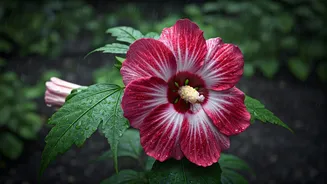
The hero of the wet garden is the hardy *Hibiscus moscheutos*, commonly known as the Swamp Rose Mallow or Dinner-Plate Hibiscus. The name says it all: this plant naturally grows in wetlands, along riverbanks, and in marshy areas throughout the eastern and southern United States. Far from just tolerating moisture, it thrives in it. And the flowers are nothing short of breathtaking. Often measuring 8 to 12 inches across, these blooms bring an undeniable “festival colour” to the landscape. Modern cultivars offer a dazzling palette of reds, pinks, and whites, often with a contrasting deep red center. Imagine a four-foot-tall shrub covered in blooms the size of dinner plates, happily situated in a part of your yard where other plants struggle. That’s the promise of the Swamp Rose Mallow.
Planting for a Damp Location
Success with hardy hibiscus in a wet spot is all about leaning into its natural preferences. Unlike with plants that demand sharp drainage, you don’t need to excessively amend the soil. Find a location that receives at least six hours of direct sunlight per day; full sun is essential for producing those massive flowers and keeping the plant sturdy. These plants do well in low-lying areas that collect rainwater, near a downspout, or in a dedicated rain garden. While they love moisture, they don't want to be submerged in a stagnant pond indefinitely. Consistently moist soil is perfect, but ensure the location doesn't stay flooded for weeks on end. When planting, give them plenty of space. These are robust perennials that can grow several feet wide, and good air circulation is key to preventing fungal diseases like powdery mildew, which can be a risk in damp, humid weather.
Care and Maintenance Tips
Once established, hardy hibiscus is surprisingly low-maintenance. During dry spells, give it a deep watering to keep the soil evenly moist. A layer of organic mulch, like shredded leaves or pine bark, will help retain that moisture and keep the roots cool. Fertilize in the spring as new growth appears with a balanced, slow-release fertilizer to fuel its rapid growth and prolific blooming. Don't panic if your plant is slow to appear in the spring. Hardy hibiscus is one of the last perennials to break dormancy, often waiting until soil temperatures are consistently warm, sometimes as late as June in cooler climates. After the first hard frost in the fall, the plant’s stems will die back. You can then cut the woody stalks down to about 4-6 inches above the ground. This tidies up the garden and marks the plant’s location so you don’t accidentally disturb it before it wakes up the following year.