


The Garden's Unlikely Survivor
For many American gardeners, a “monsoon” might sound like a weather event from a distant land. But as climate patterns shift, bringing periods of intense, soaking rain followed by scorching heat, the principle is the same. These are the exact conditions
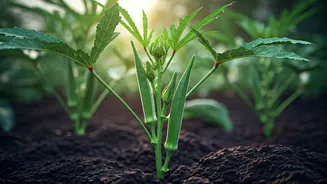
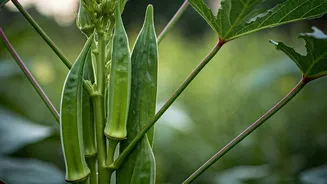
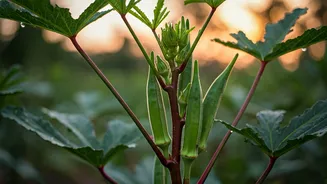
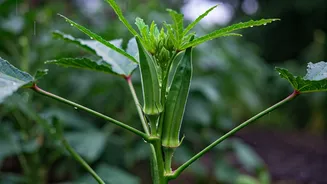
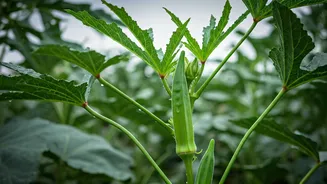
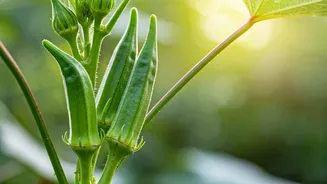
that can decimate a carefully tended vegetable patch. Zucchini vines rot, tomatoes split, and leafy greens bolt. But okra? Okra often just keeps going. This incredible toughness isn't an accident; it’s baked into the plant's DNA. Originating in the hot, variable climates of northeastern Africa, okra (Abelmoschus esculentus) is a member of the mallow family, a cousin to hibiscus and cotton. It evolved to handle extremes. Its deep taproot can search for moisture during dry spells, while its strong, woody stalk helps it stand firm against wind and rain. Unlike plants with shallow roots that can easily drown in saturated soil, okra has a higher tolerance for “wet feet,” at least for short periods. This ability to endure both drought and deluge makes it a botanical marvel, perfectly suited for the unpredictable weather many of us now call a typical summer.
A Plant with a Rich Pedigree
In the United States, okra’s reputation is complicated. For many, the first and only word that comes to mind is “slimy.” This characteristic, technically called mucilage, is a soluble fiber that thickens when heated—perfect for its most famous culinary application, gumbo, but a textural turn-off for some. Yet to focus on the slime is to miss the point entirely. Okra has one of the most profound histories of any vegetable grown in American soil. The plant arrived in the Americas in the 1700s, carried across the Atlantic on slave ships. Its very name is derived from “ọ́kụ̀rụ̀,” the word for the plant in the Igbo language of West Africa. Enslaved Africans cultivated it not just as a source of sustenance but as a critical link to their cultural and culinary heritage. It became a cornerstone of Southern cooking, particularly in Creole and Gullah Geechee communities, where its thickening properties were essential for creating the rich, soulful stews that define the region. Seeing okra only for its texture is like looking at a historical document and complaining about the font; it misses the entire story.
A Crop for a Warmer, Wetter World
The same traits that allowed okra to survive the Middle Passage and thrive in the humid American South now position it as a potential star player in the 21st-century garden. As meteorologists report record-breaking heat domes and once-in-a-century storms become a yearly occurrence, gardeners and small-scale farmers are looking for crops that don’t just survive, but produce. Okra fits the bill perfectly. It loves heat, truly coming into its own when summer temperatures soar into the 90s and beyond—a point at which many other vegetables give up. And while no plant loves to be in a swamp, okra’s ability to weather a week of heavy rain without rotting from the root makes it a far safer bet than more delicate crops. This dual resistance makes it a low-risk, high-reward choice for gardeners navigating an increasingly volatile climate. In an era of agricultural uncertainty, okra isn’t just a historical artifact; it’s a vision of a more resilient future.
Bringing the Hero Home
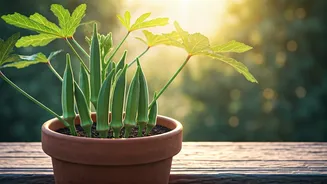
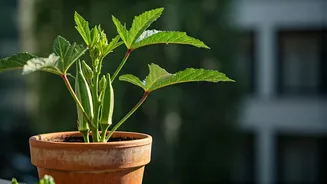
Convinced to give this champion a try? Growing okra is remarkably straightforward. It demands little more than a spot with full sun and a little patience, as it won't take off until the weather is consistently hot. As a bonus, its gorgeous, pale-yellow flowers with deep red centers are nearly identical to those of its hibiscus cousins, adding an ornamental flair to any garden bed. And if you’re still worried about the slime, just change your cooking method. The mucilage is released by water and slow cooking. To avoid it, cook okra fast and dry. Slice the pods lengthwise, toss them with olive oil and spices, and roast them at high heat (around 425°F) until they are browned and slightly crispy. They become nutty, tender, and completely slime-free. You can also grill them whole or slice them into rounds and fry them for a classic Southern side dish. This simple shift in preparation can transform a feared texture into a beloved new favorite.