







Follow the Money
The most compelling evidence of plant-based protein’s success isn’t found in foodie blogs, but in financial reports. The U.S. plant-based food market is a multi-billion dollar industry, with retail sales showing consistent and powerful growth that far
outpaces conventional food categories. According to data from the Plant Based Foods Association and the Good Food Institute, sales have been climbing at double-digit rates, a stark contrast to the low single-digit growth of overall food sales. This isn’t just about tofu and almond milk anymore. The real explosion is in plant-based meat, cheese, and eggs, categories that directly compete with their animal-based counterparts. Venture capitalists and private equity firms have poured billions into startups like Impossible Foods and Beyond Meat, betting that this is not a niche but the future of a significant slice of the protein market. This influx of cash fuels innovation, scales production, and funds the massive marketing campaigns needed to win over mainstream consumers.
From Niche Market to Main Street
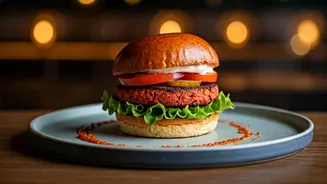
Perhaps the biggest “win” for plant-based protein has been its escape from the confines of the vegan aisle. The turning point wasn't just when products appeared in regular grocery stores, but when they landed on the menus of America's largest fast-food chains. Burger King’s Impossible Whopper was a watershed moment, proving that a major corporation believed plant-based meat had mass appeal. Since then, dozens of chains—from Starbucks to KFC—have introduced plant-based alternatives. This move does two crucial things: it normalizes plant-based eating for millions of Americans who would never step into a specialty health store, and it signals to the rest of the industry that flexitarians—consumers who eat meat but are actively reducing their consumption—are a demographic too large and lucrative to ignore. The target customer is no longer just the committed vegan, but anyone looking for a different option on a Tuesday night.
The Technology Behind the Taste
Let’s be honest: the veggie burgers of the 1990s weren’t converting many carnivores. They were often dry, crumbly, and tasted distinctly of beans and grains. The current boom is powered by a revolution in food science. Companies are no longer just trying to make a plant-based patty; they're deconstructing the sensory experience of meat and rebuilding it from plants. Impossible Foods famously bioengineered yeast to produce heme, the iron-containing molecule that gives beef its signature flavor and aroma. Beyond Meat uses a heating and cooling process to align plant proteins, mimicking the fibrous texture of muscle. These technological leaps are critical. They close the “taste gap” that previously kept mainstream consumers away, transforming plant-based protein from a sacrifice into a legitimate culinary alternative. It's this focus on delivering a no-compromise experience that underpins the industry’s entire growth strategy.
When Giants Join the Game
Nothing says “you’re winning” quite like your biggest competitors trying to copy you. For years, the traditional meat industry viewed the plant-based movement with skepticism or even hostility. That has changed dramatically. Today, nearly every major meat processor has a foot in the plant-based game. Tyson Foods, one of the world's largest meat companies, launched its own line of plant-based products under the “Raised & Rooted” brand. Hormel, the maker of Spam, owns the Planters brand and is innovating in the plant-protein space. JBS, the largest meat processing company globally, has made nine-figure acquisitions of plant-based food companies. This isn't a defensive crouch; it's a strategic pivot. These legacy giants recognize that the future of protein is not a zero-sum game between animals and plants. They are rebranding themselves as diversified “protein companies,” positioning themselves to profit no matter which shelf a customer chooses from.