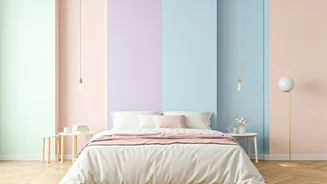







1. The Faux Painted Headboard
One of the easiest and most impactful ways to dip your toes into color-blocking is by creating a 'faux headboard' with paint. This technique works wonders for minimalist setups or small rooms where a bulky headboard would feel overwhelming. The most popular
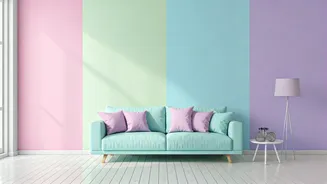
shape is a simple, elegant arch painted directly on the wall behind your bed. Choose a soothing pastel like a dusty rose, sage green, or soft lavender. The curve of the arch softens the room's hard lines, creating a dreamy focal point that anchors the bed. For a more modern, graphic look, you could opt for a large rectangle instead. The key is to measure carefully. Use a pencil and string to draw a perfect arch, or painter’s tape for crisp rectangular lines. It’s a weekend project that delivers the visual weight of new furniture without the cost or clutter.
2. The Two-Tone Horizontal Wall
A full accent wall can sometimes feel like too much of a commitment. A two-tone, horizontally divided wall offers a more dynamic and design-forward alternative. This technique, often called 'color-dipping,' involves painting the bottom portion of your walls one color and the top portion another. For a calming effect, pair a slightly deeper pastel on the bottom (like a muted teal) with a creamy off-white on top. This grounds the room and can even create the illusion of higher ceilings. To execute, decide on your dividing line—a third of the way up the wall is a classic choice. Use a level and painter's tape to ensure a perfectly straight, crisp line. The effect is architectural and intentional, adding a layer of sophistication that a single color can't always achieve on its own.
3. The Geometric Accent Corner
You don't need to commit to an entire wall to make a statement. Instead, focus on an underutilized corner or the wall space around a piece of furniture, like a reading chair or a vanity. Use painter’s tape to map out a series of overlapping or adjacent geometric shapes—think triangles, rectangles, and circles. Fill them in with a curated palette of three to four complementary pastels, such as baby blue, pale yellow, and a soft coral. This method turns a dead zone into a deliberate, art-like feature. It’s a playful yet chic approach that injects personality without overwhelming the room’s tranquil purpose. The key is to plan your shapes in advance and ensure the colors feel balanced, not chaotic. This is your chance to be truly creative.
4. Color-Blocked Furniture Upcycle
If you're hesitant to put paint on your walls, turn to your furniture. An old dresser, nightstand, or bookshelf is the perfect canvas for a pastel color-blocking experiment. This is a fantastic way to upcycle a tired piece and tie it into your new bedroom aesthetic. You could paint each drawer of a dresser a different pastel shade within the same family for a subtle ombré effect. Alternatively, create a more graphic look by taping off sections of a single piece—like painting just the doors of a cabinet a soft mint green, leaving the frame its original wood or white. It adds a bespoke, custom-made feel to your furniture and allows you to introduce color in a controlled, focused way. Always remember to properly sand and prime the piece for a durable, professional-looking finish.
5. Layering with Textiles
For the truly paint-averse, color-blocking can be achieved entirely with textiles and decor. This is the least permanent but equally effective method. The goal is to think in solid blocks of color. Start with your bedding. Instead of a busy pattern, opt for a solid pastel duvet cover and layer it with pillows and a throw blanket in contrasting solid pastels. For example, a lilac duvet could be paired with butter-yellow pillows and a powder-blue throw. Extend the concept to the floor with a color-blocked area rug that features large geometric shapes. Even your wall art can contribute: a triptych of three canvases, each painted a single pastel color and hung side-by-side, creates a powerful, cohesive statement. This approach allows for easy updates as your tastes change.