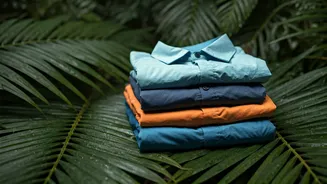









The Soaked-Through Truth About Cotton
Imagine this: You’re trekking through a lush, rain-soaked landscape in Thailand or Costa Rica. The air is thick, warm, and heavy with moisture. Your standard-issue cotton t-shirt, drenched from a sudden downpour, is clinging to your skin like a wet blanket.
Hours later, back at your guesthouse, it’s still damp. The next morning? It’s not only still wet but has developed a distinct, musty odor. This is the reality of traveling with cotton in high-humidity environments. Cotton is hydrophilic, meaning it loves water. A cotton shirt can absorb up to 27 times its weight in water and takes an eternity to dry in humid air, making it heavy, uncomfortable, and a perfect breeding ground for mildew. It loses all insulating properties when wet, leaving you feeling chilled and clammy even in a tropical climate. In a monsoon, your favorite comfy tee becomes your worst enemy.
The Science of Staying Dry
Quick-dry clothing is the definitive answer to this problem. These garments are typically made from synthetic fabrics like polyester or nylon, or from natural performance fibers like merino wool. Unlike cotton, these materials are hydrophobic—they repel water. When you sweat or get caught in the rain, the fabric doesn’t absorb the moisture. Instead, it pulls the wetness away from your skin and pushes it to the outer surface of the garment, a process called “wicking.” Once on the surface, the moisture can evaporate quickly, even in humid conditions. A lightweight polyester shirt can feel bone-dry within an hour or two of being hand-washed and hung up in your room, while a cotton equivalent would remain soggy overnight. This property keeps you more comfortable, prevents chilling, and drastically reduces the risk of funky smells taking over your backpack. It’s a simple technological upgrade that completely changes your travel experience.
Your Essential Quick-Dry Wardrobe
You don’t need to replace your entire closet, but focusing on a few key pieces will make a world of difference. Start with the layers closest to your skin. * **Shirts:** Pack at least two or three quick-dry t-shirts or tank tops. Look for polyester blends or lightweight merino wool. Merino is a superstar; it’s naturally odor-resistant, meaning you can wear it multiple times between washes—a huge plus on the road. * **Pants and Shorts:** A pair of quick-dry hiking pants or convertible pants (that zip off into shorts) is incredibly versatile. They’re durable, lightweight, and will dry quickly after a downpour. Avoid jeans at all costs; they are the absolute worst offender for holding moisture. * **Underwear and Socks:** This is non-negotiable. Packing three to four pairs of quick-dry underwear (synthetic or merino) and socks allows you to wash a pair in the sink each night and have a fresh, dry set ready by morning. Damp socks are a recipe for blisters and discomfort, so this small investment pays huge dividends in foot health and overall happiness.
What to Look For on the Label
When shopping, the term “quick-dry” is a great start, but a few other features elevate a garment from good to great for monsoon travel. Look for clothing with built-in UPF (Ultraviolet Protection Factor), as the sun can be intense between rain showers. Anti-odor or anti-microbial treatments are also a fantastic feature, often using silver ions or other technologies to inhibit the growth of bacteria that cause smells. Furthermore, consider packability. The best travel clothes are not only functional but also lightweight and compress down to a small size, saving precious space in your luggage. Investing in a few well-chosen, multi-functional pieces with these features will streamline your packing list and keep you prepared for whatever the weather throws at you.