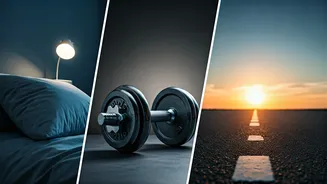






The New Foundation: Strength for Life
If the 2010s were defined by endless cardio and HIIT classes, the next era is being built on a foundation of solid muscle. But this isn’t the bodybuilding culture of yesterday, focused purely on aesthetics. The modern approach to strength training is about
longevity and capability. Experts and everyday people are finally embracing what science has long confirmed: building and maintaining muscle mass is one of the most effective things you can do for your long-term health. More muscle means a higher resting metabolism, which helps with weight management. It means stronger bones, reducing the risk of osteoporosis. Crucially, it means better glucose control, a powerful tool against metabolic diseases like type 2 diabetes. The goal isn’t necessarily to look like a professional athlete, but to be functionally strong—to be able to carry your groceries, lift your kids, and move through the world with confidence and without pain for decades to come. This shift democratizes the weight room, inviting women, older adults, and workout novices to pick up dumbbells, kettlebells, or just their own bodyweight. The new mantra is simple: strength isn’t a vanity project; it’s a prerequisite for a healthy life.
The Daily Habit: Constant, Gentle Movement
The idea of a single, brutal, one-hour workout as the only path to fitness is fading fast. In its place is a more holistic understanding of activity that recognizes a hard truth: you can’t out-train a sedentary lifestyle. The emerging wisdom focuses on increasing your total daily movement, especially of the low-intensity variety. This is the antidote to our desk-bound, screen-heavy lives. Think less about burning calories and more about building a baseline of activity. This is where concepts like Zone 2 cardio—long, slow, steady-state exercise where you can hold a conversation—come in. A brisk 45-minute walk, a gentle bike ride, or a slow jog a few times a week does wonders for mitochondrial health, improving your body’s ability to use fat for fuel and boosting endurance. This approach is more accessible, less intimidating, and easier on the joints than an all-out sprint. It complements strength training perfectly and makes fitness feel less like a scheduled punishment and more like a natural part of your day. The most effective fitness plan is the one you can stick with, and a daily walk is infinitely more sustainable than a daily suffer-fest.
The Final Piece: Making Rest an Action
For the longest time, rest was seen as a sign of weakness—the thing you did only when you were forced to. That mindset is officially obsolete. The new fitness philosophy correctly identifies recovery as the third, co-equal pillar of health, right alongside training and nutrition. It’s during rest, not during the workout itself, that your body repairs muscle tissue, gets stronger, and adapts to the stress you’ve applied. This isn’t just about taking a day off. Proactive recovery is now a key part of the process. That means prioritizing 7-9 hours of quality sleep, which is the most powerful performance-enhancing activity there is. It also means incorporating active recovery, like stretching, foam rolling, or going for a gentle walk on your “off” days. Wearable technology has played a huge role here, giving people real-time data on their sleep quality, heart rate variability (HRV), and overall readiness to train. This data empowers us to finally listen to our bodies, providing objective feedback on when to push and, just as importantly, when to pull back. In the 2026 fitness landscape, rest isn’t lazy. It’s strategic.