





The Monsoon Mindset
When we hear “monsoon,” we might picture the dramatic rainy seasons of South Asia. But the core elements of a monsoon climate—intense, humid heat followed by drenching, cyclical rains—are familiar to anyone gardening in the American South, the Gulf Coast,
or even a sweltering Midwestern summer. While other plants struggle with this combination, developing root rot or simply wilting under the oppressive heat, the hibiscus hits its stride. Its genetics are coded for this exact environment. Understanding the hibiscus as a “monsoon flower” is the key to unlocking its power in a U.S. garden; it’s not just a pretty tropical plant, but a purpose-built performer for summer’s toughest challenges.
Built for Heat and Humidity
Hibiscus is, at its heart, a tropical or subtropical native. Plants like Hibiscus rosa-sinensis originate in places where heat and humidity are constants, not exceptions. This heritage gives them a distinct advantage. Their large, glossy leaves are efficient solar panels, but they are also experts at transpiration—the process of releasing water vapor, which cools the plant down. While other plants shut down in extreme heat to conserve water, a well-watered hibiscus keeps its systems running, allowing it to continue producing those famously huge, vibrant blooms. It doesn't just tolerate heat; it requires it to trigger its most spectacular floral displays. In a sense, the 95-degree day that makes you want to hide inside is the exact signal a hibiscus is waiting for to truly show off.
Thriving in the Downpour
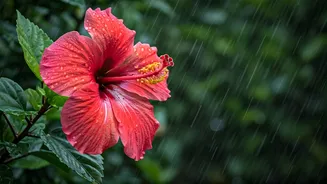
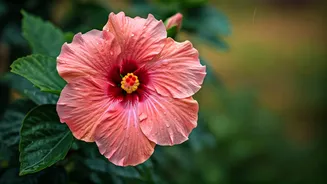
Just as important as heat tolerance is the ability to handle water—and lots of it. A sudden summer thunderstorm can be disastrous for flowers with delicate, cup-shaped blossoms that collect water, weigh down stems, and promote fungal diseases. The open, elegant structure of a hibiscus bloom, however, tends to shed water effectively. The plant’s robust root system is also adapted to absorb large amounts of moisture quickly, a trait honed in environments with seasonal deluges. After a heavy rain, a hibiscus often looks refreshed and reinvigorated, its leaves washed clean and its buds ready for the next round of sun. This resilience makes it a reliable choice for gardeners who are tired of seeing their flowerbeds beaten down after every summer storm.
Hardy vs. Tropical: Which Is for You?
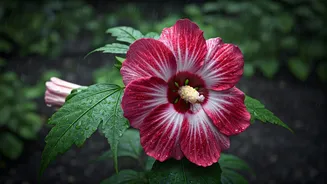
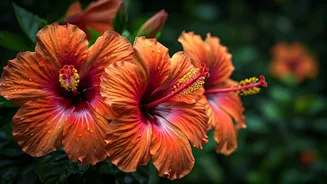
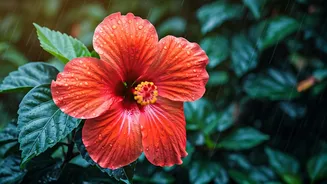
Before you run to the nursery, it’s crucial to know which hibiscus to buy. There are two main categories available in the U.S. The first is Tropical Hibiscus (Hibiscus rosa-sinensis), known for its glossy leaves and wide range of colors like orange, yellow, and peach. These are true heat-lovers but are not frost-tolerant. In most of the country, they are grown as annuals or in pots that can be brought indoors for the winter. The second is Hardy Hibiscus (often Hibiscus moscheutos), a perennial that dies back to the ground in winter and re-emerges in late spring. These varieties produce some of the largest flowers in the plant kingdom—often the size of dinner plates—in classic shades of white, pink, and deep red. They are incredibly tough and can survive winters in zones as cold as 4 or 5, making them a permanent fixture for gardeners who want that tropical look without the winter hassle.
Simple Care for a Summer Star
Getting a hibiscus to “perform” isn’t complicated. The formula is simple: sun and water. They are not drought-tolerant plants. They crave consistently moist soil, especially when grown in containers, which dry out quickly. A deep watering every day or two during the peak of summer is often necessary. They are also heavy feeders. To keep the blooms coming all season long, provide a balanced, potassium-rich fertilizer every few weeks during the growing season. Finally, give them at least six hours of direct sunlight. With these three elements—plenty of water, regular food, and lots of sun—your hibiscus will reward you with a nonstop parade of spectacular flowers from mid-summer until the first frost.