
An Ode to the King of Fruits
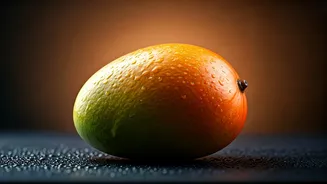
In the United States, summer is marked by strawberries and watermelon. But across South Asia and its global diaspora, the season is defined by one fruit and one fruit only: the mango. Its arrival is an event, a sensory explosion that transforms markets
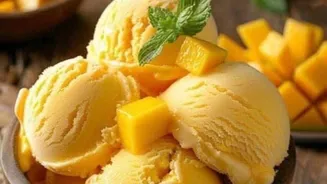
into fragrant, golden landscapes. This isn't just about food; it's a cultural phenomenon steeped in nostalgia and joy. Families have their favorite varieties—the perfumed Alphonso, the sweet Kesar, the tangy Langra—and the annual debate over which is best is a cherished tradition. The mango signifies abundance, warmth, and the sweet, lazy days of summer vacation. It’s eaten fresh, blended into lassis, churned into kulfi (ice cream), and, most magnificently, cooked into mithai.
So, What Exactly Is Mango Barfi?
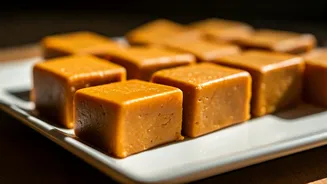
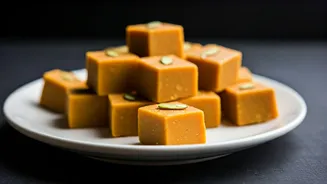
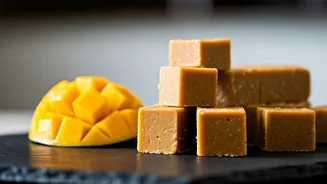
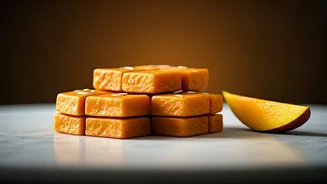
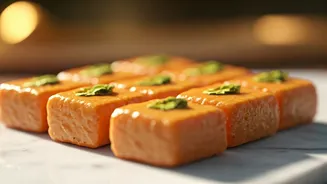
Think of barfi as the Indian subcontinent’s answer to fudge. It’s a dense, milk-based confection that can be flavored with everything from pistachios to rosewater. Mango barfi, or *aam ki barfi* (aam means mango), is the pinnacle of its seasonal form. At its core, it’s a simple, alchemical transformation of a few key ingredients: rich mango pulp, milk solids (known as *khoya* or *mawa*), and sugar. These are slowly cooked together in a pan until the mixture thickens, pulls away from the sides, and transforms into a glossy, decadent mass. Once it sets, it’s cut into neat squares or diamonds and often garnished with slivered nuts. The result is a treat that’s firm yet melts in your mouth, delivering an intense, concentrated burst of pure mango flavor, balanced by the creamy richness of the milk. It’s not just sweet; it’s a distillation of summer itself.
The Home Cook’s Approach
Making mango barfi at home can feel intimidating, but it’s more about patience than complex technique. The biggest challenge is sourcing *khoya*, which is made by slowly reducing milk for hours. Luckily, many modern recipes offer brilliant shortcuts. The most common is using full-fat milk powder, which, when combined with ghee (clarified butter) and milk, creates a quick, reliable substitute that beautifully mimics the texture and richness of traditional *khoya*. The process involves cooking down your mango pulp to remove excess moisture before adding the sugar and milk powder mixture. The key is constant stirring over low-to-medium heat. You’re looking for the moment the mixture becomes a single, cohesive unit that no longer sticks to the pan. Pour it into a greased tray, let it cool completely, and you’ve just made one of summer’s most beloved sweets.
Choosing the Right Mango
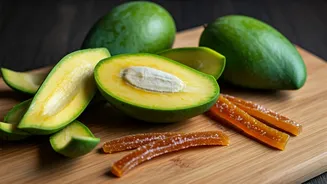
The quality of your barfi depends entirely on the quality of your mango. For those living in the U.S., finding the legendary Indian varieties fresh can be a challenge. Your best bet for a fantastic homemade barfi is the Ataulfo mango, also known as the honey or Champagne mango. These small, yellow-skinned mangoes are sweet, fragrant, and have very little fiber, making them perfect for creating a smooth pulp. They are widely available in American grocery stores throughout the spring and summer. Alternatively, a trip to your local Indian or South Asian market is a must. There, you’ll find high-quality canned mango pulp, often made from Alphonso or Kesar mangoes. Using canned pulp is a fantastic, time-saving option that guarantees authentic flavor and a vibrant, natural color without any fuss.
Where to Find the Good Stuff
If you’re not ready to take the plunge into making it yourself, you can still partake in this seasonal ritual. Most well-stocked Indian sweet shops, or *mithai walas*, will feature mango barfi prominently as soon as mango season hits. When you’re buying, look for a barfi with a bright, natural orange-yellow hue, not a fluorescent one, which can indicate artificial coloring. It should smell distinctly of mangoes, not just sugar. A good shop will often let you sample a small piece. Don’t be afraid to ask which variety of mango they use—a passionate confectioner will be happy to tell you. Buying from a local shop not only saves you time but also supports small businesses that are keepers of these delicious cultural traditions.