




The Performance of Paradise
Scroll through your social media feeds in July and you’ll see it: the carefully curated shot of a designer swimsuit next to a sweating cocktail, with a sliver of turquoise water in the background. This is the official postcard of modern American leisure.
From the pulsing energy of South Beach to the manicured shores of Southern California, the message is clear: a great beach is a popular one. We’ve equated crowds with desirability, a full restaurant with a good one, and a packed shoreline with a successful vacation. But is it relaxation, or is it a performance? True rest requires a quiet mind, and it’s hard to find that quiet when you’re navigating a dense field of towels, dodging stray frisbees, and absorbing the ambient noise of a thousand other vacations happening simultaneously just feet from your own.
Redefining Luxury as Space
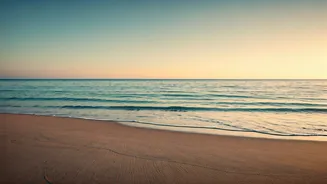
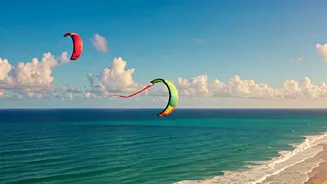
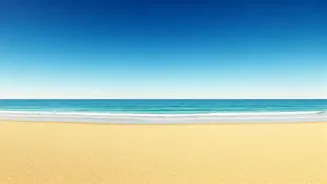
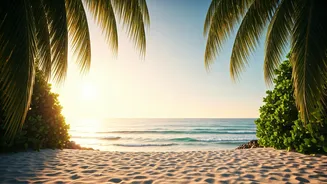
In a world of constant connectivity, notifications, and urban density, the rarest commodity is no longer a five-star amenity—it’s space. Not just physical space, but mental and auditory space. This is the new definition of luxury. It’s the ability to hear your own thoughts, to listen to the rhythmic crash of waves uninterrupted by club music, to see a horizon that isn't cluttered with jet skis and parasailers. An empty beach offers this in abundance. It provides a natural canvas for decompression. The sheer scale of the ocean against an empty shore has a way of right-sizing our anxieties, reminding us of a world that operates on a much grander, slower timescale. This isn't about being anti-social; it's about being pro-solitude, reclaiming a piece of the world for yourself, even if only for an afternoon.
The Richness of an Unbroken Coastline
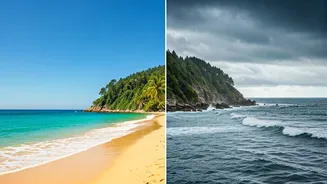
Imagine walking along the misty, moody coast of Oregon, where dramatic sea stacks emerge from the fog and the only other footprints in the sand belong to shorebirds. Picture the wild, windswept dunes of a Georgia barrier island, where gnarled live oaks give way to a vast, empty expanse of white sand. Or consider the shores of the Great Lakes in autumn, where the crowds have vanished but the water’s deep blue beauty remains, stark and magnificent against the changing leaves. These experiences offer a different kind of richness. The luxury here isn’t about being served, but about being immersed. It’s the feeling of the wind on your face without the smell of someone else’s sunscreen. It’s finding a perfectly smooth stone or an intricate piece of driftwood and feeling like you’ve discovered a treasure no one else has seen.
How to Find Your Own Quiet Shore
Finding these quiet places doesn’t require a secret map or an off-road vehicle. It just requires a slight shift in strategy. The first rule is to travel in the shoulder seasons. A beach that’s mobbed in July can be blissfully peaceful in late September. Secondly, explore beyond the famous headliners. For every Zion National Park, there’s a dozen stunning and far-less-crowded state parks nearby. Look for national seashores, which are often more protected and less developed than municipal beaches. Consider coastlines people forget, like the quiet stretches of the Florida Panhandle far from the spring break chaos, or the shores of Lake Michigan, which offer ocean-like vistas without the coastal crowds. The goal isn’t to find a place no one has ever heard of, but to visit the beautiful places we all know at a time, or in a way, that no one else does.