

Breaking Down the Barrier
For decades, the standard kitchen island has been a long, rectangular block. While functional for food prep and creating a boundary between the cook and the living area, its linear shape often acts as a subtle barrier. It creates a distinct “us vs. them”
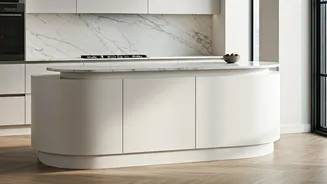
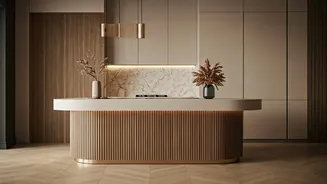
dynamic—the person cooking is on one side, and guests or family are on the other. A rounded or curved island dismantles this invisible wall. By wrapping around, it physically and psychologically invites people in. There’s no longer a clear “head” of the island; everyone seated around it feels more included. The gentle curve encourages people to turn toward one another, fostering a more natural and communal atmosphere for conversation.
Improving Flow and Function
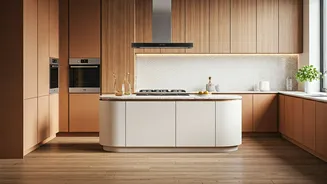
Beyond the social benefits, curved islands offer significant ergonomic advantages. In a high-traffic area like the kitchen, sharp corners are hazards. They’re easy to bump into, a common complaint for adults and a genuine safety concern for families with small children. A rounded edge eliminates this problem entirely, creating smoother, safer pathways. This improved traffic flow makes the kitchen feel less cramped and more intuitive to navigate, especially when multiple people are moving around. Whether you’re grabbing a drink from the fridge, helping with homework, or prepping a meal, the lack of sharp corners creates a more fluid and less stressful environment for everyone.
A Softer, More Organic Aesthetic
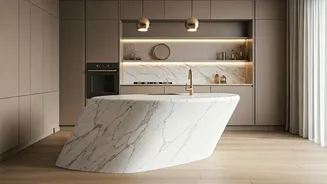
Kitchens are typically dominated by hard lines and rigid geometry: square cabinets, rectangular appliances, and straight countertops. While clean and efficient, this can sometimes make the space feel sterile or cold. Introducing a curved element provides a powerful visual counterpoint. A rounded island softens the entire room, adding an organic, sculptural quality that feels both modern and timeless. This design choice breaks up the monotony of straight lines, making the kitchen feel more dynamic and thoughtfully designed. It can serve as a stunning focal point, drawing the eye and infusing the space with a sense of elegance and warmth that rectangular islands often lack.
The Ultimate Gathering Spot
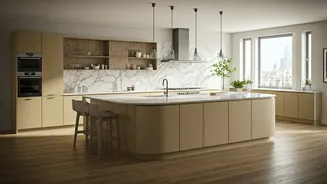
The end goal of the modern kitchen is to be the heart of the home, and the rounded island is the perfect centerpiece for that vision. Its shape inherently creates a destination. It’s not just a surface for chopping vegetables; it's a place for morning coffee, after-school snacks, impromptu wine nights, and party congregations. Unlike a formal dining table, an island feels casual and accessible. The curved design enhances this by making seating more comfortable and interactive. Guests can easily chat with the host—and each other—without craning their necks. This transforms the island from a utilitarian workstation into the kitchen’s social anchor, the spot where daily life naturally unfolds.
Key Design Considerations
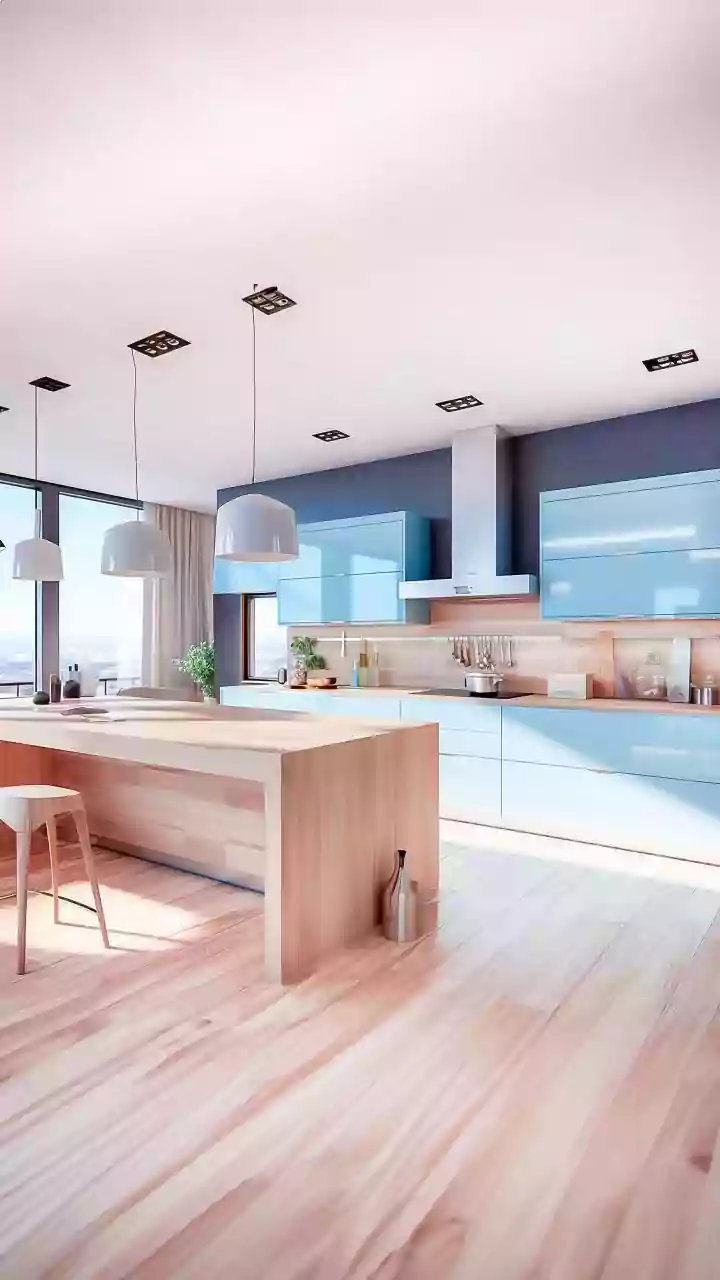
Integrating a rounded island requires some planning. Because of their shape, they can take up more floor space than a simple rectangle, so they work best in medium to large kitchens. However, even a smaller space can benefit from a demi-lune or a peninsula with a curved end. Material choice is also crucial. Wood can add warmth, while quartz or marble with a rounded waterfall edge can create a seamless, high-end look. Lighting is another key factor; a statement pendant light or a series of smaller fixtures following the curve can accentuate the island’s shape and define it as the room's centerpiece. When planned correctly, the result is a kitchen that’s not just beautiful but also perfectly attuned to the social rhythms of a modern home.