
The Blessing: Why Rain Is Liquid Gold
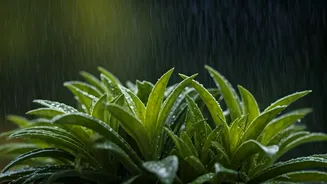
Before we get to the risks, let’s talk about why you’d even consider hauling your pothos to the patio. Natural rainwater is fundamentally different from what comes out of your tap. First, it’s naturally soft, free from the chlorine, fluoride, and mineral
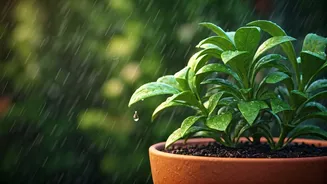
salts often found in municipal water. Over time, these additives can build up in your plant’s soil, forming a crust on the surface and potentially harming its roots. A good rain shower acts as a natural reset, flushing these accumulated salts away. Furthermore, rainwater has a slightly acidic pH, which most houseplants love. This acidity helps to release micronutrients in the soil like iron, zinc, and manganese, making them more available for the plant to absorb. The most significant benefit, however, is nitrogen. Rainwater actually collects nitrogen from the atmosphere, delivering it to your plants in a form they can readily use for new, green growth. It’s essentially a free, mild dose of fertilizer, which is why lawns and gardens always look so vibrant after a storm.
The Bully: When Showers Turn Savage
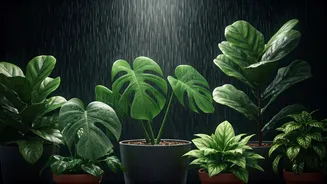
So, why isn’t everyone leaving their houseplants out all summer? Because a gentle shower can quickly turn into a bullying force of nature. The most obvious danger is overwatering. A plant sitting in a torrential downpour without excellent drainage can become waterlogged in minutes. This suffocates the roots, creating an anaerobic environment perfect for root rot, a fungal disease that is often a death sentence for indoor plants. Physical damage is another major concern. Heavy, driving rain and high winds can shred delicate leaves on plants like Calatheas, snap stems, or even knock pots over entirely. The force of the water can also compact the soil, reducing aeration for the roots. Finally, there’s the issue of pests and sun. Rain can wash dormant pests from nearby trees onto your plants, or splash soil-borne pathogens onto the leaves. And if water droplets sit on the leaves when the sun comes out, they can act like tiny magnifying glasses, causing scorch marks on the foliage.
Know Your Candidates
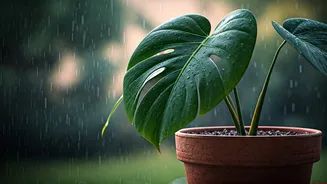
Not all plants are created equal when it comes to enjoying a summer shower. Your best candidates are tropical foliage plants that originate from rainforest environments. Think Monsteras, Philodendrons, Alocasias, and most ferns. Their native habitat involves frequent, heavy rainfall, so they are well-adapted to it, provided they have good drainage. On the other hand, some plants should almost never be put out in the rain. Succulents and cacti, which are adapted to arid conditions, are extremely susceptible to rot from excess moisture. Plants with fuzzy leaves, like African Violets, are also poor candidates; their hairy leaves trap water, which can lead to crown rot and fungal spots. Any plant that is already stressed, recently repotted, or showing signs of pest infestation should stay inside where conditions are stable.
How to Give Your Plants a Safe Spa Day
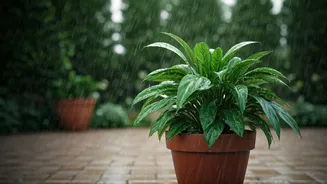
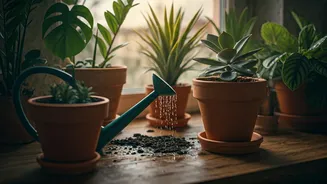
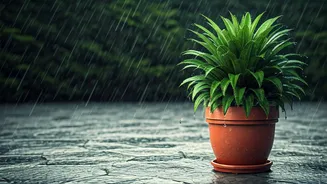
If you’ve got the right plant and the right conditions, you can absolutely harness the benefits of rainwater. Think of it as a supervised activity, not a “set it and forget it” situation. First, check the forecast. You’re looking for a period of light to moderate, steady rain, not a thunderstorm with high winds and a massive downpour. An hour or two is plenty. Second, check the pot. This is non-negotiable: the pot must have drainage holes. If your plant is in a decorative pot without holes, either remove it or don’t put it outside. For extra safety, you can even place plants on their side for a few minutes after the rain stops to let excess water drain from the saucer or pot base. Finally, be mindful of the transition. A plant that lives in a dim corner shouldn’t be thrust into direct sun after its shower. Place it in a shady, protected spot on your porch or patio to enjoy the rain without the shock of direct sun or wind.