

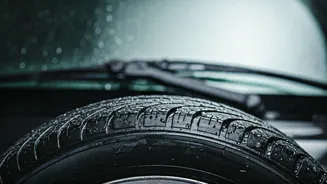



1. Check Your Tires: The Quarter Test
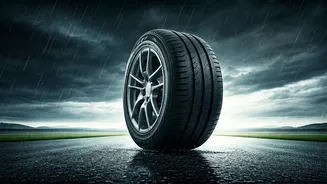
Your tires are the single most important safety feature in the rain. Their grooves are designed to channel water away, keeping the rubber in contact with the asphalt. If the tread is worn, they can't do their job, leading to hydroplaning. Forget complicated
gauges; grab a quarter. Insert it into the tread with Washington's head facing down. If you can see the top of his head, your tires are likely worn below the safe minimum of 4/32 of an inch and need to be replaced. Also, check your tire pressure. Underinflated tires can affect handling and increase the risk of a blowout, while overinflated tires have less grip.
2. Inspect Your Wipers and Fluid
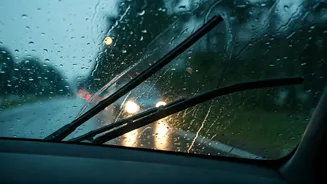
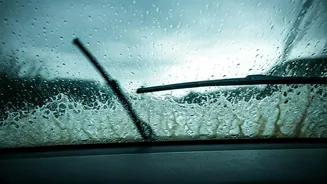
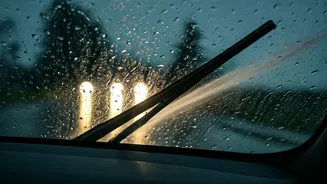
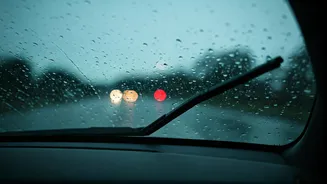
Visibility is your first line of defense. If your wiper blades are smearing, streaking, or chattering, they're not effectively clearing your view. Blades are inexpensive and easy to replace—a new pair each year is a good rule of thumb. While you're at it, top off your windshield washer fluid. A sudden spray of grimy road mist can blind you instantly, and having the fluid to wash it away immediately is crucial. It’s a simple check that pays huge dividends when the weather turns.
3. Test Your Lights
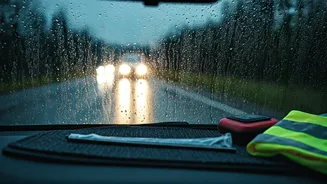
In many states, it’s the law: if your wipers are on, your headlights must be on, too. This isn't just about helping you see; it's about helping other drivers see you. Rain and road spray create a low-visibility gray haze that can make cars blend into the background. Do a quick walk-around before you leave. Check that your headlights (both low and high beams), taillights, and brake lights are all functioning. A dim or burned-out bulb can make your car nearly invisible from certain angles.
4. Slow Down Immediately
This is the most critical adjustment you can make once you're on the road. Your car simply cannot stop or turn as quickly on wet pavement. The National Highway Traffic Safety Administration (NHTSA) recommends reducing your speed by at least one-third in wet conditions. If the speed limit is 60 mph, you shouldn't be going faster than 40 mph. Driving slower gives you more time to react to hazards and increases the effectiveness of your tires by giving them more time to channel water away.
5. Double Your Following Distance
The “three-second rule” for following distance is designed for ideal, dry conditions. In the rain, you need to double that to at least five or six seconds. To check, watch the vehicle ahead of you pass a fixed object like a sign or an overpass. Then, start counting: "one-one-thousand, two-one-thousand..." If you reach the object before you get to six, you're following too closely. This extra space provides a critical buffer, giving you enough room to brake smoothly and safely without slamming them on, which could cause a skid.
6. Understand and Avoid Hydroplaning
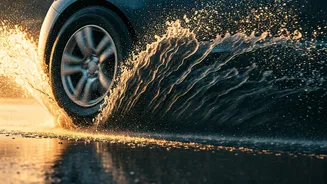
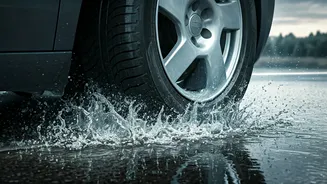
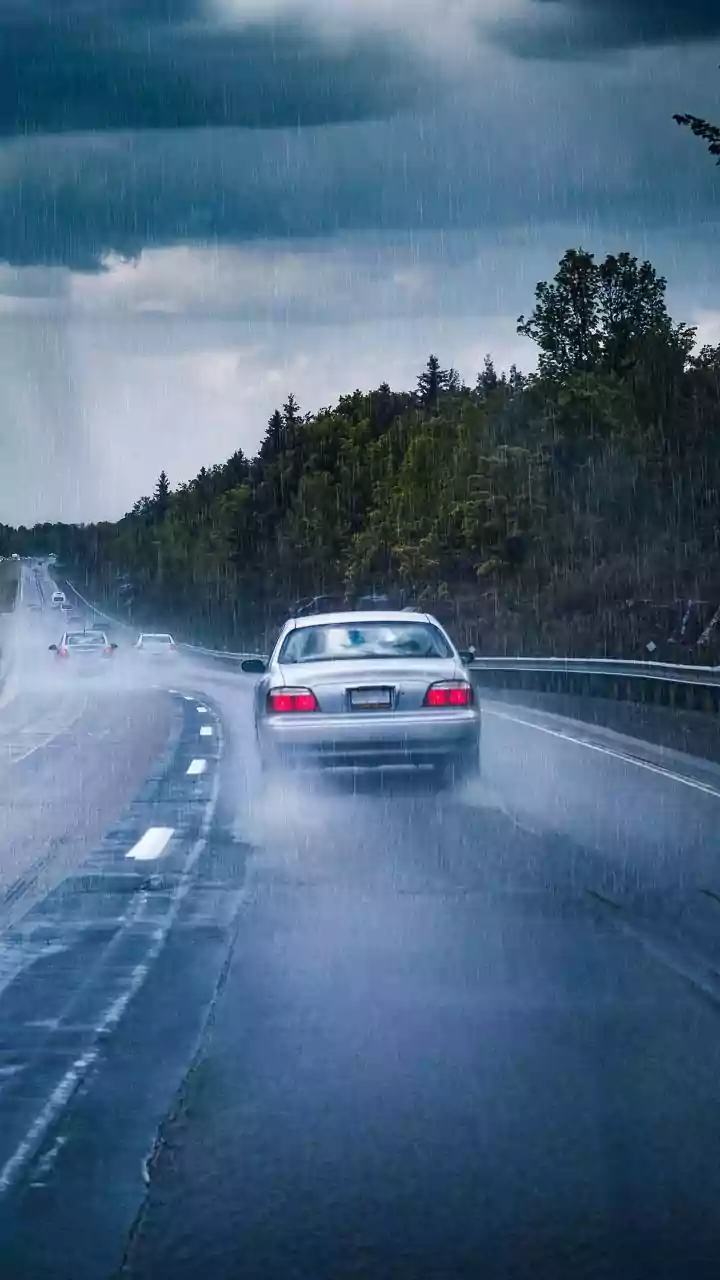
Hydroplaning occurs when your tires lose contact with the road and ride on a thin layer of water. It can happen at speeds as low as 35 mph with worn tires. If you feel the steering suddenly become light and the car feels like it's floating, you're hydroplaning. Do not slam on the brakes or jerk the steering wheel. Instead, ease your foot off the accelerator and steer straight ahead until you feel the tires regain traction. The best way to avoid it is by slowing down and staying away from large puddles and standing water where possible.
7. Know When to Pull Over
Sometimes, the safest decision is to not drive at all. If the rain is so heavy that your wipers can't keep up or you can't see the edges of the road or the vehicles in front of you, it's time to pull over. Signal, move to the shoulder as far from traffic as possible, and turn on your hazard lights. Turn off your headlights to avoid confusing other drivers into thinking your car is in a travel lane. Wait for the worst of the downpour to pass. Arriving a few minutes late is infinitely better than not arriving at all.